ChipApex | Global Electronic Components Supplier

SEARCH
Search Product
Search Post
— IC芯片 | 连接器 | 传感器 | 被动器件 —
Search productSearch post
— IC芯片 | 连接器 | 传感器 | 被动器件 —
Consult the customer manager about the wholesale price.
consultation hotline:86-132-6715-2157
email:[email protected]
Contact the product manager for consultation. One-stop consultation is available.
Do you want a lower wholesale price? Please send us your inquiry and we will reply immediately.
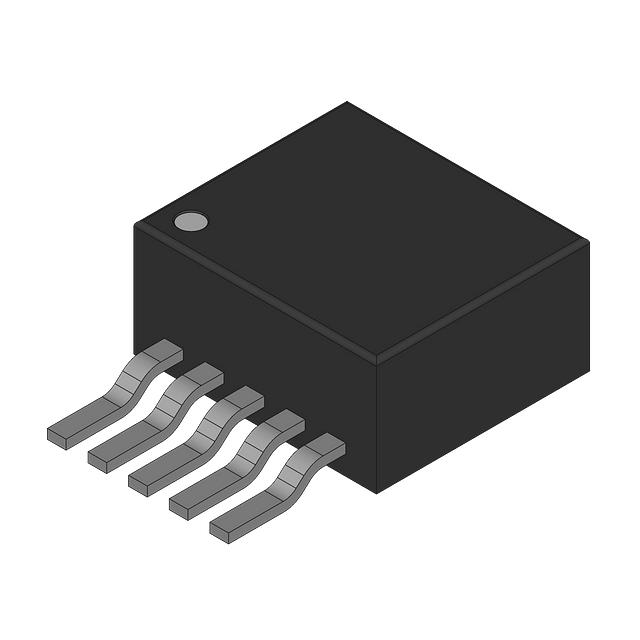
LM2595S-12-TI is listed in the Voltage Regulators - DC DC Switching Regulators range at ChipApex. The manufacturer field lists Texas Instruments. Its product description is IC REG BUCK 12V 1A DDPAK. Review the specifications below when checking this part for your BOM.
The LM2595S-12 is a SIMPLE SWITCHER step-down voltage regulator from Texas Instruments, operating at a fixed 150 kHz switching frequency. It provides a fixed 12 V output with a maximum load current of 1 A. The device accepts an input voltage range of 4.5 V to 40 V and features low quiescent current of 5 mA. It includes internal frequency compensation, a 150 kHz oscillator, and TTL shutdown capability. The regulator offers thermal shutdown and current limiting protection, housed in a TO-263-5 surface-mount package.
Verify the specific suffix against the manufacturer datasheet to confirm output voltage and package type. Ensure the component meets RoHS compliance requirements if applicable to your assembly process. Confirm availability status as older revisions may be discontinued or subject to change.
Select this component when a fixed 12 V output is required from a higher input voltage rail up to 40 V. It is suitable for designs prioritizing simplicity with minimal external component count. Consider the thermal performance in the TO-263 package for heat dissipation needs at full load.
This part belongs to the LM2595 series of SIMPLE SWITCHER regulators. It is a buck converter designed for high-efficiency DC-DC conversion. The series includes various fixed voltage options and an adjustable version, all sharing similar internal architecture and protection features.
Check for direct replacements such as LM2595S-12/NOPB for lead-free versions. Verify pin compatibility and electrical specifications before substituting with other buck converters like the LM2596 series, noting differences in current ratings and switching frequencies.
Explore related parts through Power Management (PMIC), Integrated Circuits (ICs), all product categories, ChipApex homepage.
 LM2595S-12-TI

See how a MEMS gyroscope measures angular rate, why its angle estimate drifts, and which range, noise, interface and temperature specs to compare.
Read More
LM2595S-12-TI is listed in the Voltage Regulators - DC DC Switching Regulators range at ChipApex. The manufacturer field lists Texas Instruments. Its product description…
Read More
LM2595S-12-TI is listed in the Voltage Regulators - DC DC Switching Regulators range at ChipApex. The manufacturer field lists Texas Instruments. Its product description…
Read More
LM2595S-12-TI is listed in the Voltage Regulators - DC DC Switching Regulators range at ChipApex. The manufacturer field lists Texas Instruments. Its product description…
Read More
LM2595S-12-TI is listed in the Voltage Regulators - DC DC Switching Regulators range at ChipApex. The manufacturer field lists Texas Instruments. Its product description…
Read More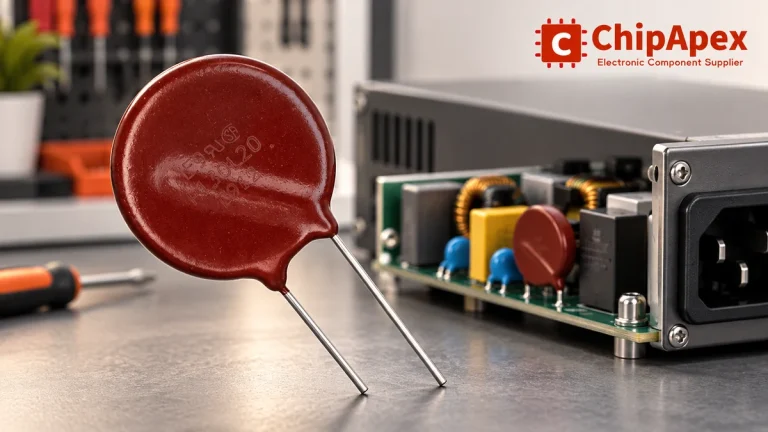
Select MOV varistors by continuous voltage, clamping behavior, surge waveform and repetition. Check thermal disconnection, fuse coordination and replacements.
Read More
LM2595S-12-TI is listed in the Voltage Regulators - DC DC Switching Regulators range at ChipApex. The manufacturer field lists Texas Instruments. Its product description…
Read More
LM2595S-12-TI is listed in the Voltage Regulators - DC DC Switching Regulators range at ChipApex. The manufacturer field lists Texas Instruments. Its product description…
Read More
Learn how a diode conducts, how to identify anode and cathode, and when to choose rectifier, TVS, Zener or photodiode types for a circuit.
Read More
LM2595S-12-TI is listed in the Voltage Regulators - DC DC Switching Regulators range at ChipApex. The manufacturer field lists Texas Instruments. Its product description…
Read More
Understand how a comparator switches at a voltage threshold, why hysteresis prevents chatter, and which output and input specs matter.
Read More
Compare RC, crystal and MEMS oscillator circuits. Check ppm, jitter, load capacitance, startup margin and output compatibility before choosing a clock source.
Read More
The activity of extra discounts on wholesale prices is in full swing…
Please fill in your contact information and we will send you the latest wholesale price list.