 ChipApex | Global Electronic Components Supplier

SEARCH
Search Product
Search Post
— IC芯片 | 连接器 | 传感器 | 被动器件 —
Search productSearch post
— IC芯片 | 连接器 | 传感器 | 被动器件 —
Consult the customer manager about the wholesale price.
consultation hotline:86-132-6715-2157
email:[email protected]
Contact the product manager for consultation. One-stop consultation is available.
Do you want a lower wholesale price? Please send us your inquiry and we will reply immediately.
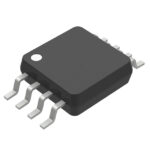
LM2621MM/NOPB is listed in the Voltage Regulators - DC DC Switching Regulators range at ChipApex. The manufacturer field lists Texas Instruments. Its product description is IC REG BST SEPIC ADJ 8VSSOP. Review the specifications below when checking this part for your BOM.
The LM2621MM/NOPB is a low input voltage step-up DC-DC converter manufactured by Texas Instruments. It operates with an input voltage range of 1.2 V to 14 V and provides an adjustable output voltage from 1.24 V to 14 V. The device supports a maximum output current of 2.85 A and features a switchable switching frequency between 300 kHz and 2 MHz. It functions within a temperature range of -40 °C to +85 °C and draws only 80 µA of quiescent current. The component is housed in an 8-pin VSSOP surface-mount package.
Verify the specific suffix and package type against the official datasheet to ensure compatibility with design requirements. Confirm that the operating temperature range meets the application's environmental conditions. Check for RoHS compliance status as indicated in the manufacturer documentation. Ensure the selected variant matches the required pinout and thermal characteristics for the intended PCB layout.
Select this component when a wide input voltage range down to 1.2 V is required. Consider the adjustable output voltage capability for flexible system designs. Evaluate the trade-off between switching frequency selection and external component size. Verify that the 2.85 A output current rating satisfies the load requirements under all expected operating conditions.
This part belongs to the LM2621 series of switching regulators from Texas Instruments. It is categorized under PMIC - Power Management ICs. The device is designed for efficient voltage boosting in space-constrained applications. It shares family characteristics with other members of the LM26xx series but offers specific performance parameters tailored for low-input-voltage scenarios.
Publicly confirmed substitute part numbers are not available in the provided source material.
Explore related parts through Power Management (PMIC), Integrated Circuits (ICs), all product categories, ChipApex homepage.
 LM2621MM/NOPB
LM2621MM/NOPB is listed in the Voltage Regulators - DC DC Switching Regulators range at ChipApex. The manufacturer field lists Texas Instruments. Its product description…
Read More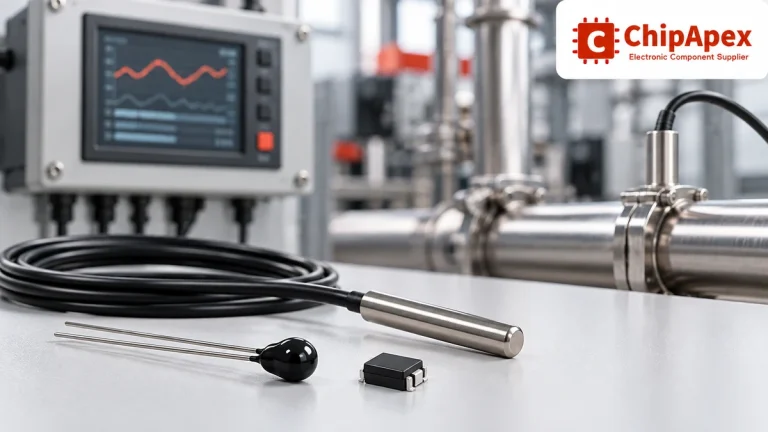
Compare thermistors, RTDs, thermocouples and temperature ICs. Learn how range, accuracy, response, interfaces and mounting affect component selection.
Read More
LM2621MM/NOPB is listed in the Voltage Regulators - DC DC Switching Regulators range at ChipApex. The manufacturer field lists Texas Instruments. Its product description…
Read More
LM2621MM/NOPB is listed in the Voltage Regulators - DC DC Switching Regulators range at ChipApex. The manufacturer field lists Texas Instruments. Its product description…
Read More
LM2621MM/NOPB is listed in the Voltage Regulators - DC DC Switching Regulators range at ChipApex. The manufacturer field lists Texas Instruments. Its product description…
Read More
LM2621MM/NOPB is listed in the Voltage Regulators - DC DC Switching Regulators range at ChipApex. The manufacturer field lists Texas Instruments. Its product description…
Read More
LM2621MM/NOPB is listed in the Voltage Regulators - DC DC Switching Regulators range at ChipApex. The manufacturer field lists Texas Instruments. Its product description…
Read More
Find out when a bare shock switch needs a pull resistor, when an MCU internal pull-up is enough, and why sensor modules and piezo…
Read More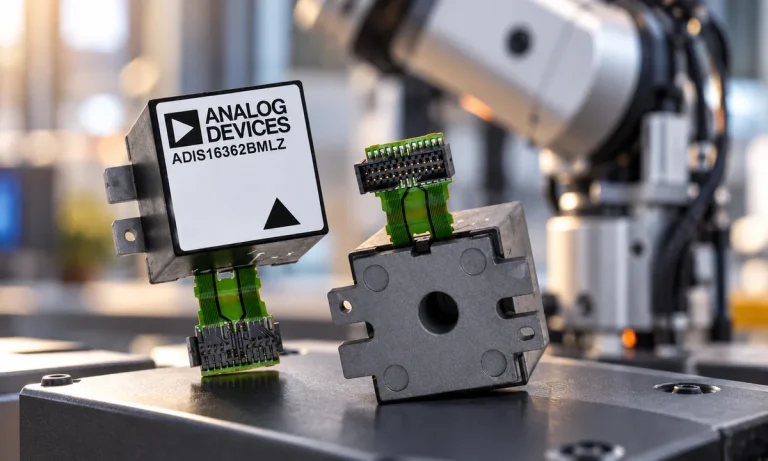
Learn what an IMU measures, how accelerometers and gyroscopes work together, why orientation estimates drift, and what to compare.
Read More
LM2621MM/NOPB is listed in the Voltage Regulators - DC DC Switching Regulators range at ChipApex. The manufacturer field lists Texas Instruments. Its product description…
Read More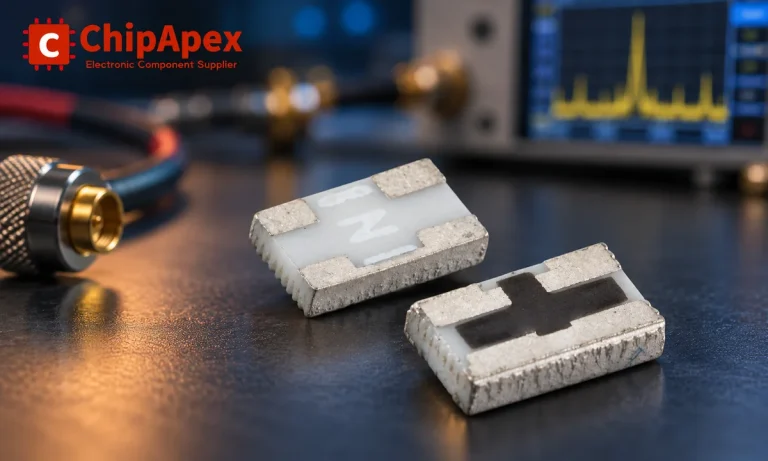
Understand RF attenuator dB values, fixed and programmable types, impedance, power limits and noise tradeoffs before choosing parts for an RF signal path.
Read More
Learn why PTC resistance rises with temperature, how it differs from NTC, and which ratings matter for sensing and protection.
Read More
The activity of extra discounts on wholesale prices is in full swing…
Please fill in your contact information and we will send you the latest wholesale price list.





