 ChipApex | Global Electronic Components Supplier

SEARCH
Search Product
Search Post
— IC芯片 | 连接器 | 传感器 | 被动器件 —
Search productSearch post
— IC芯片 | 连接器 | 传感器 | 被动器件 —
Consult the customer manager about the wholesale price.
consultation hotline:86-132-6715-2157
email:[email protected]
Contact the product manager for consultation. One-stop consultation is available.
Do you want a lower wholesale price? Please send us your inquiry and we will reply immediately.
LM2678SX-3.3/NOPB is listed in the Voltage Regulators - DC DC Switching Regulators range at ChipApex. The manufacturer field lists Texas Instruments. Its product description is IC REG BUCK 3.3V 5A TO263. Review the specifications below when checking this part for your BOM.
The LM2678SX-3.3/NOPB is a Texas Instruments SIMPLE SWITCHER step-down DC/DC switching regulator in a TO-263-7 (D2PAK) surface-mount package. It operates with an input voltage range of 8 V to 40 V and provides a fixed 3.3 V output at up to 5 A. The device features a typical switching frequency of 260 kHz, ensuring high efficiency exceeding 90% through low on-resistance DMOS power switches. It includes internal compensation for stability, thermal shutdown protection, and a shutdown pin for standby mode operation.
Verify the exact ordering suffix matches the required package and temperature grade. Confirm RoHS compliance status as indicated by the NOPB designation. Ensure the supplier provides valid traceability documentation. Check for any specific handling instructions related to moisture sensitivity level 3 classification during storage and reflow soldering processes.
Select this part when a fixed 3.3 V output is required from an 8 V to 40 V input source. It is suitable for applications demanding up to 5 A continuous current with minimal external components. Consider the TO-263-7 package for its thermal performance advantages over smaller packages in higher power scenarios.
This component belongs to the LM2678 series of SIMPLE SWITCHER regulators. The series offers various fixed voltage options including 3.3 V, 5 V, and 12 V, alongside adjustable versions. All variants share the same core architecture, switching frequency, and protection features, differing primarily in output voltage configuration and packaging options.
LM2678SX-ADJ/NOPB: Adjustable output version with identical electrical characteristics and package.
Explore related parts through Power Management (PMIC), Integrated Circuits (ICs), all product categories, ChipApex homepage.
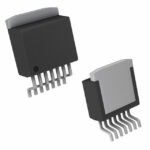 LM2678SX-3.3/NOPB
LM2678SX-3.3/NOPB is listed in the Voltage Regulators - DC DC Switching Regulators range at ChipApex. The manufacturer field lists Texas Instruments. Its product description…
Read More
LM2678SX-3.3/NOPB is listed in the Voltage Regulators - DC DC Switching Regulators range at ChipApex. The manufacturer field lists Texas Instruments. Its product description…
Read More
LM2678SX-3.3/NOPB is listed in the Voltage Regulators - DC DC Switching Regulators range at ChipApex. The manufacturer field lists Texas Instruments. Its product description…
Read More
Compare RC, crystal and MEMS oscillator circuits. Check ppm, jitter, load capacitance, startup margin and output compatibility before choosing a clock source.
Read More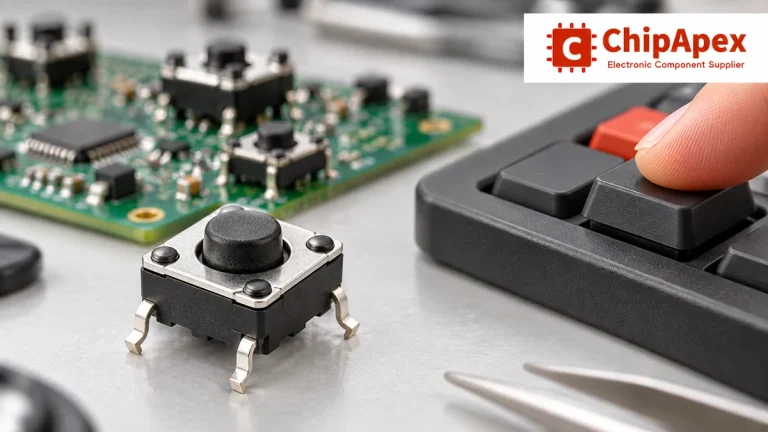
Understand tactile switches, PCB and keyboard differences, four-pin wiring, debounce, force, travel and replacement checks for reliable control inputs.
Read More
LM2678SX-3.3/NOPB is listed in the Voltage Regulators - DC DC Switching Regulators range at ChipApex. The manufacturer field lists Texas Instruments. Its product description…
Read More
LM2678SX-3.3/NOPB is listed in the Voltage Regulators - DC DC Switching Regulators range at ChipApex. The manufacturer field lists Texas Instruments. Its product description…
Read More
LM2678SX-3.3/NOPB is listed in the Voltage Regulators - DC DC Switching Regulators range at ChipApex. The manufacturer field lists Texas Instruments. Its product description…
Read More
LM2678SX-3.3/NOPB is listed in the Voltage Regulators - DC DC Switching Regulators range at ChipApex. The manufacturer field lists Texas Instruments. Its product description…
Read More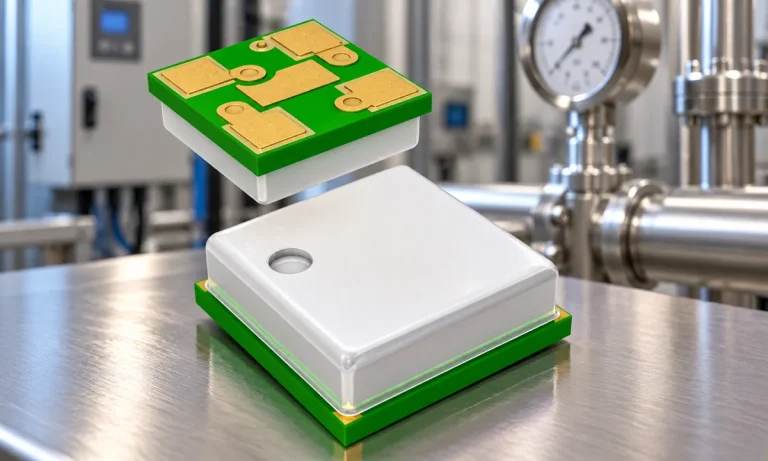
Learn how a pressure transducer converts pressure into voltage, current, or digital output, and compare pressure references and key selection specs.
Read More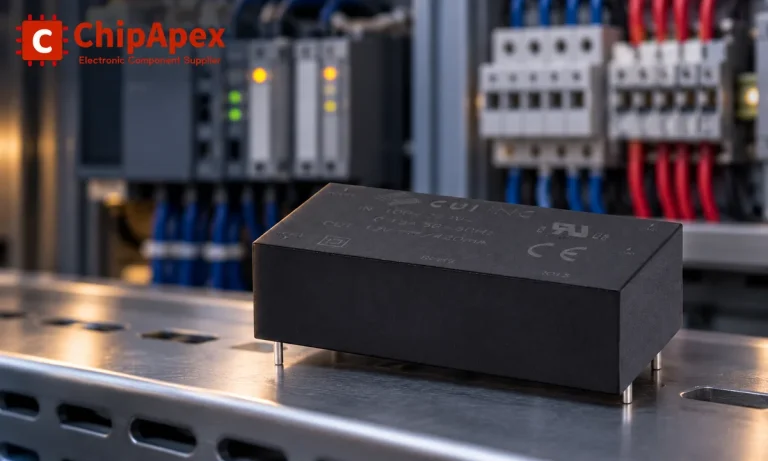
Choose an AC to DC converter by input range, output demand, isolation, efficiency and thermal derating. Compare architectures and check installation needs.
Read More
Understand how oscillators generate timing signals, how they differ from crystals, and which frequency, output and stability specs matter when choosing one.
Read More
The activity of extra discounts on wholesale prices is in full swing…
Please fill in your contact information and we will send you the latest wholesale price list.





