ChipApex | Global Electronic Components Supplier

SEARCH
Search Product
Search Post
— IC芯片 | 连接器 | 传感器 | 被动器件 —
Search productSearch post
— IC芯片 | 连接器 | 传感器 | 被动器件 —
Consult the customer manager about the wholesale price.
consultation hotline:86-132-6715-2157
email:[email protected]
Contact the product manager for consultation. One-stop consultation is available.
Do you want a lower wholesale price? Please send us your inquiry and we will reply immediately.
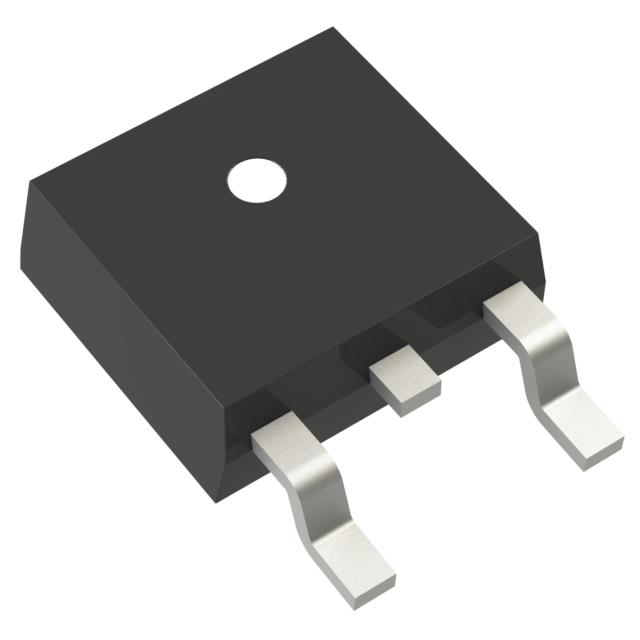
LM2936QDTX-3.3/NOPB is listed in the Voltage Regulators - Linear, Low Drop Out (LDO) Regulators range at ChipApex. The manufacturer field lists Texas Instruments. Its product description is IC REG LINEAR 3.3V 50MA TO252-3. Review the specifications below when checking this part for your BOM.
The LM2936QDTX-3.3/NOPB is a fixed-output low-dropout linear voltage regulator manufactured by Texas Instruments, designed for automotive and industrial applications. It provides a stable 3.3 V output with a maximum load current of 50 mA. The device features an ultra-low quiescent current of 15 µA, ensuring minimal power consumption in standby modes. It operates within an input voltage range of 4 V to 40 V and supports junction temperatures from -40°C to +125°C. Packaged in a TO-252 (DPAK) surface-mount case, it includes built-in protections against overtemperature, reverse polarity, and short circuits.
Verify that the specific suffix 'QDT' corresponds to the TO-252 package and automotive grade when sourcing. Confirm RoHS compliance status via the manufacturer's latest documentation. Ensure the ordering part number matches the required tape-and-reel packaging format for automated assembly processes.
Select this component when automotive reliability and low static current are critical requirements. It is suitable for designs where input voltages vary significantly but require a stable 3.3 V rail. Consider the thermal performance of the TO-252 package relative to the expected load current and ambient temperature constraints.
This part belongs to the LM2936 family of low-dropout regulators known for high input voltage tolerance and low power consumption. The 'Q' prefix indicates automotive qualification, while 'DT' specifies the TO-252 surface-mount package. The '/NOPB' suffix denotes lead-free construction and absence of specific organic materials.
LM2936QDT-3.3/NOPB
Explore related parts through Power Management (PMIC), Integrated Circuits (ICs), all product categories, ChipApex homepage.
 LM2936QDTX-3.3/NOPB
LM2936QDTX-3.3/NOPB is listed in the Voltage Regulators - Linear, Low Drop Out (LDO) Regulators range at ChipApex. The manufacturer field lists Texas Instruments. Its…
Read More
LM2936QDTX-3.3/NOPB is listed in the Voltage Regulators - Linear, Low Drop Out (LDO) Regulators range at ChipApex. The manufacturer field lists Texas Instruments. Its…
Read More
LM2936QDTX-3.3/NOPB is listed in the Voltage Regulators - Linear, Low Drop Out (LDO) Regulators range at ChipApex. The manufacturer field lists Texas Instruments. Its…
Read More
LM2936QDTX-3.3/NOPB is listed in the Voltage Regulators - Linear, Low Drop Out (LDO) Regulators range at ChipApex. The manufacturer field lists Texas Instruments. Its…
Read More
Choose logic inverter ICs by thresholds, supply, output drive and delay. Compare standard and Schmitt-trigger inputs, power sequencing and replacement checks.
Read More
LM2936QDTX-3.3/NOPB is listed in the Voltage Regulators - Linear, Low Drop Out (LDO) Regulators range at ChipApex. The manufacturer field lists Texas Instruments. Its…
Read More
LM2936QDTX-3.3/NOPB is listed in the Voltage Regulators - Linear, Low Drop Out (LDO) Regulators range at ChipApex. The manufacturer field lists Texas Instruments. Its…
Read More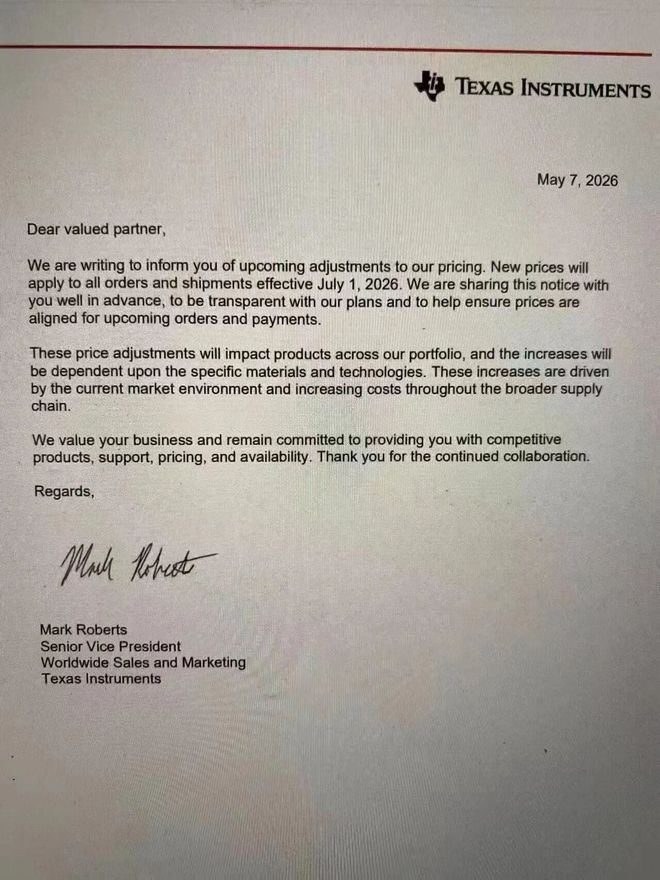
LM2936QDTX-3.3/NOPB is listed in the Voltage Regulators - Linear, Low Drop Out (LDO) Regulators range at ChipApex. The manufacturer field lists Texas Instruments. Its…
Read More
Choose an AC to DC converter by input range, output demand, isolation, efficiency and thermal derating. Compare architectures and check installation needs.
Read More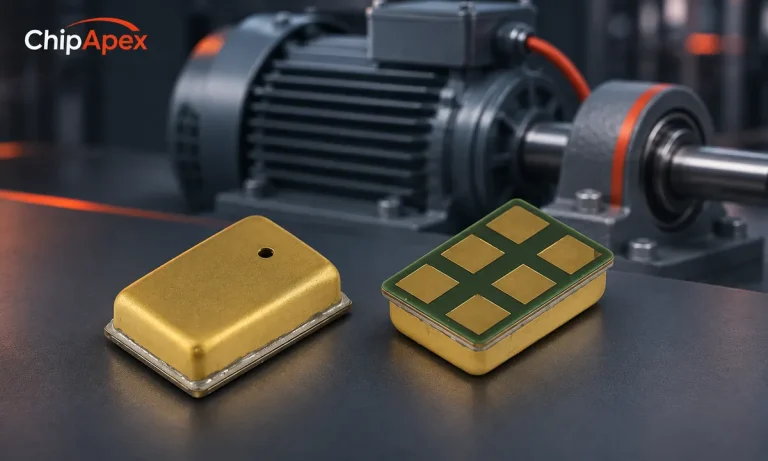
Choose a vibration sensor for machine monitoring. Compare sensing methods, bandwidth, noise and mounting, then define the signal-chain requirements.
Read More
LM2936QDTX-3.3/NOPB is listed in the Voltage Regulators - Linear, Low Drop Out (LDO) Regulators range at ChipApex. The manufacturer field lists Texas Instruments. Its…
Read More
Compare thermistors, RTDs, thermocouples and temperature ICs. Learn how range, accuracy, response, interfaces and mounting affect component selection.
Read More
The activity of extra discounts on wholesale prices is in full swing…
Please fill in your contact information and we will send you the latest wholesale price list.