 ChipApex | Global Electronic Components Supplier

SEARCH
Search Product
Search Post
— IC芯片 | 连接器 | 传感器 | 被动器件 —
Search productSearch post
— IC芯片 | 连接器 | 传感器 | 被动器件 —
Consult the customer manager about the wholesale price.
consultation hotline:86-132-6715-2157
email:[email protected]
Contact the product manager for consultation. One-stop consultation is available.
Do you want a lower wholesale price? Please send us your inquiry and we will reply immediately.
LM5165YQDRCRQ1 is listed in the Voltage Regulators - DC DC Switching Regulators range at ChipApex. The manufacturer field lists Texas Instruments. Its product description is IC REG BUCK 3.3V 150MA 10VSON. Review the specifications below when checking this part for your BOM.
The LM5165YQDRCRQ1 is an automotive-grade synchronous buck converter from Texas Instruments, designed for high-voltage applications. It supports a wide input voltage range of 3V to 65V and delivers a fixed output of 3.3V at up to 150mA. The device features a maximum switching frequency of 600kHz and operates within a junction temperature range of -40°C to 150°C. Packaged in a compact 10-VSON (3x3) format with exposed pad, it meets AEC-Q100 standards for automotive reliability.
Verify the complete part number against official Texas Instruments documentation to ensure correct suffix alignment. Confirm that the 'Y' indicates the specific output voltage variant and 'Q1' denotes automotive grade. Cross-reference the package marking with the datasheet to validate authenticity and prevent counterfeit components during sourcing.
Select this component when designing circuits requiring a small footprint synchronous buck solution for automotive systems. Ensure the required output current does not exceed 150mA and the input voltage remains within the 3V to 65V window. Verify thermal management requirements given the 150°C junction temperature rating and the 10-VSON package constraints.
This device belongs to the LM5165 family of high-voltage synchronous buck converters. It shares core architectural similarities with non-automotive variants but includes enhanced testing and qualification processes to meet automotive reliability standards. The family is designed to simplify power design in space-constrained electronic control units.
LM5165XQDRCTQ1: Automotive-grade alternative with similar electrical characteristics and package options.
Explore related parts through Power Management (PMIC), Integrated Circuits (ICs), all product categories, ChipApex homepage.
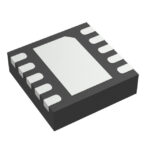 LM5165YQDRCRQ1

Find out when a bare shock switch needs a pull resistor, when an MCU internal pull-up is enough, and why sensor modules and piezo…
Read More
Choose LED drivers by current, string voltage, dimming and thermal limits. Understand constant-current operation and the checks needed for your load.
Read More
LM5165YQDRCRQ1 is listed in the Voltage Regulators - DC DC Switching Regulators range at ChipApex. The manufacturer field lists Texas Instruments. Its product description…
Read More
LM5165YQDRCRQ1 is listed in the Voltage Regulators - DC DC Switching Regulators range at ChipApex. The manufacturer field lists Texas Instruments. Its product description…
Read More
Learn what data acquisition means, from sensors and conditioning to sampling and storage. Review channel timing, wiring, calibration and data quality.
Read More
Select a common mode choke using noise frequency, current, insulation and signal integrity. Understand impedance curves, layout and filter limitations.
Read More
LM5165YQDRCRQ1 is listed in the Voltage Regulators - DC DC Switching Regulators range at ChipApex. The manufacturer field lists Texas Instruments. Its product description…
Read More
LM5165YQDRCRQ1 is listed in the Voltage Regulators - DC DC Switching Regulators range at ChipApex. The manufacturer field lists Texas Instruments. Its product description…
Read More
Learn how a pressure transducer converts pressure into voltage, current, or digital output, and compare pressure references and key selection specs.
Read More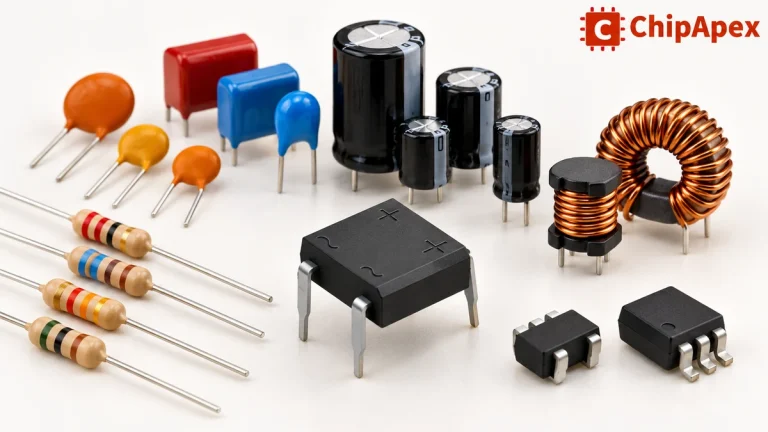
Explore electronic component types, functions, packages and datasheets. Learn selection, replacement and BOM checks before ordering parts for your PCB.
Read More
LM5165YQDRCRQ1 is listed in the Voltage Regulators - DC DC Switching Regulators range at ChipApex. The manufacturer field lists Texas Instruments. Its product description…
Read More
Choose a DIP switch by contact type, coded positions, footprint and signal ratings. Check logic polarity, assembly conditions and PCB configuration behavior.
Read More
The activity of extra discounts on wholesale prices is in full swing…
Please fill in your contact information and we will send you the latest wholesale price list.





