 ChipApex | Global Electronic Components Supplier

SEARCH
Search Product
Search Post
— IC芯片 | 连接器 | 传感器 | 被动器件 —
Search productSearch post
— IC芯片 | 连接器 | 传感器 | 被动器件 —
Consult the customer manager about the wholesale price.
consultation hotline:86-132-6715-2157
email:[email protected]
Contact the product manager for consultation. One-stop consultation is available.
Do you want a lower wholesale price? Please send us your inquiry and we will reply immediately.
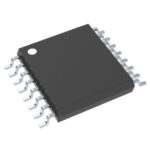
LM5574MTX is listed in the Voltage Regulators - DC DC Switching Regulators range at ChipApex. The manufacturer field lists Texas Instruments. Its product description is IC REG BUCK ADJ 500MA 16TSSOP. Review the specifications below when checking this part for your BOM.
The LM5574MTX is a high-voltage synchronous buck regulator from Texas Instruments, part of the Simple Switcher family. It operates with an input voltage range of 6 V to 75 V and delivers up to 500 mA output current. The device supports adjustable output voltages from 1.225 V to 70 V. It features a switching frequency range of 50 kHz to 500 kHz and includes emulated current mode control for stability. The component is housed in a TSSOP-16 package and functions within a temperature range of -40 °C to +125 °C.
Verify the specific suffix against official datasheets to confirm pinout compatibility and electrical specifications. Ensure the ordering code matches the required tape-and-reel packaging format. Cross-reference the manufacturer's latest documentation to validate RoHS compliance status and any recent product change notices affecting the component.
Select this component when designing systems requiring high input voltage tolerance up to 75 V. It is suitable for applications needing compact solutions due to its integrated synchronous rectification. Consider the operating temperature range and available switching frequencies to optimize efficiency and external component sizing for the specific load requirements.
This device belongs to the LM5574 series of high-voltage synchronous buck regulators. It is designed as a drop-in replacement for older non-synchronous counterparts like the LM2574 in certain high-voltage applications, offering improved efficiency through internal synchronous rectification while maintaining similar control loop characteristics.
Direct substitutes include the LM5574MT/NOPB variant which differs primarily in packaging configuration. Verify functional equivalence with legacy parts such as the LM25574 by comparing pinouts and electrical limits carefully.
Explore related parts through Power Management (PMIC), Integrated Circuits (ICs), all product categories, ChipApex homepage.
 LM5574MTX

See how a MEMS gyroscope measures angular rate, why its angle estimate drifts, and which range, noise, interface and temperature specs to compare.
Read More
LM5574MTX is listed in the Voltage Regulators - DC DC Switching Regulators range at ChipApex. The manufacturer field lists Texas Instruments. Its product description…
Read More
Learn how a JFET works and how to compare bias, leakage, noise and pinout. Review practical selection questions for high-impedance analog circuits.
Read More
LM5574MTX is listed in the Voltage Regulators - DC DC Switching Regulators range at ChipApex. The manufacturer field lists Texas Instruments. Its product description…
Read More
Choose a vibration sensor for machine monitoring. Compare sensing methods, bandwidth, noise and mounting, then define the signal-chain requirements.
Read More
Understand voltage controlled oscillator tuning, phase noise and PLL operation. Check supply noise, output loading and requirements before selection.
Read More
LM5574MTX is listed in the Voltage Regulators - DC DC Switching Regulators range at ChipApex. The manufacturer field lists Texas Instruments. Its product description…
Read More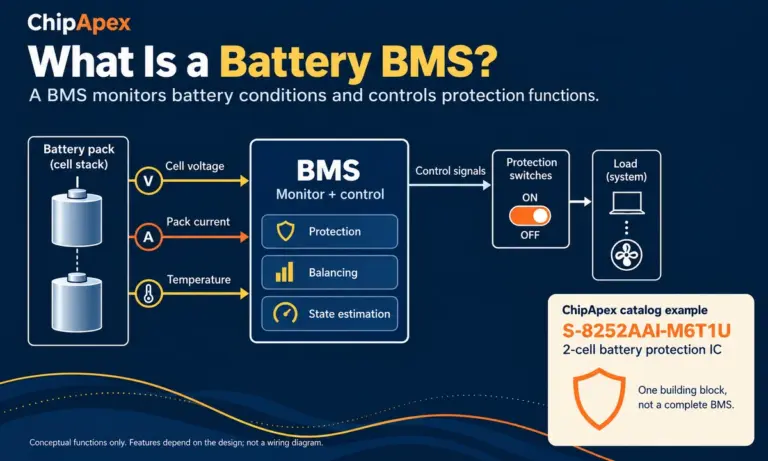
Learn what a battery BMS does, how protection differs from charging, and which pack specifications to check when sourcing BMS components through ChipApex.
Read More
LM5574MTX is listed in the Voltage Regulators - DC DC Switching Regulators range at ChipApex. The manufacturer field lists Texas Instruments. Its product description…
Read More
LM5574MTX is listed in the Voltage Regulators - DC DC Switching Regulators range at ChipApex. The manufacturer field lists Texas Instruments. Its product description…
Read More
LM5574MTX is listed in the Voltage Regulators - DC DC Switching Regulators range at ChipApex. The manufacturer field lists Texas Instruments. Its product description…
Read More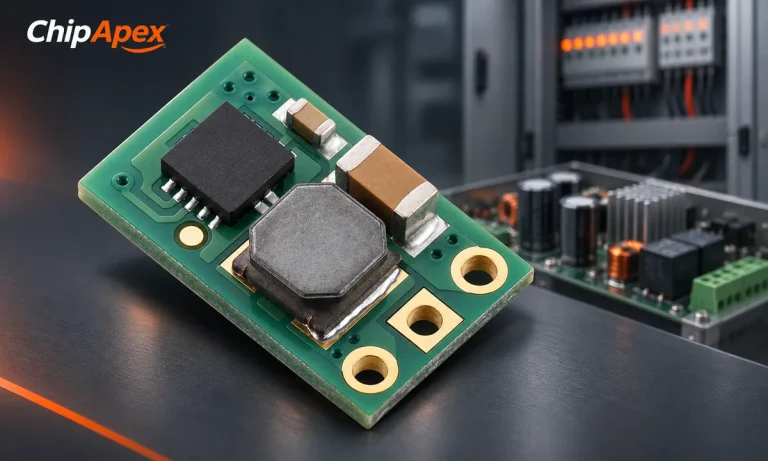
Select a DC-DC converter by input range, topology, isolation and temperature. Compare ripple, efficiency and load limits before choosing a component.
Read More
The activity of extra discounts on wholesale prices is in full swing…
Please fill in your contact information and we will send you the latest wholesale price list.





