 ChipApex | Global Electronic Components Supplier

SEARCH
Search Product
Search Post
— IC芯片 | 连接器 | 传感器 | 被动器件 —
Search productSearch post
— IC芯片 | 连接器 | 传感器 | 被动器件 —
Consult the customer manager about the wholesale price.
consultation hotline:86-132-6715-2157
email:[email protected]
Contact the product manager for consultation. One-stop consultation is available.
Do you want a lower wholesale price? Please send us your inquiry and we will reply immediately.
LP2992IM5-3.3/NOPB is listed in the Voltage Regulators - Linear, Low Drop Out (LDO) Regulators range at ChipApex. The manufacturer field lists Texas Instruments. Its product description is IC REG LINEAR 3.3V 250MA SOT23-5. Review the specifications below when checking this part for your BOM.
The LP2992IM5-3.3/NOPB is a fixed-output, low-noise, ultra-low-dropout linear regulator from Texas Instruments. It provides a stable 3.3V output with up to 250mA load current capability. The device operates within an input voltage range of 2.5V to 16V and maintains high accuracy across varying conditions. Key electrical specifications include a typical quiescent current of 69µA at no load and 875µA at full load. Output noise is minimized to 30µVRMS with a bypass capacitor. The regulator features high power supply rejection ratios of 70dB at 1kHz and 40dB at 1MHz. It includes integrated thermal shutdown and current limiting protection.
Verify the specific manufacturing revision when sourcing this component, as legacy and new chip variants exhibit differences in quiescent current and shutdown specifications. Confirm that the selected output capacitors meet the required low ESR criteria to ensure stability. Ensure the PCB layout adheres to thermal guidelines to maintain reliable operation within the specified temperature range.
Select this regulator for applications requiring low noise and high PSRR to filter upstream switching converter ripple. It is suitable for powering sensitive microcontrollers and processors needing tight voltage tolerance. Consider the package thermal resistance and board copper area requirements for heat dissipation under maximum load conditions.
This component belongs to the LP2992 family of micropower LDO regulators. It is housed in a compact 5-pin SOT-23 (DBV) package measuring 2.9mm by 2.8mm. The device is part of Texas Instruments' portfolio designed for portable and non-portable electronics requiring efficient power management.
LP2992AIM5-3.3/NOPB
Explore related parts through Power Management (PMIC), Integrated Circuits (ICs), all product categories, ChipApex homepage.
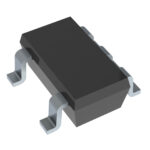 LP2992IM5-3.3/NOPB
LP2992IM5-3.3/NOPB is listed in the Voltage Regulators - Linear, Low Drop Out (LDO) Regulators range at ChipApex. The manufacturer field lists Texas Instruments. Its…
Read More
LP2992IM5-3.3/NOPB is listed in the Voltage Regulators - Linear, Low Drop Out (LDO) Regulators range at ChipApex. The manufacturer field lists Texas Instruments. Its…
Read More
LP2992IM5-3.3/NOPB is listed in the Voltage Regulators - Linear, Low Drop Out (LDO) Regulators range at ChipApex. The manufacturer field lists Texas Instruments. Its…
Read More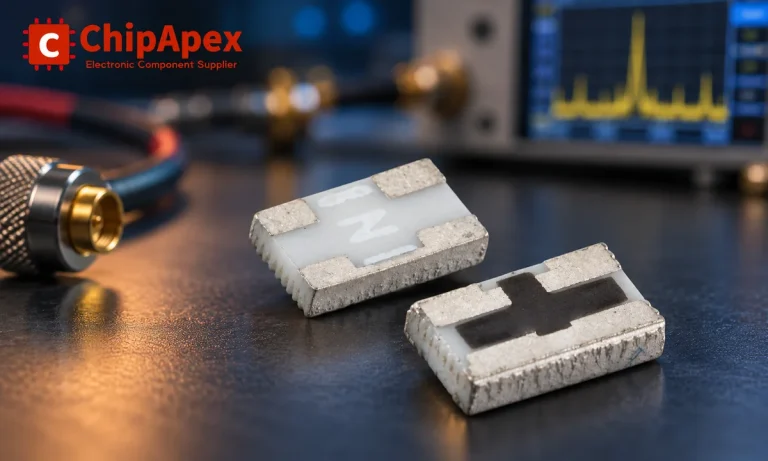
Understand RF attenuator dB values, fixed and programmable types, impedance, power limits and noise tradeoffs before choosing parts for an RF signal path.
Read More
LP2992IM5-3.3/NOPB is listed in the Voltage Regulators - Linear, Low Drop Out (LDO) Regulators range at ChipApex. The manufacturer field lists Texas Instruments. Its…
Read More
LP2992IM5-3.3/NOPB is listed in the Voltage Regulators - Linear, Low Drop Out (LDO) Regulators range at ChipApex. The manufacturer field lists Texas Instruments. Its…
Read More
LP2992IM5-3.3/NOPB is listed in the Voltage Regulators - Linear, Low Drop Out (LDO) Regulators range at ChipApex. The manufacturer field lists Texas Instruments. Its…
Read More
Learn how rectifiers convert AC to DC, compare half-wave and bridge circuits, and select voltage, current, recovery and thermal ratings for your design.
Read More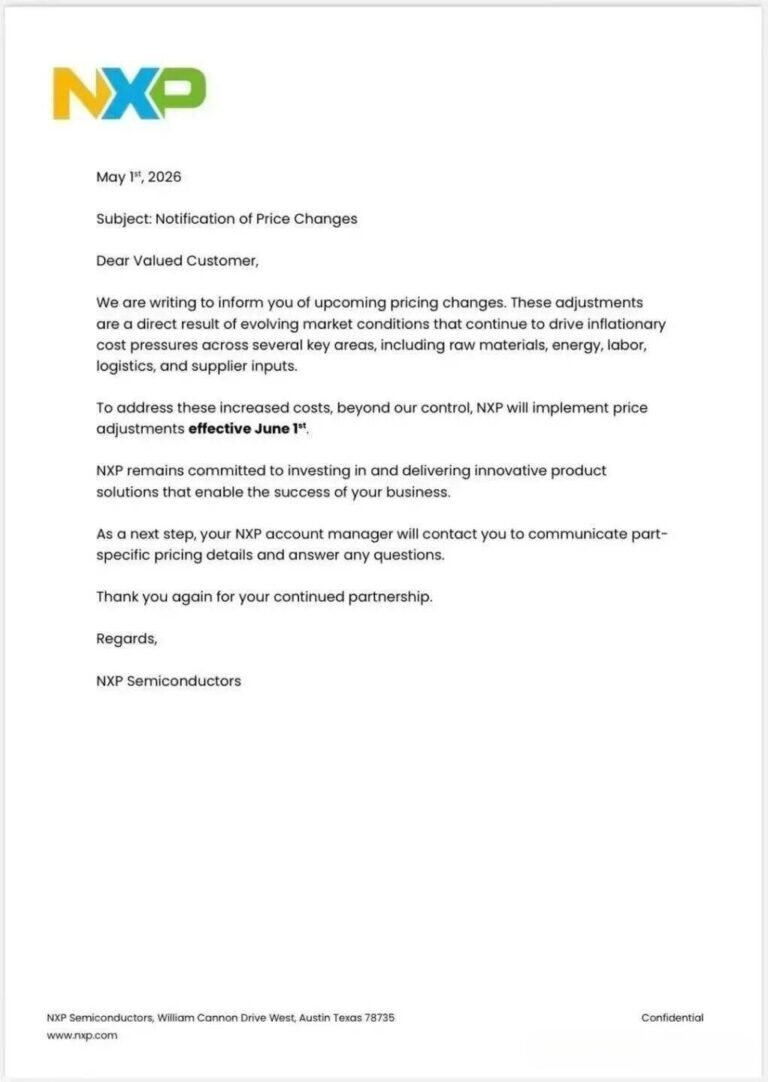
LP2992IM5-3.3/NOPB is listed in the Voltage Regulators - Linear, Low Drop Out (LDO) Regulators range at ChipApex. The manufacturer field lists Texas Instruments. Its…
Read More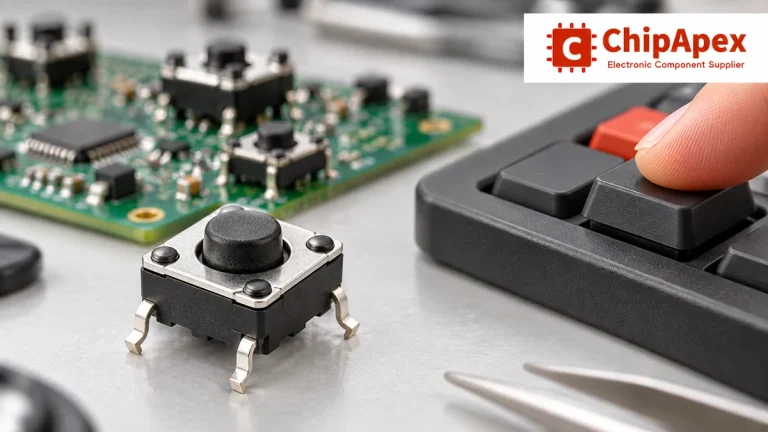
Understand tactile switches, PCB and keyboard differences, four-pin wiring, debounce, force, travel and replacement checks for reliable control inputs.
Read More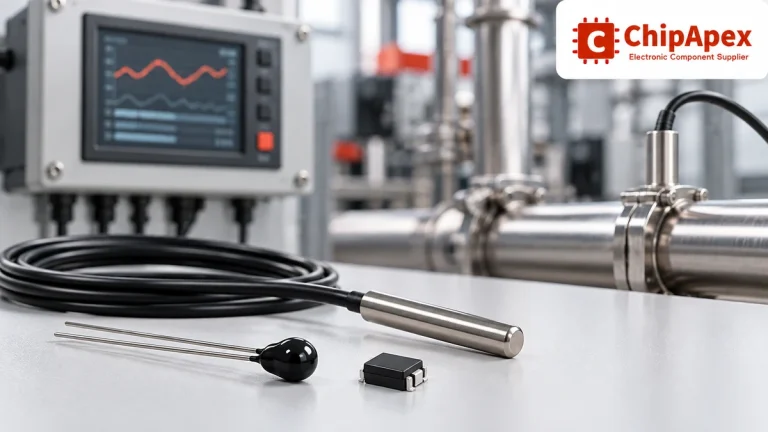
Compare thermistors, RTDs, thermocouples and temperature ICs. Learn how range, accuracy, response, interfaces and mounting affect component selection.
Read More
Find out when a bare shock switch needs a pull resistor, when an MCU internal pull-up is enough, and why sensor modules and piezo…
Read More
The activity of extra discounts on wholesale prices is in full swing…
Please fill in your contact information and we will send you the latest wholesale price list.




