 ChipApex | Global Electronic Components Supplier

SEARCH
Search Product
Search Post
— IC芯片 | 连接器 | 传感器 | 被动器件 —
Search productSearch post
— IC芯片 | 连接器 | 传感器 | 被动器件 —
Consult the customer manager about the wholesale price.
consultation hotline:86-132-6715-2157
email:[email protected]
Contact the product manager for consultation. One-stop consultation is available.
Do you want a lower wholesale price? Please send us your inquiry and we will reply immediately.
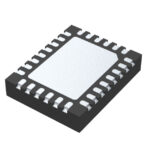
LTC7893AUFDM#WPBF is listed in the DC DC Switching Controllers range at ChipApex. The manufacturer field lists Analog Devices Inc.. Its product description is LOW IQ 100V SINGLE SYNC BOOST CT. Review the specifications below when checking this part for your BOM.
The LTC7893AUFDM#WPBF is a synchronous boost controller from Analog Devices, designed for low input voltage applications. It operates with an input voltage range of 1 V to 60 V and supports output voltages from 1.2 V to 100 V. The device features a QFN-28 package and functions within a temperature range of -40°C to +125°C. It offers a load regulation of 1% and includes shutdown functionality. This component is classified as a switching voltage regulator under the PMIC category.
Verify the specific suffix #WPBF against official Analog Devices documentation to confirm tape-and-reel packaging and lead-free compliance. Ensure the QFN-28 package variant matches your PCB footprint requirements. Cross-reference the manufacturer part number directly with the datasheet to avoid confusion with similar model numbers in the LTC7893 family.
Select this component when designing circuits that require stepping up low input voltages, such as single-cell battery sources, to higher stable output levels. The wide input range accommodates various supply conditions. Consider the thermal performance of the QFN-28 package for your specific power dissipation needs and ensure the operating temperature range aligns with your environmental constraints.
This part belongs to the LTC7893 series of synchronous boost controllers. It is manufactured by Analog Devices Inc. and falls under the Power Management ICs (PMIC) subcategory. The device is intended for use in applications demanding high efficiency and low quiescent current from low-voltage inputs.
Consult the Analog Devices product selector guide for direct pin-compatible or functionally equivalent alternatives within the LTC7893 family. Verify electrical specifications and package dimensions before substitution.
Explore related parts through Power Management (PMIC), Integrated Circuits (ICs), all product categories, ChipApex homepage.
 LTC7893AUFDM#WPBF

See how a MEMS gyroscope measures angular rate, why its angle estimate drifts, and which range, noise, interface and temperature specs to compare.
Read More
LTC7893AUFDM#WPBF is listed in the DC DC Switching Controllers range at ChipApex. The manufacturer field lists Analog Devices Inc.. Its product description is LOW…
Read More
LTC7893AUFDM#WPBF is listed in the DC DC Switching Controllers range at ChipApex. The manufacturer field lists Analog Devices Inc.. Its product description is LOW…
Read More
LTC7893AUFDM#WPBF is listed in the DC DC Switching Controllers range at ChipApex. The manufacturer field lists Analog Devices Inc.. Its product description is LOW…
Read More
LTC7893AUFDM#WPBF is listed in the DC DC Switching Controllers range at ChipApex. The manufacturer field lists Analog Devices Inc.. Its product description is LOW…
Read More
LTC7893AUFDM#WPBF is listed in the DC DC Switching Controllers range at ChipApex. The manufacturer field lists Analog Devices Inc.. Its product description is LOW…
Read More
Understand how oscillators generate timing signals, how they differ from crystals, and which frequency, output and stability specs matter when choosing one.
Read More
LTC7893AUFDM#WPBF is listed in the DC DC Switching Controllers range at ChipApex. The manufacturer field lists Analog Devices Inc.. Its product description is LOW…
Read More
LTC7893AUFDM#WPBF is listed in the DC DC Switching Controllers range at ChipApex. The manufacturer field lists Analog Devices Inc.. Its product description is LOW…
Read More
LTC7893AUFDM#WPBF is listed in the DC DC Switching Controllers range at ChipApex. The manufacturer field lists Analog Devices Inc.. Its product description is LOW…
Read More
LTC7893AUFDM#WPBF is listed in the DC DC Switching Controllers range at ChipApex. The manufacturer field lists Analog Devices Inc.. Its product description is LOW…
Read More
Learn why PTC resistance rises with temperature, how it differs from NTC, and which ratings matter for sensing and protection.
Read More
The activity of extra discounts on wholesale prices is in full swing…
Please fill in your contact information and we will send you the latest wholesale price list.





