 ChipApex | Global Electronic Components Supplier

SEARCH
Search Product
Search Post
— IC芯片 | 连接器 | 传感器 | 被动器件 —
Search productSearch post
— IC芯片 | 连接器 | 传感器 | 被动器件 —
Consult the customer manager about the wholesale price.
consultation hotline:86-132-6715-2157
email:[email protected]
Contact the product manager for consultation. One-stop consultation is available.
Do you want a lower wholesale price? Please send us your inquiry and we will reply immediately.
The Taitien PYETGLJANF-25.000000 is a crystal oscillator (XO) with a nominal frequency of 25.00 MHz and CMOS output logic. It operates at a supply voltage of 3.3V, drawing a maximum current of 10mA during active mode and 10µA in disable mode. The device features a frequency stability of ±50ppm and functions within an industrial temperature range of -40°C to +85°C. It utilizes a 4-SMD, no-lead package with dimensions of 2.50mm x 2.00mm x 1.00mm. This component is currently obsolete and no longer manufactured.
Verify component obsolescence status before integration into new designs. Confirm availability through secondary market channels as original manufacturing has ceased. Ensure compatibility with existing PCB footprints and electrical specifications if replacing active inventory. Review datasheet revisions for any historical parameter updates prior to final validation.
Select this part only for maintenance or legacy system repairs where the specific 3.3V supply and 2520 package form factor are required. Evaluate alternative active series from the manufacturer for new projects due to end-of-life status. Verify that the ±50ppm stability meets the target application's jitter and timing requirements.
This oscillator belongs to the Taitien PY series, designed for ultra-low power consumption in portable electronics. The PY series typically offers compact surface-mount packages suitable for space-constrained boards. As an obsolete item, it represents a previous generation of low-power clock solutions previously used in consumer and industrial devices.
No direct public substitute part numbers are confirmed for this obsolete model. Consider the OYJTGLJANF-25.000000 or OCJTGLJANF-25.000000 for similar performance, noting differences in package size and supply voltage.
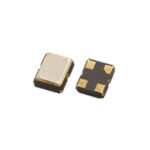 PYETGLJANF-25.000000
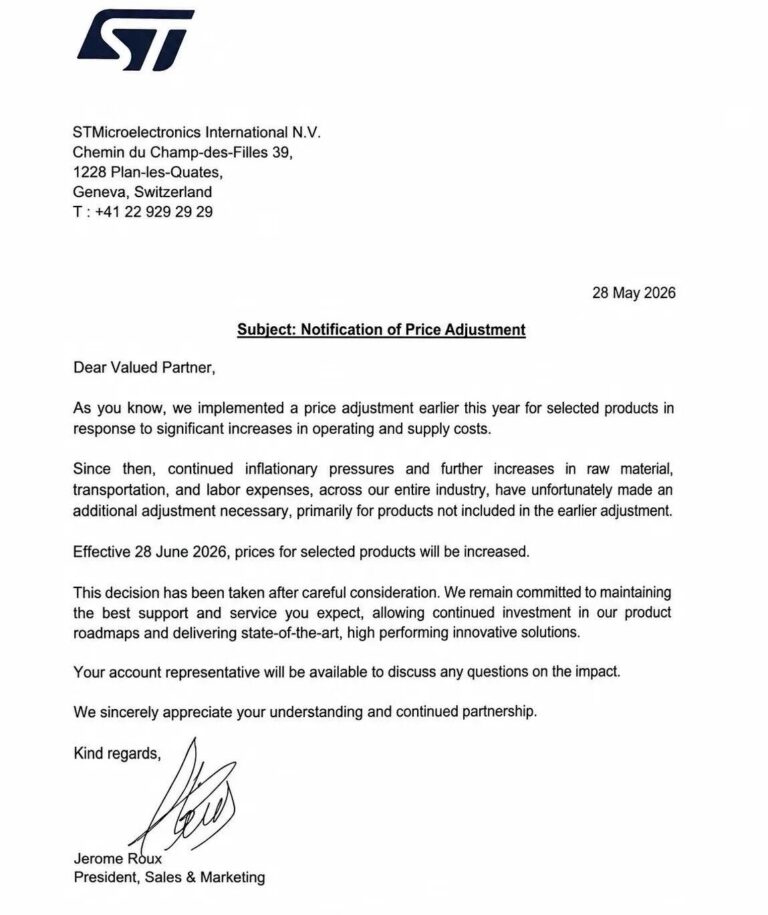
STMicroelectronics (ST), a global leader in semiconductor manufacturing, has officially notified customers of a new round of price increases for selected products, set to…
Read More
The rapid advancement of artificial intelligence (AI) is transforming industries across the globe, and the world of electronic components is no exception. From smarter…
Read More
Learn how a diode conducts, how to identify anode and cathode, and when to choose rectifier, TVS, Zener or photodiode types for a circuit.
Read More
In the vast landscape of memory technology, EEPROM (Electrically Erasable Programmable Read-Only Memory) often plays the unsung hero. While NAND Flash grabs headlines for…
Read More
Monolithic Power Systems (MPS), a global leader in analog and mixed-signal semiconductors, has notified its distribution partners of an upcoming price increase for selected…
Read More
Learn how rectifiers convert AC to DC, compare half-wave and bridge circuits, and select voltage, current, recovery and thermal ratings for your design.
Read More
TOKYO — Global leading semiconductor and power electronic components manufacturer Renesas Electronics officially issued a new price adjustment notice in early September 2026, confirming…
Read More
Hsinchu, Taiwan – April 18, 2026 – United Microelectronics Corporation (UMC, NYSE: UMC), a leading global semiconductor foundry specializing in mature process technologies, has…
Read More
PLANO, Texas – March 20, 2026 – Diodes Incorporated (Nasdaq: DIOD), a leading global manufacturer and supplier of high-quality application-specific standard products in the…
Read More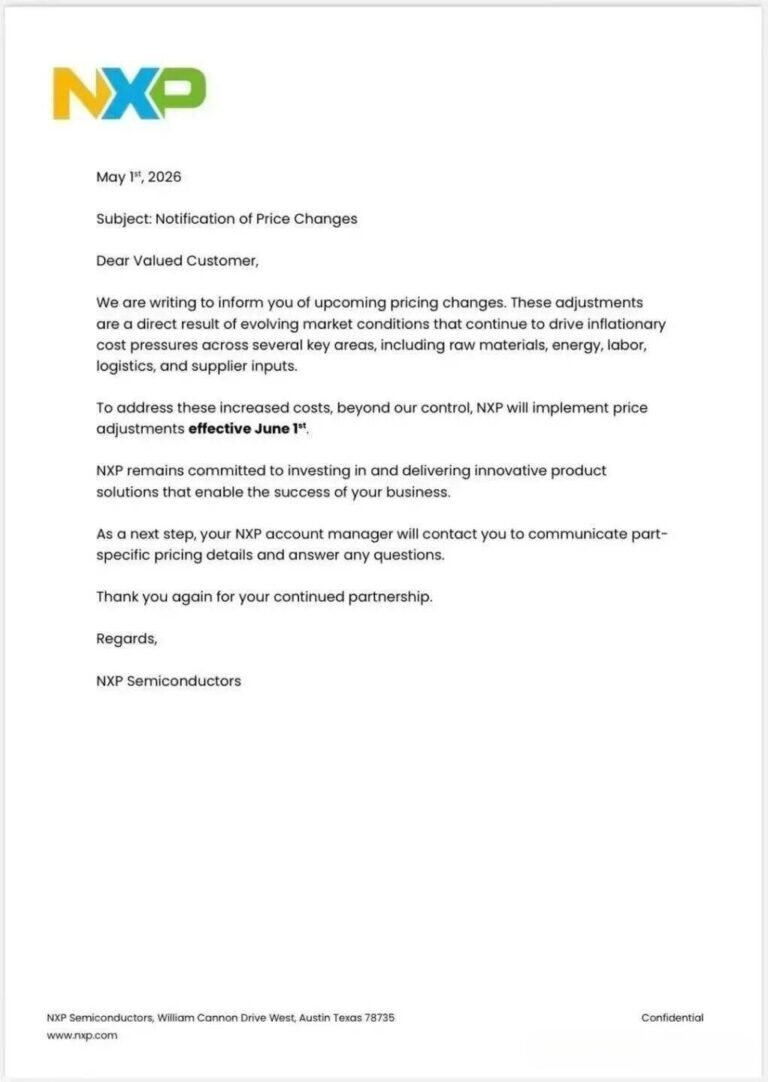
May 8, 2026 – Eindhoven, Netherlands NXP Semiconductors (NXPI), a global leader in automotive and industrial semiconductor solutions, has officially notified its worldwide channel…
Read More
Learn how a pressure transducer converts pressure into voltage, current, or digital output, and compare pressure references and key selection specs.
Read More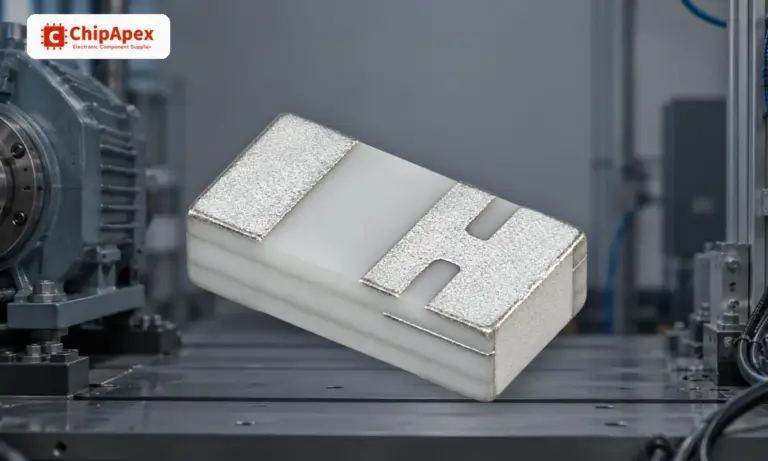
Find out when a bare shock switch needs a pull resistor, when an MCU internal pull-up is enough, and why sensor modules and piezo…
Read More
The activity of extra discounts on wholesale prices is in full swing…
Please fill in your contact information and we will send you the latest wholesale price list.




