 ChipApex | Global Electronic Components Supplier

SEARCH
Search Product
Search Post
— IC芯片 | 连接器 | 传感器 | 被动器件 —
Search productSearch post
— IC芯片 | 连接器 | 传感器 | 被动器件 —
Consult the customer manager about the wholesale price.
consultation hotline:86-132-6715-2157
email:chipapex@foxmail.com
Contact the product manager for consultation. One-stop consultation is available.
Do you want a lower wholesale price? Please send us your inquiry and we will reply immediately.
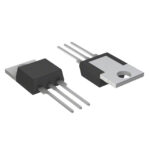
Q6016LH2 is listed in the Triacs range at ChipApex. The manufacturer field lists Littelfuse Inc.. Its product description is TRIAC ALTERNISTOR 600V 16A TO220. Review the specifications below when checking this part for your BOM.
The Littelfuse Q6016LH2 is a bidirectional triac from the Qxx16xHx series, designed for AC switching and phase control. It features a rated repetitive off-state voltage (VDRM) of 600 V and an on-state RMS current (It RMS) of 16 A. The device has a maximum non-repetitive peak on-state current of 200 A and a typical on-state voltage of 1.6 V. Gate triggering parameters include a maximum holding current of 15 mA, a gate trigger voltage of 1.3 V, and a gate trigger current of 10 mA. It operates within a temperature range of -40°C to +125°C and is housed in a TO-220-2 through-hole package.
Verify the specific suffix against the manufacturer's datasheet to confirm pinout and electrical characteristics. Ordering suffixes may indicate variations in packaging or testing standards. Ensure the component meets RoHS compliance requirements for the intended market. Cross-reference the part number with official Littelfuse documentation to avoid substitution errors.
Select this component for applications requiring 600 V blocking voltage and 16 A continuous current handling. The Alternistor design is suitable for circuits demanding high dv/dt immunity. Verify that the gate drive circuit can supply at least 10 mA at 1.3 V for reliable triggering. Consider the TO-220-2 package size for thermal dissipation needs in the target enclosure.
This part belongs to the Qxx16xHx series of 16 Amp Alternistor Triacs by Littelfuse. These devices are engineered for high commutation performance compared to standard triacs. The series supports various packages including TO-220 variants for different thermal and mechanical integration requirements.
Direct replacements must match the 600 V rating, 16 A current capacity, and Alternistor functionality. Verify gate sensitivity and holding current compatibility. Check package dimensions for mechanical fit. Consult Littelfuse application notes for equivalent part numbers within the same family.
Explore related parts through Thyristors, Discrete Semiconductor Products, all product categories, ChipApex homepage.
 Q6016LH2

Q6016LH2 is listed in the Triacs range at ChipApex. The manufacturer field lists Littelfuse Inc.. Its product description is TRIAC ALTERNISTOR 600V 16A TO220.…
Read More
See how a MEMS gyroscope measures angular rate, why its angle estimate drifts, and which range, noise, interface and temperature specs to compare.
Read More
Learn how a pressure transducer converts pressure into voltage, current, or digital output, and compare pressure references and key selection specs.
Read More
Understand how a comparator switches at a voltage threshold, why hysteresis prevents chatter, and which output and input specs matter.
Read More
Q6016LH2 is listed in the Triacs range at ChipApex. The manufacturer field lists Littelfuse Inc.. Its product description is TRIAC ALTERNISTOR 600V 16A TO220.…
Read More
Q6016LH2 is listed in the Triacs range at ChipApex. The manufacturer field lists Littelfuse Inc.. Its product description is TRIAC ALTERNISTOR 600V 16A TO220.…
Read More
Find out when a bare shock switch needs a pull resistor, when an MCU internal pull-up is enough, and why sensor modules and piezo…
Read More
Q6016LH2 is listed in the Triacs range at ChipApex. The manufacturer field lists Littelfuse Inc.. Its product description is TRIAC ALTERNISTOR 600V 16A TO220.…
Read More
Q6016LH2 is listed in the Triacs range at ChipApex. The manufacturer field lists Littelfuse Inc.. Its product description is TRIAC ALTERNISTOR 600V 16A TO220.…
Read More
Q6016LH2 is listed in the Triacs range at ChipApex. The manufacturer field lists Littelfuse Inc.. Its product description is TRIAC ALTERNISTOR 600V 16A TO220.…
Read More
Q6016LH2 is listed in the Triacs range at ChipApex. The manufacturer field lists Littelfuse Inc.. Its product description is TRIAC ALTERNISTOR 600V 16A TO220.…
Read More
See when an inductor behaves linearly, how DC bias and saturation reduce inductance, and which current and temperature curves to check.
Read More
The activity of extra discounts on wholesale prices is in full swing…
Please fill in your contact information and we will send you the latest wholesale price list.





