 ChipApex | Global Electronic Components Supplier

SEARCH
Search Product
Search Post
— IC芯片 | 连接器 | 传感器 | 被动器件 —
Search productSearch post
— IC芯片 | 连接器 | 传感器 | 被动器件 —
Consult the customer manager about the wholesale price.
consultation hotline:86-132-6715-2157
email:[email protected]
Contact the product manager for consultation. One-stop consultation is available.
Do you want a lower wholesale price? Please send us your inquiry and we will reply immediately.
Q8016NH6RP is listed in the Triacs range at ChipApex. The manufacturer field lists Littelfuse Inc.. Its product description is TRIAC ALTERNISTOR 800V 16A TO263. Review the specifications below when checking this part for your BOM.
The Littelfuse Q8016NH6RP is a bidirectional triac designed for high-power switching applications. It features an RMS on-state current of 16 A and a rated repetitive off-state voltage (VDRM) of 800 V. The device exhibits a maximum on-state voltage of 1.6 V and a gate trigger current (Igt) of 80 mA. Non-repetitive peak on-state currents are specified at 167 A and 200 A under different conditions. Leakage current in the off-state is limited to 100 uA at VDRM. The component operates within a temperature range of -40 C to +125 C and is housed in an SMTO-263-2 surface-mount package.
Verify the specific suffix RP against official Littelfuse documentation to confirm reel packaging and tape specifications. Ensure compatibility with standard SMD reflow profiles. Cross-reference the Mouser part number 576-Q8016NH6RP with manufacturer datasheets to validate lot traceability and RoHS compliance status prior to procurement.
Select this component when an 800 V blocking voltage and 16 A continuous current rating are required in a compact surface-mount form factor. Consider the 80 mA gate trigger current requirement for driver circuit design. Evaluate thermal management needs given the 1.6 V on-state voltage drop during conduction periods.
This triac belongs to the Qxx16xHx series from Littelfuse, which focuses on robust thyristor solutions for industrial environments. The Q8016NH6RP shares core electrical characteristics with other variants in the family but differs in packaging and handling specifications. It serves as a key component in the broader Littelfuse thyristor portfolio.
QK016NH6TP offers similar 16 A performance but with a higher 1 kV voltage rating. Q8016NH3TP provides comparable current handling with different gate trigger parameters. Verify pinout compatibility and thermal resistance values before substituting.
Explore related parts through Thyristors, Discrete Semiconductor Products, all product categories, ChipApex homepage.
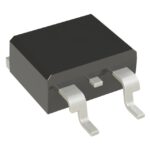 Q8016NH6RP

Understand how oscillators generate timing signals, how they differ from crystals, and which frequency, output and stability specs matter when choosing one.
Read More
Q8016NH6RP is listed in the Triacs range at ChipApex. The manufacturer field lists Littelfuse Inc.. Its product description is TRIAC ALTERNISTOR 800V 16A TO263.…
Read More
Learn how a diode conducts, how to identify anode and cathode, and when to choose rectifier, TVS, Zener or photodiode types for a circuit.
Read More
Q8016NH6RP is listed in the Triacs range at ChipApex. The manufacturer field lists Littelfuse Inc.. Its product description is TRIAC ALTERNISTOR 800V 16A TO263.…
Read More
Q8016NH6RP is listed in the Triacs range at ChipApex. The manufacturer field lists Littelfuse Inc.. Its product description is TRIAC ALTERNISTOR 800V 16A TO263.…
Read More
Q8016NH6RP is listed in the Triacs range at ChipApex. The manufacturer field lists Littelfuse Inc.. Its product description is TRIAC ALTERNISTOR 800V 16A TO263.…
Read More
Q8016NH6RP is listed in the Triacs range at ChipApex. The manufacturer field lists Littelfuse Inc.. Its product description is TRIAC ALTERNISTOR 800V 16A TO263.…
Read More
Q8016NH6RP is listed in the Triacs range at ChipApex. The manufacturer field lists Littelfuse Inc.. Its product description is TRIAC ALTERNISTOR 800V 16A TO263.…
Read More
Learn the relay definition, coil and contact operation, NO and NC forms, load ratings and suppression choices. Compare mechanical, reed and solid-state types.
Read More
See how a MEMS gyroscope measures angular rate, why its angle estimate drifts, and which range, noise, interface and temperature specs to compare.
Read More
Understand how a comparator switches at a voltage threshold, why hysteresis prevents chatter, and which output and input specs matter.
Read More
Learn why PTC resistance rises with temperature, how it differs from NTC, and which ratings matter for sensing and protection.
Read More
The activity of extra discounts on wholesale prices is in full swing…
Please fill in your contact information and we will send you the latest wholesale price list.





