 ChipApex | Global Electronic Components Supplier

SEARCH
Search Product
Search Post
— IC芯片 | 连接器 | 传感器 | 被动器件 —
Search productSearch post
— IC芯片 | 连接器 | 传感器 | 被动器件 —
Consult the customer manager about the wholesale price.
consultation hotline:86-132-6715-2157
email:[email protected]
Contact the product manager for consultation. One-stop consultation is available.
Do you want a lower wholesale price? Please send us your inquiry and we will reply immediately.
R1161N181B-TR-FE is listed in the Voltage Regulators - Linear, Low Drop Out (LDO) Regulators range at ChipApex. The manufacturer field lists Nisshinbo Micro Devices Inc.. Its product description is IC REG LINEAR 1.8V 300MA SOT23-5. Review the specifications below when checking this part for your BOM.
The R1161N181B-TR-FE is a low dropout regulator manufactured by Nisshinbo Micro Devices. It provides a fixed output voltage of 1.8V with a maximum output current capability of 300mA. The device operates within an input voltage range from 1.4V to 6V and features a typical dropout voltage of 0.23V at full load for this output variant. It incorporates Eco Mode shift functionality to minimize quiescent current during light load conditions, achieving standby currents as low as 0.1μA. The component is housed in a compact SOT-23-5 package.
Verify the specific suffix codes against official datasheets to confirm output voltage accuracy and package type. Ensure compatibility with required thermal dissipation limits given the small form factor. Confirm RoHS compliance status through manufacturer documentation before integration into final assemblies.
Select this component when a fixed 1.8V output is required with moderate current demands up to 300mA. Consider the low standby current feature for applications prioritizing energy efficiency over high-speed transient performance. Evaluate the SOT-23-5 footprint constraints against available board space.
This part belongs to the R1161N series of low dropout regulators designed for battery-operated equipment. The series emphasizes ultra-low power consumption through advanced Eco Mode shifting mechanisms. It serves as a power management solution for mobile and handheld devices where battery longevity is critical.
Check for direct pin-compatible alternatives within the same Nisshinbo family that offer different output voltages or current ratings. Verify electrical parameter equivalence for any cross-brand substitutes to ensure system stability.
Explore related parts through Power Management (PMIC), Integrated Circuits (ICs), all product categories, ChipApex homepage.
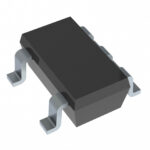 R1161N181B-TR-FE
R1161N181B-TR-FE is listed in the Voltage Regulators - Linear, Low Drop Out (LDO) Regulators range at ChipApex. The manufacturer field lists Nisshinbo Micro Devices…
Read More
R1161N181B-TR-FE is listed in the Voltage Regulators - Linear, Low Drop Out (LDO) Regulators range at ChipApex. The manufacturer field lists Nisshinbo Micro Devices…
Read More
R1161N181B-TR-FE is listed in the Voltage Regulators - Linear, Low Drop Out (LDO) Regulators range at ChipApex. The manufacturer field lists Nisshinbo Micro Devices…
Read More
R1161N181B-TR-FE is listed in the Voltage Regulators - Linear, Low Drop Out (LDO) Regulators range at ChipApex. The manufacturer field lists Nisshinbo Micro Devices…
Read More
R1161N181B-TR-FE is listed in the Voltage Regulators - Linear, Low Drop Out (LDO) Regulators range at ChipApex. The manufacturer field lists Nisshinbo Micro Devices…
Read More
Learn how a diode conducts, how to identify anode and cathode, and when to choose rectifier, TVS, Zener or photodiode types for a circuit.
Read More
R1161N181B-TR-FE is listed in the Voltage Regulators - Linear, Low Drop Out (LDO) Regulators range at ChipApex. The manufacturer field lists Nisshinbo Micro Devices…
Read More
R1161N181B-TR-FE is listed in the Voltage Regulators - Linear, Low Drop Out (LDO) Regulators range at ChipApex. The manufacturer field lists Nisshinbo Micro Devices…
Read More
Choose a DIP switch by contact type, coded positions, footprint and signal ratings. Check logic polarity, assembly conditions and PCB configuration behavior.
Read More
R1161N181B-TR-FE is listed in the Voltage Regulators - Linear, Low Drop Out (LDO) Regulators range at ChipApex. The manufacturer field lists Nisshinbo Micro Devices…
Read More
R1161N181B-TR-FE is listed in the Voltage Regulators - Linear, Low Drop Out (LDO) Regulators range at ChipApex. The manufacturer field lists Nisshinbo Micro Devices…
Read More
Learn why PTC resistance rises with temperature, how it differs from NTC, and which ratings matter for sensing and protection.
Read More
The activity of extra discounts on wholesale prices is in full swing…
Please fill in your contact information and we will send you the latest wholesale price list.




