 ChipApex | Global Electronic Components Supplier

SEARCH
Search Product
Search Post
— IC芯片 | 连接器 | 传感器 | 被动器件 —
Search productSearch post
— IC芯片 | 连接器 | 传感器 | 被动器件 —
Consult the customer manager about the wholesale price.
consultation hotline:86-132-6715-2157
email:[email protected]
Contact the product manager for consultation. One-stop consultation is available.
Do you want a lower wholesale price? Please send us your inquiry and we will reply immediately.
SG-9101CG-C02SHAAA is listed in the Programmable Oscillators range at ChipApex. The manufacturer field lists EPSON. Its product description is XTAL OSC PROG XO CMOS CTR SPRD. Review the specifications below when checking this part for your BOM.
The SG-9101CG-C02SHAAA is a programmable crystal oscillator from the EPSON SG-9101 series. It features a CMOS output type and operates within a frequency range of 670 kHz to 170 MHz. The device supports a supply voltage of 1.62V to 3.63V and includes a standby function. It is housed in a 4-SMD, no lead package with dimensions of 2.50mm x 2.00mm x 0.80mm. The unit is rated for an operating temperature range of -40°C to 105°C and utilizes a basic resonator of crystal type.
Verify the specific ordering suffix to confirm the exact frequency programming requirements and package variant. Ensure compatibility with the target system's voltage levels and thermal constraints. Confirm RoHS compliance status if required by regulatory standards. Check datasheet specifications for maximum current draw during active and standby modes to validate power budget allocation.
Select this component when a programmable solution is needed for frequencies up to 170 MHz with CMOS output compatibility. Consider the 4-SMD package size for board layout constraints. Evaluate the need for spread spectrum capabilities to meet EMC requirements. Ensure the operating temperature range aligns with the intended application environment.
This part belongs to the SG-9101Cx series of programmable spread spectrum crystal oscillators. The series offers various frequency ranges and package options. The SG-9101CG-C02SHAAA specifically targets applications requiring standard XO performance with programmability and spread spectrum features in a small footprint.
Direct substitutes include other SG-9101CG variants with different frequency programming or package sizes. Verify pinout compatibility and electrical characteristics before substitution. Consult EPSON documentation for cross-reference information regarding equivalent models within the same product family.
Explore related parts through Crystals, Oscillators, Resonators, all product categories, ChipApex homepage.
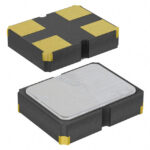 SG-9101CG-C02SHAAA
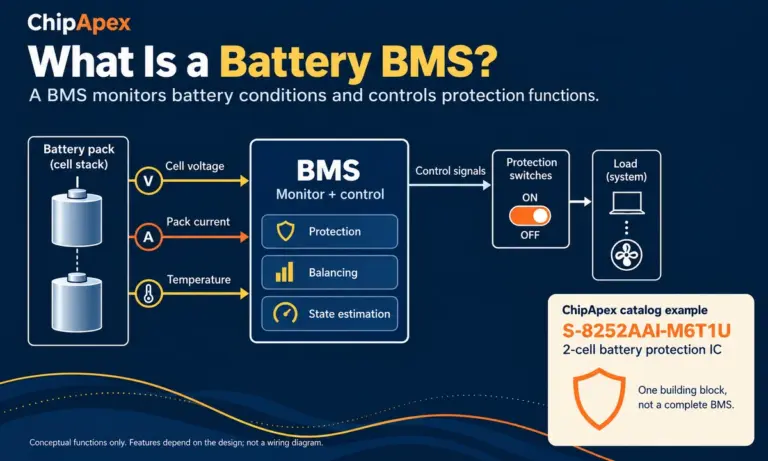
Learn what a battery BMS does, how protection differs from charging, and which pack specifications to check when sourcing BMS components through ChipApex.
Read More
SG-9101CG-C02SHAAA is listed in the Programmable Oscillators range at ChipApex. The manufacturer field lists EPSON. Its product description is XTAL OSC PROG XO CMOS…
Read More
SG-9101CG-C02SHAAA is listed in the Programmable Oscillators range at ChipApex. The manufacturer field lists EPSON. Its product description is XTAL OSC PROG XO CMOS…
Read More
SG-9101CG-C02SHAAA is listed in the Programmable Oscillators range at ChipApex. The manufacturer field lists EPSON. Its product description is XTAL OSC PROG XO CMOS…
Read More
Choose a DIP switch by contact type, coded positions, footprint and signal ratings. Check logic polarity, assembly conditions and PCB configuration behavior.
Read More
SG-9101CG-C02SHAAA is listed in the Programmable Oscillators range at ChipApex. The manufacturer field lists EPSON. Its product description is XTAL OSC PROG XO CMOS…
Read More
SG-9101CG-C02SHAAA is listed in the Programmable Oscillators range at ChipApex. The manufacturer field lists EPSON. Its product description is XTAL OSC PROG XO CMOS…
Read More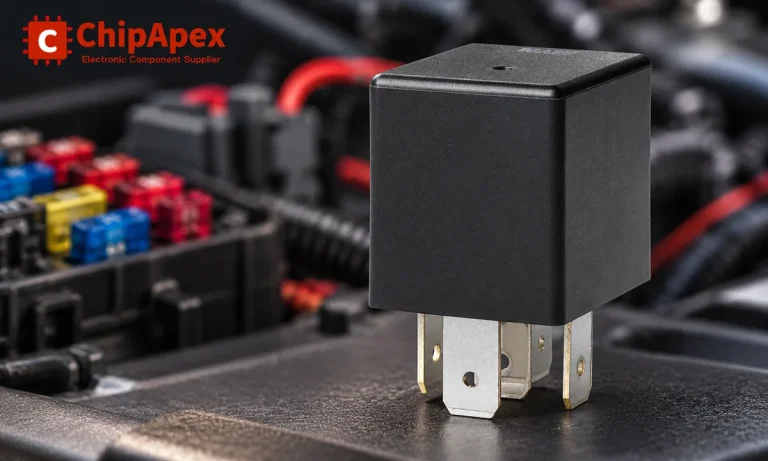
Learn the relay definition, coil and contact operation, NO and NC forms, load ratings and suppression choices. Compare mechanical, reed and solid-state types.
Read More
SG-9101CG-C02SHAAA is listed in the Programmable Oscillators range at ChipApex. The manufacturer field lists EPSON. Its product description is XTAL OSC PROG XO CMOS…
Read More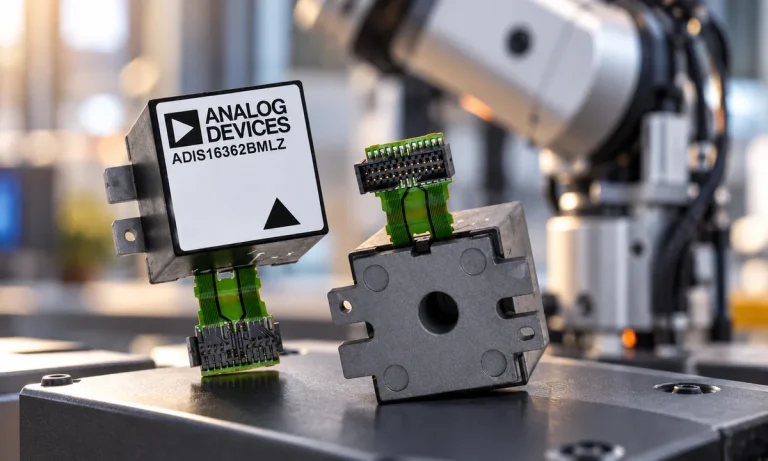
Learn what an IMU measures, how accelerometers and gyroscopes work together, why orientation estimates drift, and what to compare.
Read More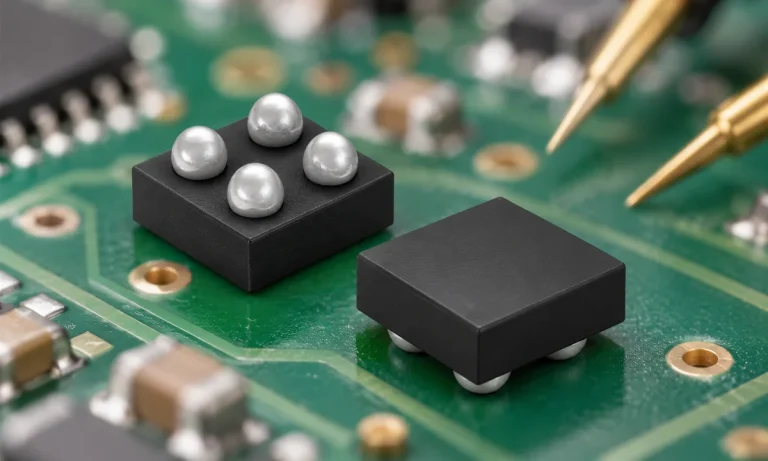
Understand how a comparator switches at a voltage threshold, why hysteresis prevents chatter, and which output and input specs matter.
Read More
See when an inductor behaves linearly, how DC bias and saturation reduce inductance, and which current and temperature curves to check.
Read More
The activity of extra discounts on wholesale prices is in full swing…
Please fill in your contact information and we will send you the latest wholesale price list.





