 ChipApex | Global Electronic Components Supplier

SEARCH
Search Product
Search Post
— IC芯片 | 连接器 | 传感器 | 被动器件 —
Search productSearch post
— IC芯片 | 连接器 | 传感器 | 被动器件 —
Consult the customer manager about the wholesale price.
consultation hotline:86-132-6715-2157
email:[email protected]
Contact the product manager for consultation. One-stop consultation is available.
Do you want a lower wholesale price? Please send us your inquiry and we will reply immediately.
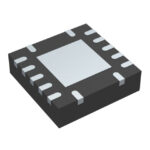
SN74ABT126RGYR is listed in the Buffers, Drivers, Receivers, Transceivers range at ChipApex. The manufacturer field lists Texas Instruments. Its product description is IC BUFF NON-INVERT 5.5V 14VQFN. Review the specifications below when checking this part for your BOM.
The SN74ABT126RGYR is a quad bus buffer gate from the ABT logic series, manufactured by Texas Instruments. It features four non-inverting inputs and outputs housed in a 14-VQFN package. The device operates within a supply voltage range of 4.5 V to 5.5 V. Key electrical parameters include a propagation delay of 5.1 ns, high-level output current of -32 mA, and low-level output current of 64 mA. It supports surface-mount installation and functions reliably across an operating temperature range of -40°C to +85°C.
Verify the specific suffix RGYR corresponds to the 14-VQFN package variant. Confirm RoHS compliance status through official manufacturer documentation. Ensure moisture sensitivity level handling procedures are followed during assembly. Cross-reference the datasheet revision date to guarantee parameter accuracy against design requirements.
Select this component when a 5V logic interface requires buffered output with tri-state functionality. Compare propagation delay specifications against system timing constraints. Evaluate package thermal performance for the target application environment. Consider pin compatibility if replacing legacy 74-series buffers in existing designs.
This part belongs to the SN74ABT126 family of quad bus buffers. It shares functional similarities with the SN74ABT125 but differs in enable polarity. The RGYR suffix denotes the specific VQFN-14 packaging configuration used for surface-mount applications.
SN74ABT125RGYR offers identical electrical characteristics but utilizes active-high enable inputs instead of active-low. Verify logic polarity requirements before substituting to ensure correct circuit operation.
Explore related parts through Logic, Integrated Circuits (ICs), all product categories, ChipApex homepage.
 SN74ABT126RGYR

SN74ABT126RGYR is listed in the Buffers, Drivers, Receivers, Transceivers range at ChipApex. The manufacturer field lists Texas Instruments. Its product description is IC BUFF…
Read More
SN74ABT126RGYR is listed in the Buffers, Drivers, Receivers, Transceivers range at ChipApex. The manufacturer field lists Texas Instruments. Its product description is IC BUFF…
Read More
SN74ABT126RGYR is listed in the Buffers, Drivers, Receivers, Transceivers range at ChipApex. The manufacturer field lists Texas Instruments. Its product description is IC BUFF…
Read More
SN74ABT126RGYR is listed in the Buffers, Drivers, Receivers, Transceivers range at ChipApex. The manufacturer field lists Texas Instruments. Its product description is IC BUFF…
Read More
SN74ABT126RGYR is listed in the Buffers, Drivers, Receivers, Transceivers range at ChipApex. The manufacturer field lists Texas Instruments. Its product description is IC BUFF…
Read More
SN74ABT126RGYR is listed in the Buffers, Drivers, Receivers, Transceivers range at ChipApex. The manufacturer field lists Texas Instruments. Its product description is IC BUFF…
Read More
SN74ABT126RGYR is listed in the Buffers, Drivers, Receivers, Transceivers range at ChipApex. The manufacturer field lists Texas Instruments. Its product description is IC BUFF…
Read More
Choose LED drivers by current, string voltage, dimming and thermal limits. Understand constant-current operation and the checks needed for your load.
Read More
SN74ABT126RGYR is listed in the Buffers, Drivers, Receivers, Transceivers range at ChipApex. The manufacturer field lists Texas Instruments. Its product description is IC BUFF…
Read More
SN74ABT126RGYR is listed in the Buffers, Drivers, Receivers, Transceivers range at ChipApex. The manufacturer field lists Texas Instruments. Its product description is IC BUFF…
Read More
Understand how a comparator switches at a voltage threshold, why hysteresis prevents chatter, and which output and input specs matter.
Read More
See when an inductor behaves linearly, how DC bias and saturation reduce inductance, and which current and temperature curves to check.
Read More
The activity of extra discounts on wholesale prices is in full swing…
Please fill in your contact information and we will send you the latest wholesale price list.





