 ChipApex | Global Electronic Components Supplier

SEARCH
Search Product
Search Post
— IC芯片 | 连接器 | 传感器 | 被动器件 —
Search productSearch post
— IC芯片 | 连接器 | 传感器 | 被动器件 —
Consult the customer manager about the wholesale price.
consultation hotline:86-132-6715-2157
email:[email protected]
Contact the product manager for consultation. One-stop consultation is available.
Do you want a lower wholesale price? Please send us your inquiry and we will reply immediately.
SN74ALS541-1DW is listed in the Buffers, Drivers, Receivers, Transceivers range at ChipApex. The manufacturer field lists Texas Instruments. Its product description is IC BUF NON-INVERT 5.5V 20SOIC. Review the specifications below when checking this part for your BOM.
The SN74ALS541-1DW is an octal buffer and line driver from the Texas Instruments ALS logic family. It features eight non-inverting outputs with three-state capability, housed in a 20-pin SOIC package. The device operates within a supply voltage range of 4.75 V to 5.25 V. Key electrical characteristics include a high-level output current of -15 mA and a low-level output current of 48 mA. Static current consumption is specified at 6 mA, while operating power supply current reaches 25 mA. The component supports surface mount installation and functions reliably within an ambient temperature range of 0°C to +70°C.
Verify the specific suffix '-1' against the manufacturer datasheet to confirm pinout or functional variations compared to standard variants. Ensure the SOIC-20 package dimensions match the target PCB footprint. Confirm RoHS compliance status for the specific manufacturing lot before integration into regulated assemblies.
Select this component when designing systems requiring high-speed buffering with significant load-driving capabilities. The ALS series offers a balance between speed and power consumption. Verify that the system voltage remains strictly within the 4.75 V to 5.25 V window to ensure proper logic levels and avoid damage to the internal circuitry.
This part belongs to the SN74ALS54x series of octal buffers and line drivers. It shares architectural similarities with the SN74ALS540 but differs in signal polarity. The device is designed for high-performance digital applications where signal integrity and bus isolation are critical requirements for system operation.
SN74ALS541DWR: Same logical function and pinout in a tape-and-reel SOIC-20 package.
Explore related parts through Logic, Integrated Circuits (ICs), all product categories, ChipApex homepage.
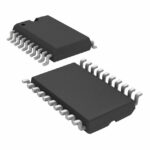 SN74ALS541-1DW
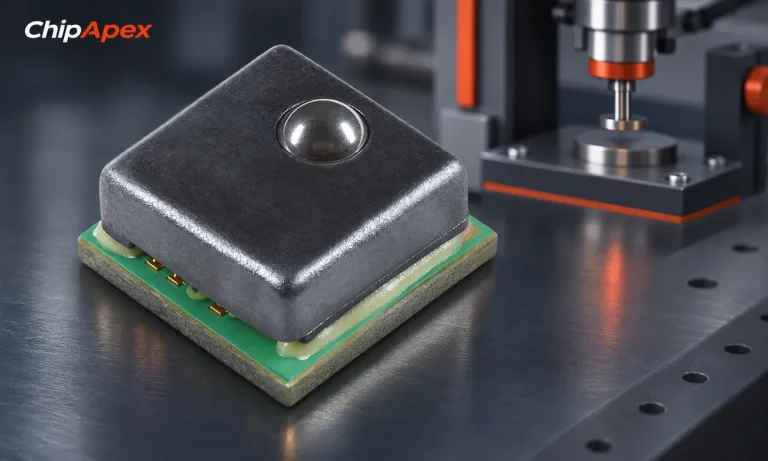
Understand load cell sensor output, bridge wiring and calibration. Learn how mV/V sensitivity, mechanics and ADC noise affect measurement accuracy.
Read More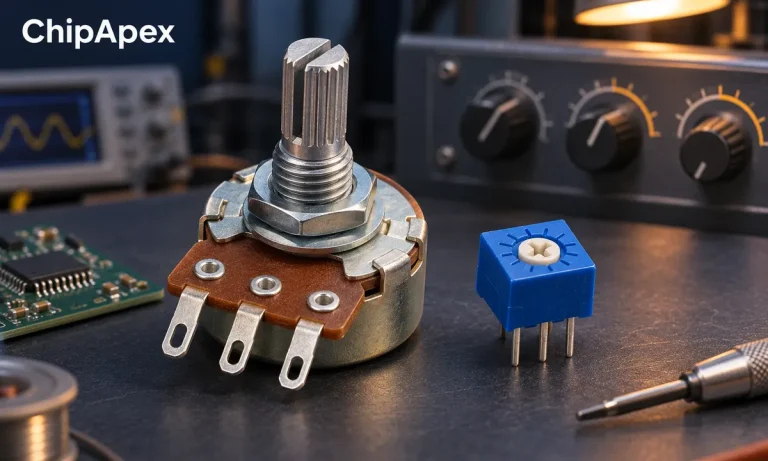
Compare rheostat and potentiometer wiring and functions. Understand divider loading, wiper current, track power and practical component selection.
Read More
SN74ALS541-1DW is listed in the Buffers, Drivers, Receivers, Transceivers range at ChipApex. The manufacturer field lists Texas Instruments. Its product description is IC BUF…
Read More
SN74ALS541-1DW is listed in the Buffers, Drivers, Receivers, Transceivers range at ChipApex. The manufacturer field lists Texas Instruments. Its product description is IC BUF…
Read More
SN74ALS541-1DW is listed in the Buffers, Drivers, Receivers, Transceivers range at ChipApex. The manufacturer field lists Texas Instruments. Its product description is IC BUF…
Read More
SN74ALS541-1DW is listed in the Buffers, Drivers, Receivers, Transceivers range at ChipApex. The manufacturer field lists Texas Instruments. Its product description is IC BUF…
Read More
SN74ALS541-1DW is listed in the Buffers, Drivers, Receivers, Transceivers range at ChipApex. The manufacturer field lists Texas Instruments. Its product description is IC BUF…
Read More
SN74ALS541-1DW is listed in the Buffers, Drivers, Receivers, Transceivers range at ChipApex. The manufacturer field lists Texas Instruments. Its product description is IC BUF…
Read More
SN74ALS541-1DW is listed in the Buffers, Drivers, Receivers, Transceivers range at ChipApex. The manufacturer field lists Texas Instruments. Its product description is IC BUF…
Read More
SN74ALS541-1DW is listed in the Buffers, Drivers, Receivers, Transceivers range at ChipApex. The manufacturer field lists Texas Instruments. Its product description is IC BUF…
Read More
Learn how an analog front end conditions sensor signals. Compare gain, noise, filtering, ADC settling and integration options before selecting components.
Read More
Find out when a bare shock switch needs a pull resistor, when an MCU internal pull-up is enough, and why sensor modules and piezo…
Read More
The activity of extra discounts on wholesale prices is in full swing…
Please fill in your contact information and we will send you the latest wholesale price list.





