 ChipApex | Global Electronic Components Supplier

SEARCH
Search Product
Search Post
— IC芯片 | 连接器 | 传感器 | 被动器件 —
Search productSearch post
— IC芯片 | 连接器 | 传感器 | 被动器件 —
Consult the customer manager about the wholesale price.
consultation hotline:86-132-6715-2157
email:[email protected]
Contact the product manager for consultation. One-stop consultation is available.
Do you want a lower wholesale price? Please send us your inquiry and we will reply immediately.
SN74BCT541ADW is listed in the Buffers, Drivers, Receivers, Transceivers range at ChipApex. The manufacturer field lists Texas Instruments. Its product description is IC BUF NON-INVERT 5.5V 20SOIC. Review the specifications below when checking this part for your BOM.
The SN74BCT541ADW is an octal buffer and line driver featuring non-inverting logic with three-state outputs, manufactured by Texas Instruments. It operates within a supply voltage range of 4.5 V to 5.5 V and supports eight input lines corresponding to eight output lines. The device utilizes a 20-pin SOIC (DW) package and functions reliably across a temperature range of 0°C to 70°C. Designed for bus driving applications, it provides high-current drive capabilities suitable for interfacing between different logic families or driving external loads on system buses.
Verify the specific suffix 'DW' confirms the 20-pin SOIC package and commercial temperature range (0°C to 70°C). Ensure compatibility with 5-V power supplies, as operation below 4.5 V is outside specifications. Confirm RoHS compliance status through official manufacturer documentation prior to procurement.
Select this component when eight-channel buffering with tri-state control is required for 5-V systems. It serves as a direct replacement for similar octal buffers in legacy designs. Consider thermal performance and pinout compatibility if substituting from other manufacturers offering equivalent BCT series devices.
This part belongs to the SN74BCT family, which combines BiCMOS technology for high speed with CMOS low power consumption. The 541 variant specifically denotes an octal buffer/driver architecture. It is widely used in industrial and consumer electronics where reliable bus interfacing at 5-V logic levels is essential.
SN74BCT541ADWR is available in tape-and-reel packaging for automated assembly. SN74ABT541BDWR offers faster switching speeds but requires careful attention to voltage level differences.
Explore related parts through Logic, Integrated Circuits (ICs), all product categories, ChipApex homepage.
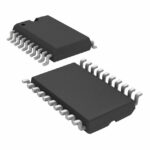 SN74BCT541ADW
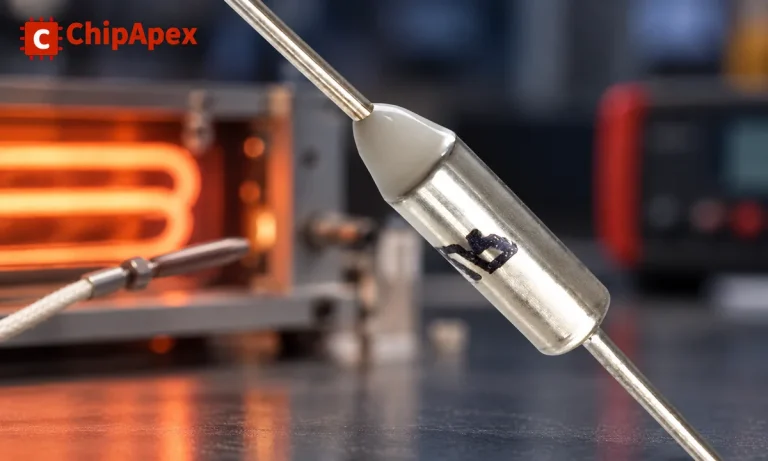
Understand thermal fuse operation, Tf, Th and Tm, electrical ratings and mounting. Check temperature limits and replacement requirements for your design.
Read More
Understand how a comparator switches at a voltage threshold, why hysteresis prevents chatter, and which output and input specs matter.
Read More
SN74BCT541ADW is listed in the Buffers, Drivers, Receivers, Transceivers range at ChipApex. The manufacturer field lists Texas Instruments. Its product description is IC BUF…
Read More
SN74BCT541ADW is listed in the Buffers, Drivers, Receivers, Transceivers range at ChipApex. The manufacturer field lists Texas Instruments. Its product description is IC BUF…
Read More
Learn what an IMU measures, how accelerometers and gyroscopes work together, why orientation estimates drift, and what to compare.
Read More
Understand tactile switches, PCB and keyboard differences, four-pin wiring, debounce, force, travel and replacement checks for reliable control inputs.
Read More
SN74BCT541ADW is listed in the Buffers, Drivers, Receivers, Transceivers range at ChipApex. The manufacturer field lists Texas Instruments. Its product description is IC BUF…
Read More
SN74BCT541ADW is listed in the Buffers, Drivers, Receivers, Transceivers range at ChipApex. The manufacturer field lists Texas Instruments. Its product description is IC BUF…
Read More
SN74BCT541ADW is listed in the Buffers, Drivers, Receivers, Transceivers range at ChipApex. The manufacturer field lists Texas Instruments. Its product description is IC BUF…
Read More
SN74BCT541ADW is listed in the Buffers, Drivers, Receivers, Transceivers range at ChipApex. The manufacturer field lists Texas Instruments. Its product description is IC BUF…
Read More
SN74BCT541ADW is listed in the Buffers, Drivers, Receivers, Transceivers range at ChipApex. The manufacturer field lists Texas Instruments. Its product description is IC BUF…
Read More
Compare Pt100 and Pt1000 RTDs, two-, three- and four-wire connections, excitation and self-heating. Build an error budget from element to reported temperature.
Read More
The activity of extra discounts on wholesale prices is in full swing…
Please fill in your contact information and we will send you the latest wholesale price list.





