 ChipApex | Global Electronic Components Supplier

SEARCH
Search Product
Search Post
— IC芯片 | 连接器 | 传感器 | 被动器件 —
Search productSearch post
— IC芯片 | 连接器 | 传感器 | 被动器件 —
Consult the customer manager about the wholesale price.
consultation hotline:86-132-6715-2157
email:[email protected]
Contact the product manager for consultation. One-stop consultation is available.
Do you want a lower wholesale price? Please send us your inquiry and we will reply immediately.
SN74HCS72QDRQ1 is listed in the Flip Flops range at ChipApex. The manufacturer field lists Texas Instruments. Its product description is IC FF D-TYPE DUAL 2BIT 14SOIC. Review the specifications below when checking this part for your BOM.
The SN74HCS72QDRQ1 is an automotive-grade, dual D-type flip-flop featuring Schmitt-trigger inputs and push-pull outputs. It operates within a supply voltage range of 2 V to 6 V and supports a maximum clock frequency of 105 MHz. The device exhibits a propagation delay of 7 ns with output currents of ±7.8 mA. Designed for harsh environments, it functions between -40°C and +125°C and holds AEC-Q100 qualification. Packaged in SOIC-14, this HCS series component provides balanced outputs and positive input clamp diodes for reliable signal integrity.
Verify the specific ordering suffix matches the required package type and tape/reel configuration. Confirm that the AEC-Q100 grade aligns with the target automotive application requirements. Check datasheet revisions for any updates to electrical characteristics or recommended operating conditions before finalizing procurement specifications.
Select this component when dual independent D-type storage with noise-tolerant inputs is required. The HCS technology offers higher speed than standard HC logic while maintaining low power consumption. Ensure the system voltage falls within the 2 V to 6 V range and that the SOIC-14 footprint fits the PCB layout constraints.
This part belongs to Texas Instruments' SN74HCS family, which combines high-speed CMOS performance with automotive durability. The Q1 suffix indicates AEC-Q100 qualification, while the DRQ1 suffix specifies the SOIC-14 package with automotive-grade manufacturing. It serves as a foundational building block for sequential logic in safety-critical automotive designs.
SN74HCS72-Q1 is the non-automotive qualified counterpart with identical electrical specifications but lacks AEC-Q100 certification. Verify if the automotive qualification is strictly necessary for the end-use environment before substituting.
Explore related parts through Logic, Integrated Circuits (ICs), all product categories, ChipApex homepage.
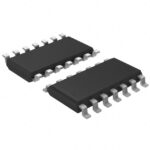 SN74HCS72QDRQ1

See how a MEMS gyroscope measures angular rate, why its angle estimate drifts, and which range, noise, interface and temperature specs to compare.
Read More
SN74HCS72QDRQ1 is listed in the Flip Flops range at ChipApex. The manufacturer field lists Texas Instruments. Its product description is IC FF D-TYPE DUAL…
Read More
SN74HCS72QDRQ1 is listed in the Flip Flops range at ChipApex. The manufacturer field lists Texas Instruments. Its product description is IC FF D-TYPE DUAL…
Read More
SN74HCS72QDRQ1 is listed in the Flip Flops range at ChipApex. The manufacturer field lists Texas Instruments. Its product description is IC FF D-TYPE DUAL…
Read More
Learn what an integrated circuit is, how ICs work, the main types and the specs to check before choosing a part for your design…
Read More
SN74HCS72QDRQ1 is listed in the Flip Flops range at ChipApex. The manufacturer field lists Texas Instruments. Its product description is IC FF D-TYPE DUAL…
Read More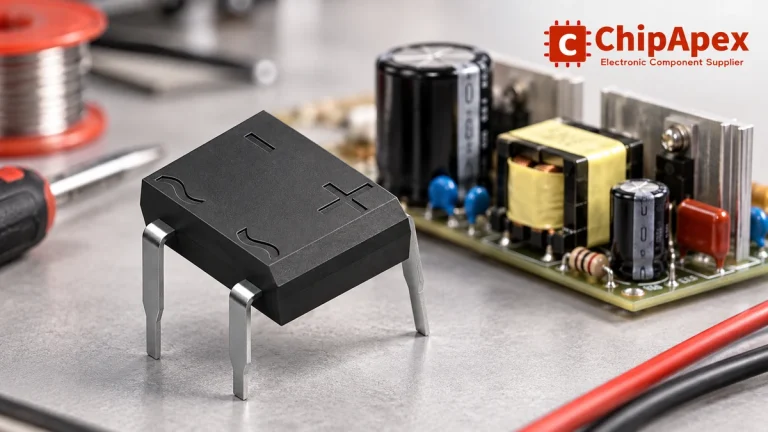
Select a bridge rectifier by reverse voltage, capacitor charging current, startup surge and cooling. Work through a stated DC voltage and ripple example.
Read More
SN74HCS72QDRQ1 is listed in the Flip Flops range at ChipApex. The manufacturer field lists Texas Instruments. Its product description is IC FF D-TYPE DUAL…
Read More
SN74HCS72QDRQ1 is listed in the Flip Flops range at ChipApex. The manufacturer field lists Texas Instruments. Its product description is IC FF D-TYPE DUAL…
Read More
SN74HCS72QDRQ1 is listed in the Flip Flops range at ChipApex. The manufacturer field lists Texas Instruments. Its product description is IC FF D-TYPE DUAL…
Read More
SN74HCS72QDRQ1 is listed in the Flip Flops range at ChipApex. The manufacturer field lists Texas Instruments. Its product description is IC FF D-TYPE DUAL…
Read More
Understand how a comparator switches at a voltage threshold, why hysteresis prevents chatter, and which output and input specs matter.
Read More
The activity of extra discounts on wholesale prices is in full swing…
Please fill in your contact information and we will send you the latest wholesale price list.





