 ChipApex | Global Electronic Components Supplier

SEARCH
Search Product
Search Post
— IC芯片 | 连接器 | 传感器 | 被动器件 —
Search productSearch post
— IC芯片 | 连接器 | 传感器 | 被动器件 —
Consult the customer manager about the wholesale price.
consultation hotline:86-132-6715-2157
email:[email protected]
Contact the product manager for consultation. One-stop consultation is available.
Do you want a lower wholesale price? Please send us your inquiry and we will reply immediately.
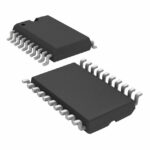
SN74LS240DWR is listed in the Buffers, Drivers, Receivers, Transceivers range at ChipApex. The manufacturer field lists Texas Instruments. Its product description is IC BUFFER INVERT 5.25V 20SOIC. Review the specifications below when checking this part for your BOM.
The SN74LS240DWR is an octal buffer and line driver manufactured by Texas Instruments, belonging to the 74LS logic series. It features eight independent channels with inverting polarity and three-state outputs, housed in a 20-pin SOIC surface-mount package. The device operates within a supply voltage range of 4.75 V to 5.25 V and supports a functional temperature range from 0°C to 70°C. Electrical characteristics include a maximum high-level output current of -15 mA and a low-level output current of 24 mA.
Verify the specific suffix 'DWR' corresponds to the tape-and-reel packaging format required for automated assembly processes. Confirm that the 74LS logic family meets the system's power consumption and speed requirements, as this series differs significantly from modern CMOS alternatives in terms of static power draw and propagation delay characteristics.
Select this component when designing systems requiring standard TTL-compatible logic levels with moderate drive capabilities. Ensure the application environment remains within the specified 0°C to 70°C operating temperature range. Consider the 20-SOIC package dimensions for PCB layout constraints and verify that the 4.75 V to 5.25 V supply voltage aligns with the target circuit design.
This part belongs to the widely used 74-series logic family, specifically the Low-power Schottky (LS) variant known for balanced performance between speed and power dissipation. The SN74LS240DWR shares functional compatibility with other octal buffers like the SN74LS240N, differing primarily in its surface-mount SOIC packaging and reel-based delivery method suitable for high-volume manufacturing.
SN74LS240NSR is a verified equivalent offering identical logical functionality in a similar surface-mount configuration.
Explore related parts through Logic, Integrated Circuits (ICs), all product categories, ChipApex homepage.
 SN74LS240DWR

SN74LS240DWR is listed in the Buffers, Drivers, Receivers, Transceivers range at ChipApex. The manufacturer field lists Texas Instruments. Its product description is IC BUFFER…
Read More
See how a MEMS gyroscope measures angular rate, why its angle estimate drifts, and which range, noise, interface and temperature specs to compare.
Read More
SN74LS240DWR is listed in the Buffers, Drivers, Receivers, Transceivers range at ChipApex. The manufacturer field lists Texas Instruments. Its product description is IC BUFFER…
Read More
Compare RC, crystal and MEMS oscillator circuits. Check ppm, jitter, load capacitance, startup margin and output compatibility before choosing a clock source.
Read More
SN74LS240DWR is listed in the Buffers, Drivers, Receivers, Transceivers range at ChipApex. The manufacturer field lists Texas Instruments. Its product description is IC BUFFER…
Read More
SN74LS240DWR is listed in the Buffers, Drivers, Receivers, Transceivers range at ChipApex. The manufacturer field lists Texas Instruments. Its product description is IC BUFFER…
Read More
SN74LS240DWR is listed in the Buffers, Drivers, Receivers, Transceivers range at ChipApex. The manufacturer field lists Texas Instruments. Its product description is IC BUFFER…
Read More
SN74LS240DWR is listed in the Buffers, Drivers, Receivers, Transceivers range at ChipApex. The manufacturer field lists Texas Instruments. Its product description is IC BUFFER…
Read More
SN74LS240DWR is listed in the Buffers, Drivers, Receivers, Transceivers range at ChipApex. The manufacturer field lists Texas Instruments. Its product description is IC BUFFER…
Read More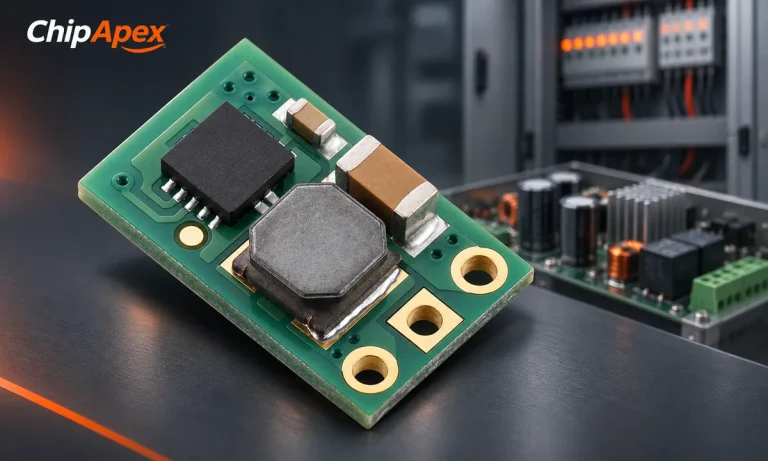
Select a DC-DC converter by input range, topology, isolation and temperature. Compare ripple, efficiency and load limits before choosing a component.
Read More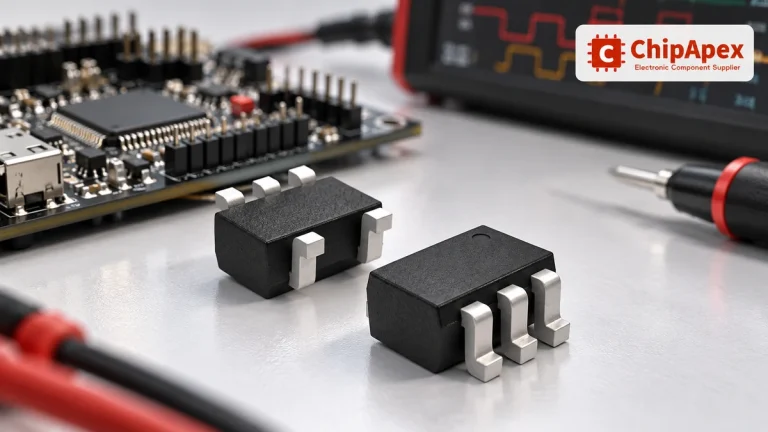
Choose logic inverter ICs by thresholds, supply, output drive and delay. Compare standard and Schmitt-trigger inputs, power sequencing and replacement checks.
Read More
Learn why PTC resistance rises with temperature, how it differs from NTC, and which ratings matter for sensing and protection.
Read More
The activity of extra discounts on wholesale prices is in full swing…
Please fill in your contact information and we will send you the latest wholesale price list.





