 ChipApex | Global Electronic Components Supplier

SEARCH
Search Product
Search Post
— IC芯片 | 连接器 | 传感器 | 被动器件 —
Search productSearch post
— IC芯片 | 连接器 | 传感器 | 被动器件 —
Consult the customer manager about the wholesale price.
consultation hotline:86-132-6715-2157
email:[email protected]
Contact the product manager for consultation. One-stop consultation is available.
Do you want a lower wholesale price? Please send us your inquiry and we will reply immediately.
SN74LS594NSR is listed in the Shift Registers range at ChipApex. The manufacturer field lists Texas Instruments. Its product description is IC SERIAL-IN SHIFT-REG 16SO. Review the specifications below when checking this part for your BOM.
The SN74LS594NSR is an 8-bit shift register with output latches manufactured by Texas Instruments. It belongs to the SN74LS logic series and utilizes a 16-pin SOIC surface-mount package. The device operates within a supply voltage range of 4.75 V to 5.25 V and supports a temperature range from 0°C to +70°C. It features serial input capability for data shifting and parallel output via latched storage, suitable for digital logic applications requiring data retention.
Verify the specific suffix 'NSR' corresponds to the tape-and-reel packaging format required for automated assembly processes. Confirm that the component meets RoHS directives if environmental compliance is mandatory for the target market. Ensure the ordering quantity aligns with the manufacturer's standard reel specifications to avoid handling discrepancies during production integration.
Select this component when an 8-bit shift register with latched outputs is required in a surface-mount design. The LS series offers balanced performance for general-purpose logic applications. Consider the 16-pin SOIC footprint for PCB layout constraints. Verify that the operating voltage and temperature ranges match the system environment before finalizing the bill of materials.
This part is part of the Texas Instruments SN74LS family, which provides low-power Schottky TTL logic functions. The SN74LS594 specifically addresses needs for sequential logic operations involving data shifting and storage. It serves as a standard solution for expanding I/O capabilities in digital circuits where space efficiency and reliable latch operation are prioritized over high-speed switching.
Explore related parts through Logic, Integrated Circuits (ICs), all product categories, ChipApex homepage.
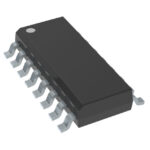 SN74LS594NSR
SN74LS594NSR is listed in the Shift Registers range at ChipApex. The manufacturer field lists Texas Instruments. Its product description is IC SERIAL-IN SHIFT-REG 16SO.…
Read More
SN74LS594NSR is listed in the Shift Registers range at ChipApex. The manufacturer field lists Texas Instruments. Its product description is IC SERIAL-IN SHIFT-REG 16SO.…
Read More
SN74LS594NSR is listed in the Shift Registers range at ChipApex. The manufacturer field lists Texas Instruments. Its product description is IC SERIAL-IN SHIFT-REG 16SO.…
Read More
SN74LS594NSR is listed in the Shift Registers range at ChipApex. The manufacturer field lists Texas Instruments. Its product description is IC SERIAL-IN SHIFT-REG 16SO.…
Read More
SN74LS594NSR is listed in the Shift Registers range at ChipApex. The manufacturer field lists Texas Instruments. Its product description is IC SERIAL-IN SHIFT-REG 16SO.…
Read More
Learn what an integrated circuit is, how ICs work, the main types and the specs to check before choosing a part for your design…
Read More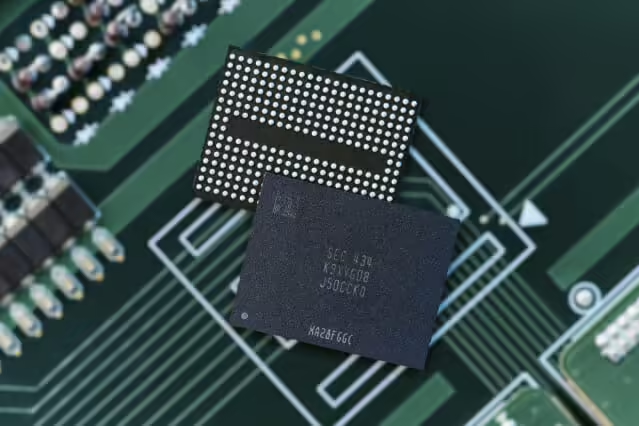
SN74LS594NSR is listed in the Shift Registers range at ChipApex. The manufacturer field lists Texas Instruments. Its product description is IC SERIAL-IN SHIFT-REG 16SO.…
Read More
SN74LS594NSR is listed in the Shift Registers range at ChipApex. The manufacturer field lists Texas Instruments. Its product description is IC SERIAL-IN SHIFT-REG 16SO.…
Read MoreSN74LS594NSR is listed in the Shift Registers range at ChipApex. The manufacturer field lists Texas Instruments. Its product description is IC SERIAL-IN SHIFT-REG 16SO.…
Read More
Find out when a bare shock switch needs a pull resistor, when an MCU internal pull-up is enough, and why sensor modules and piezo…
Read More
SN74LS594NSR is listed in the Shift Registers range at ChipApex. The manufacturer field lists Texas Instruments. Its product description is IC SERIAL-IN SHIFT-REG 16SO.…
Read More
SN74LS594NSR is listed in the Shift Registers range at ChipApex. The manufacturer field lists Texas Instruments. Its product description is IC SERIAL-IN SHIFT-REG 16SO.…
Read More
The activity of extra discounts on wholesale prices is in full swing…
Please fill in your contact information and we will send you the latest wholesale price list.






