 ChipApex | Global Electronic Components Supplier

SEARCH
Search Product
Search Post
— IC芯片 | 连接器 | 传感器 | 被动器件 —
Search productSearch post
— IC芯片 | 连接器 | 传感器 | 被动器件 —
Consult the customer manager about the wholesale price.
consultation hotline:86-132-6715-2157
email:[email protected]
Contact the product manager for consultation. One-stop consultation is available.
Do you want a lower wholesale price? Please send us your inquiry and we will reply immediately.
SN74LV125ARGYR is listed in the Buffers, Drivers, Receivers, Transceivers range at ChipApex. The manufacturer field lists Texas Instruments. Its product description is IC BUF NON-INVERT 5.5V 14VQFN. Review the specifications below when checking this part for your BOM.
The SN74LV125ARGYR is a quadruple bus buffer gate featuring three-state outputs, manufactured by Texas Instruments. It operates within a supply voltage range of 2 V to 5.5 V and supports unidirectional data flow. The device utilizes a 14-pin HVQCCN package with dimensions of 3.5 mm in length. It functions reliably across an extended temperature range from -40°C to +125°C. Key electrical characteristics include a maximum low-level output current of 16 mA and a load capacitance specification of 50 pF.
Verify the specific ordering suffix 'ARGYR' against the manufacturer's official datasheet to confirm the exact package type, tape-and-reel specifications, and environmental compliance status. Ensure that the required operating temperature range and pinout configuration match your design constraints before finalizing procurement decisions.
Select this component when designing circuits that require robust buffering for multiple data lines with high drive capability. The LV series offers improved performance over standard logic families while maintaining compatibility with legacy interfaces. Consider the 14-pin QFN footprint for space-constrained PCB layouts requiring surface-mount assembly.
This part belongs to the SN74LV125 family of quadruple bus buffers with three-state outputs. It is designed for high-speed digital applications requiring reliable signal transmission across various logic levels. The device is part of Texas Instruments' broader portfolio of level-shifting and buffering solutions aimed at modern electronic systems.
Consult official substitution guides for equivalent parts such as the SN74LV125ATRGYRG4 or other variants within the same logic family. Verify pin compatibility and electrical specifications before replacing components in existing designs.
Explore related parts through Logic, Integrated Circuits (ICs), all product categories, ChipApex homepage.
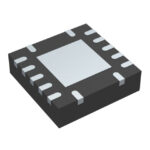 SN74LV125ARGYR

SN74LV125ARGYR is listed in the Buffers, Drivers, Receivers, Transceivers range at ChipApex. The manufacturer field lists Texas Instruments. Its product description is IC BUF…
Read More
SN74LV125ARGYR is listed in the Buffers, Drivers, Receivers, Transceivers range at ChipApex. The manufacturer field lists Texas Instruments. Its product description is IC BUF…
Read More
Understand how oscillators generate timing signals, how they differ from crystals, and which frequency, output and stability specs matter when choosing one.
Read More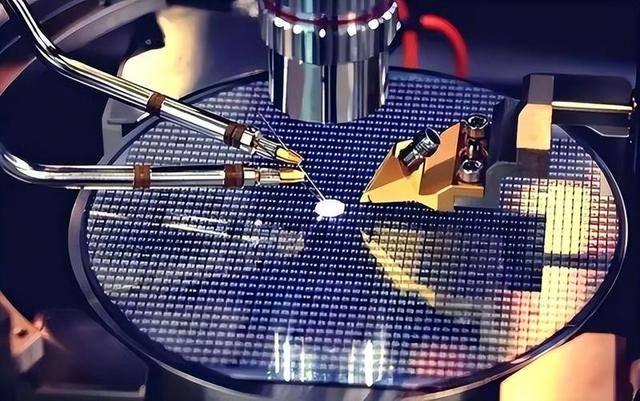
SN74LV125ARGYR is listed in the Buffers, Drivers, Receivers, Transceivers range at ChipApex. The manufacturer field lists Texas Instruments. Its product description is IC BUF…
Read More
Compare RC, crystal and MEMS oscillator circuits. Check ppm, jitter, load capacitance, startup margin and output compatibility before choosing a clock source.
Read More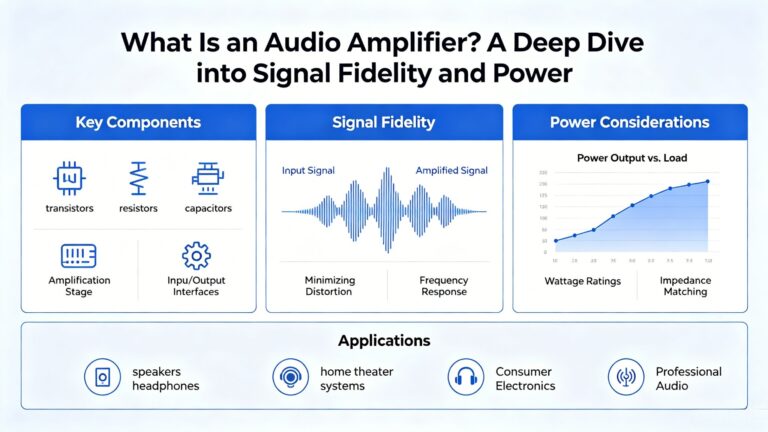
SN74LV125ARGYR is listed in the Buffers, Drivers, Receivers, Transceivers range at ChipApex. The manufacturer field lists Texas Instruments. Its product description is IC BUF…
Read More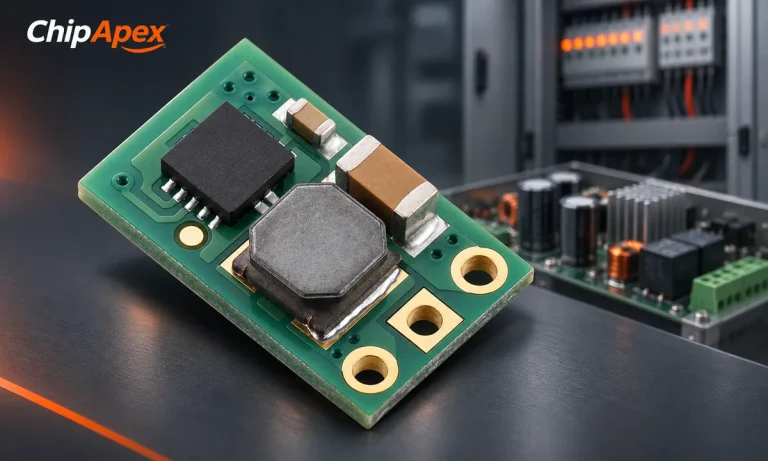
Select a DC-DC converter by input range, topology, isolation and temperature. Compare ripple, efficiency and load limits before choosing a component.
Read More
SN74LV125ARGYR is listed in the Buffers, Drivers, Receivers, Transceivers range at ChipApex. The manufacturer field lists Texas Instruments. Its product description is IC BUF…
Read More
Compare thermistors, RTDs, thermocouples and temperature ICs. Learn how range, accuracy, response, interfaces and mounting affect component selection.
Read More
SN74LV125ARGYR is listed in the Buffers, Drivers, Receivers, Transceivers range at ChipApex. The manufacturer field lists Texas Instruments. Its product description is IC BUF…
Read More
Learn what an IMU measures, how accelerometers and gyroscopes work together, why orientation estimates drift, and what to compare.
Read More
Compare Pt100 and Pt1000 RTDs, two-, three- and four-wire connections, excitation and self-heating. Build an error budget from element to reported temperature.
Read More
The activity of extra discounts on wholesale prices is in full swing…
Please fill in your contact information and we will send you the latest wholesale price list.





