 ChipApex | Global Electronic Components Supplier

SEARCH
Search Product
Search Post
— IC芯片 | 连接器 | 传感器 | 被动器件 —
Search productSearch post
— IC芯片 | 连接器 | 传感器 | 被动器件 —
Consult the customer manager about the wholesale price.
consultation hotline:86-132-6715-2157
email:[email protected]
Contact the product manager for consultation. One-stop consultation is available.
Do you want a lower wholesale price? Please send us your inquiry and we will reply immediately.
SN74LVC02AWBQARQ1 is listed in the Inverter Gates range at ChipApex. The manufacturer field lists Texas Instruments. Its product description is AUTOMOTIVE 4-CH, 2-INPUT, 2-V TO. Review the specifications below when checking this part for your BOM.
The SN74LVC02AWBQARQ1 is an automotive-grade quadruple 2-input positive-NOR gate from Texas Instruments. It operates within a supply voltage range of 2V to 3.6V and supports inputs up to 5.5V, enabling translation in mixed-voltage systems. The device features ESD protection exceeding 2000V per MIL-STD-883 Method 3015. It provides low-level output currents of 12mA at 2.7V and 24mA at 3V, with high-level output currents of -12mA at 2.7V and -24mA at 3V. Propagation delay ranges from 4.5ns to 6.5ns depending on the supply voltage. Operating temperatures span from -40°C to +125°C.
Verify the specific package type (WQFN, SOIC, or TSSOP) matches the design requirements. Confirm the suffix 'WBQA' corresponds to the WQFN package variant. Ensure the ordering part number aligns with the required production status and material specifications listed in the Package Option Addendum.
Select this component when a NOR gate function is required in automotive designs. The 5.5V input tolerance allows interfacing with 5V devices while operating at lower supply voltages. Verify that the thermal resistance and power dissipation characteristics meet the system's thermal management constraints.
This device belongs to the SN74LVC02A-Q1 family of quadruple 2-input positive-NOR gates. It is designed for 2.7V to 3.6V VCC operation. The product line includes catalog, enhanced product, and military qualified versions. The Q1 designation indicates automotive qualification.
SN74LVC02AQDRQ1
The device performs the Boolean function Y = A + B or Y = A • B in positive logic.
Yes, because inputs can be driven from either 3.3V or 5V devices, it allows use as a translator in a mixed 3.3V/5V system environment.
Explore related parts through Logic, Integrated Circuits (ICs), all product categories, ChipApex homepage.
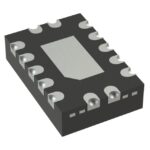 SN74LVC02AWBQARQ1

SN74LVC02AWBQARQ1 is listed in the Inverter Gates range at ChipApex. The manufacturer field lists Texas Instruments. Its product description is AUTOMOTIVE 4-CH, 2-INPUT, 2-V…
Read More
SN74LVC02AWBQARQ1 is listed in the Inverter Gates range at ChipApex. The manufacturer field lists Texas Instruments. Its product description is AUTOMOTIVE 4-CH, 2-INPUT, 2-V…
Read More
Learn how a TRIAC switches AC loads. Understand triggering, latching, holding current, phase control and thermal limits before choosing a component.
Read More
Learn what a transistor does in a circuit. Compare switching and amplification, BJT and MOSFET drive, operating limits and practical component selection.
Read More
Choose a DIP switch by contact type, coded positions, footprint and signal ratings. Check logic polarity, assembly conditions and PCB configuration behavior.
Read More
See how a MEMS gyroscope measures angular rate, why its angle estimate drifts, and which range, noise, interface and temperature specs to compare.
Read More
SN74LVC02AWBQARQ1 is listed in the Inverter Gates range at ChipApex. The manufacturer field lists Texas Instruments. Its product description is AUTOMOTIVE 4-CH, 2-INPUT, 2-V…
Read More
SN74LVC02AWBQARQ1 is listed in the Inverter Gates range at ChipApex. The manufacturer field lists Texas Instruments. Its product description is AUTOMOTIVE 4-CH, 2-INPUT, 2-V…
Read More
SN74LVC02AWBQARQ1 is listed in the Inverter Gates range at ChipApex. The manufacturer field lists Texas Instruments. Its product description is AUTOMOTIVE 4-CH, 2-INPUT, 2-V…
Read More
Compare thermistors, RTDs, thermocouples and temperature ICs. Learn how range, accuracy, response, interfaces and mounting affect component selection.
Read More
SN74LVC02AWBQARQ1 is listed in the Inverter Gates range at ChipApex. The manufacturer field lists Texas Instruments. Its product description is AUTOMOTIVE 4-CH, 2-INPUT, 2-V…
Read More
Understand load cell sensor output, bridge wiring and calibration. Learn how mV/V sensitivity, mechanics and ADC noise affect measurement accuracy.
Read More
The activity of extra discounts on wholesale prices is in full swing…
Please fill in your contact information and we will send you the latest wholesale price list.





