 ChipApex | Global Electronic Components Supplier

SEARCH
Search Product
Search Post
— IC芯片 | 连接器 | 传感器 | 被动器件 —
Search productSearch post
— IC芯片 | 连接器 | 传感器 | 被动器件 —
Consult the customer manager about the wholesale price.
consultation hotline:86-132-6715-2157
email:[email protected]
Contact the product manager for consultation. One-stop consultation is available.
Do you want a lower wholesale price? Please send us your inquiry and we will reply immediately.
SN74LVC1404DCUR is listed in the Specialty Logic range at ChipApex. The manufacturer field lists Texas Instruments. Its product description is IC OSCILLATOR DRIVER US8. Review the specifications below when checking this part for your BOM.
The SN74LVC1404DCUR is a single oscillator driver from Texas Instruments designed for crystal oscillators or ceramic resonators. It operates within a supply voltage range of 1.65V to 3.6V and utilizes a 5-pin SC-70 surface-mount package. The device features low power consumption with a maximum static current of 10µA and supports output drive currents of up to 24mA. It functions reliably across an extended temperature range from -40°C to +85°C, ensuring stable performance in various electronic applications.
Verify the specific suffix 'DCUR' corresponds to the SC-70 package and tape-and-reel quantity when sourcing. Confirm that the operating voltage requirements align with your system's 1.65V to 3.6V rail specifications. Ensure thermal management meets the -40°C to +85°C ambient temperature constraints defined in the datasheet.
Select this component when a dedicated driver is required for crystal or ceramic resonator applications rather than general-purpose inverters. Compare against the SN74LVC1GX04 series if alternative packaging or slightly different electrical characteristics are needed. Ensure the SC-70 footprint fits your PCB layout constraints compared to larger packages like SOT-353.
This part belongs to the SN74LVC1404 family of oscillator drivers manufactured by Texas Instruments. It is distinct from standard logic gates, serving specifically as a driver for frequency control elements. The DCUR designation indicates the specific SC-70 surface-mount package variant within this product line.
The SN74LVC1GX04 is a documented substitute within the same manufacturer's portfolio offering similar oscillator driver functionality.
Explore related parts through Logic, Integrated Circuits (ICs), all product categories, ChipApex homepage.
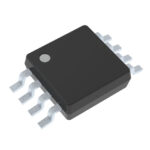 SN74LVC1404DCUR
SN74LVC1404DCUR is listed in the Specialty Logic range at ChipApex. The manufacturer field lists Texas Instruments. Its product description is IC OSCILLATOR DRIVER US8.…
Read More
SN74LVC1404DCUR is listed in the Specialty Logic range at ChipApex. The manufacturer field lists Texas Instruments. Its product description is IC OSCILLATOR DRIVER US8.…
Read More
SN74LVC1404DCUR is listed in the Specialty Logic range at ChipApex. The manufacturer field lists Texas Instruments. Its product description is IC OSCILLATOR DRIVER US8.…
Read More
Learn how CPLDs implement hardware logic, compare them with FPGAs and MCUs, and check timing, I/O voltage, startup behavior and programming requirements.
Read More
SN74LVC1404DCUR is listed in the Specialty Logic range at ChipApex. The manufacturer field lists Texas Instruments. Its product description is IC OSCILLATOR DRIVER US8.…
Read More
Learn how a TRIAC switches AC loads. Understand triggering, latching, holding current, phase control and thermal limits before choosing a component.
Read More
SN74LVC1404DCUR is listed in the Specialty Logic range at ChipApex. The manufacturer field lists Texas Instruments. Its product description is IC OSCILLATOR DRIVER US8.…
Read More
SN74LVC1404DCUR is listed in the Specialty Logic range at ChipApex. The manufacturer field lists Texas Instruments. Its product description is IC OSCILLATOR DRIVER US8.…
Read More
Learn how to use ferrite beads for noise filtering. Check impedance, DC bias, placement, resonance and load-step behavior before selecting a part.
Read More
SN74LVC1404DCUR is listed in the Specialty Logic range at ChipApex. The manufacturer field lists Texas Instruments. Its product description is IC OSCILLATOR DRIVER US8.…
Read More
Choose logic inverter ICs by thresholds, supply, output drive and delay. Compare standard and Schmitt-trigger inputs, power sequencing and replacement checks.
Read More
Learn the relay definition, coil and contact operation, NO and NC forms, load ratings and suppression choices. Compare mechanical, reed and solid-state types.
Read More
The activity of extra discounts on wholesale prices is in full swing…
Please fill in your contact information and we will send you the latest wholesale price list.





