 ChipApex | Global Electronic Components Supplier

SEARCH
Search Product
Search Post
— IC芯片 | 连接器 | 传感器 | 被动器件 —
Search productSearch post
— IC芯片 | 连接器 | 传感器 | 被动器件 —
Consult the customer manager about the wholesale price.
consultation hotline:86-132-6715-2157
email:[email protected]
Contact the product manager for consultation. One-stop consultation is available.
Do you want a lower wholesale price? Please send us your inquiry and we will reply immediately.
SN74LVC374ADBRE4 is listed in the Flip Flops range at ChipApex. The manufacturer field lists Texas Instruments. Its product description is IC FF D-TYPE SNGL 8BIT 20SSOP. Review the specifications below when checking this part for your BOM.
The SN74LVC374ADBRE4 is an octal edge-triggered D-type flip-flop manufactured by Texas Instruments. It features three-state outputs and operates within a supply voltage range of 1.65 V to 3.6 V. The device provides a propagation delay of 8.1 ns at 2.7 V with a 50 pF load, supporting clock frequencies up to 100 MHz. It offers high output drive capability with ±24 mA current ratings for both high and low states. The component is housed in a 20-pin TSSOP package and supports CMOS and TTL input levels.
Verify that the ordering suffix 'E4' corresponds to the specific lead-free and RoHS-compliant variant required for your assembly process. Confirm the package designation matches the TSSOP-20 footprint dimensions in your PCB layout. Ensure the voltage supply aligns with the 1.65 V to 3.6 V operational limits to maintain signal integrity and prevent device damage during procurement.
Select this component when an octal storage element with high-speed performance is required. The 8.1 ns propagation delay makes it suitable for applications demanding faster data throughput compared to standard 74-series logic. Consider the ±24 mA output drive strength for driving moderate capacitive loads directly. Verify compatibility with system voltage levels, as the LVC series bridges 1.8 V and 3.3 V domains effectively.
This part belongs to the SN74LVC374A family of octal D-type flip-flops. It is functionally equivalent to other variants such as the SN74LVC374ADBR and SN74LVC374ADGVR, differing primarily in packaging or manufacturing revision codes. The device is designed for use in general-purpose digital logic applications requiring reliable data storage and transfer capabilities across various industrial and consumer electronics platforms.
SN74LVC374ADBR
The device supports a maximum clock frequency of 100 MHz under specified test conditions.
No, the absolute maximum voltage rating for inputs is typically limited to the supply voltage plus a small margin; it is not designed for direct 5V interfacing without level shifting.
Explore related parts through Logic, Integrated Circuits (ICs), all product categories, ChipApex homepage.
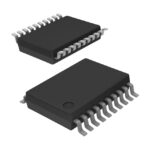 SN74LVC374ADBRE4

SN74LVC374ADBRE4 is listed in the Flip Flops range at ChipApex. The manufacturer field lists Texas Instruments. Its product description is IC FF D-TYPE SNGL…
Read More
Learn why PTC resistance rises with temperature, how it differs from NTC, and which ratings matter for sensing and protection.
Read More
SN74LVC374ADBRE4 is listed in the Flip Flops range at ChipApex. The manufacturer field lists Texas Instruments. Its product description is IC FF D-TYPE SNGL…
Read More
SN74LVC374ADBRE4 is listed in the Flip Flops range at ChipApex. The manufacturer field lists Texas Instruments. Its product description is IC FF D-TYPE SNGL…
Read More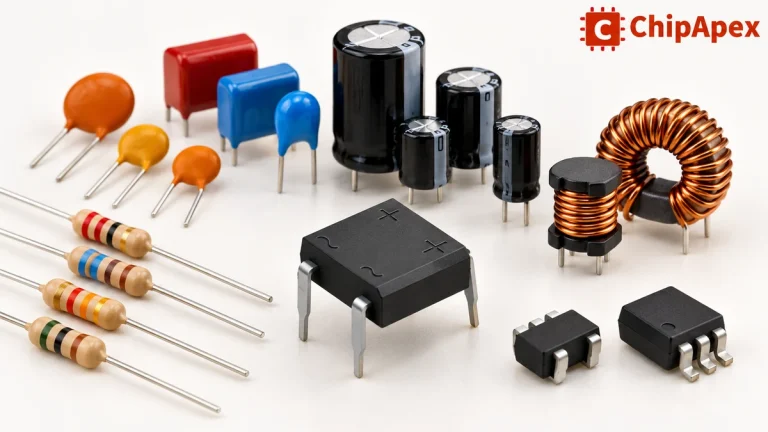
Explore electronic component types, functions, packages and datasheets. Learn selection, replacement and BOM checks before ordering parts for your PCB.
Read More
SN74LVC374ADBRE4 is listed in the Flip Flops range at ChipApex. The manufacturer field lists Texas Instruments. Its product description is IC FF D-TYPE SNGL…
Read More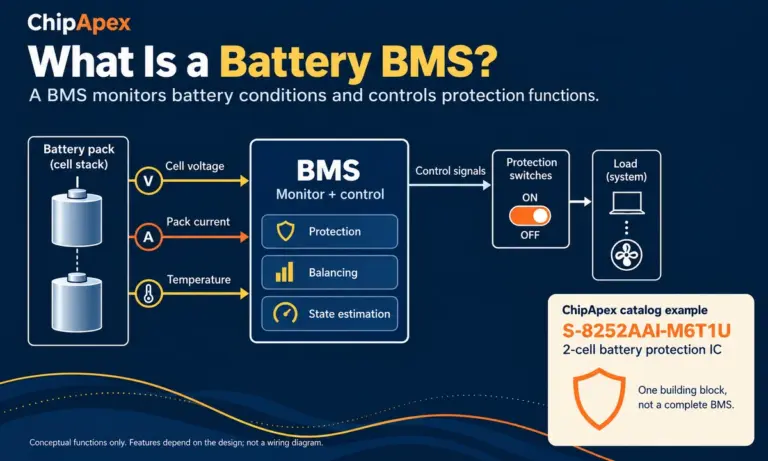
Learn what a battery BMS does, how protection differs from charging, and which pack specifications to check when sourcing BMS components through ChipApex.
Read More
SN74LVC374ADBRE4 is listed in the Flip Flops range at ChipApex. The manufacturer field lists Texas Instruments. Its product description is IC FF D-TYPE SNGL…
Read More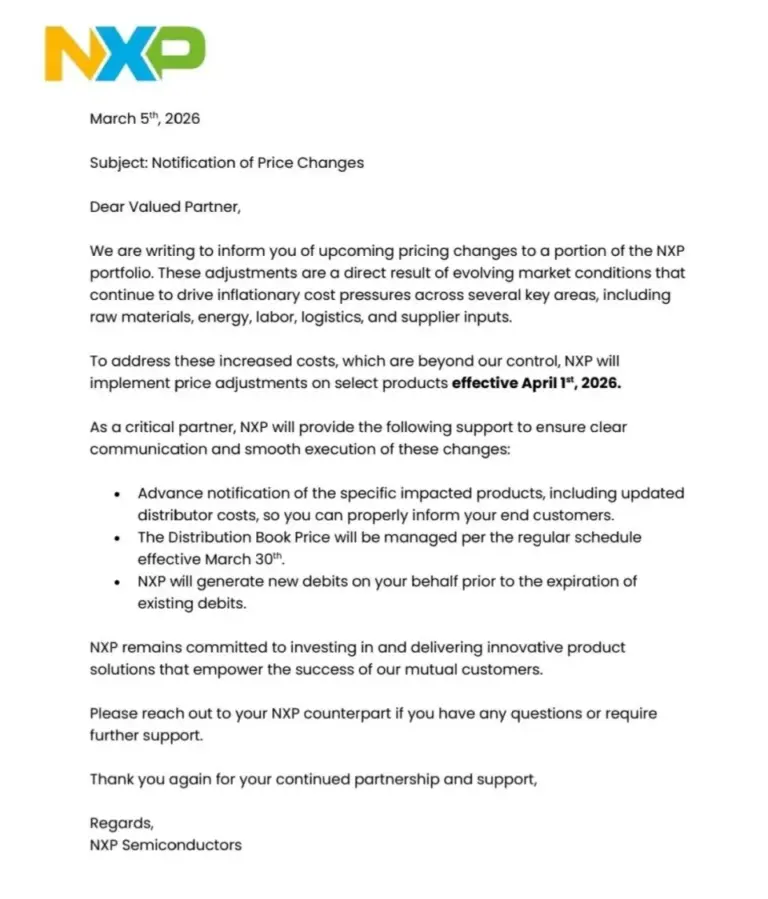
SN74LVC374ADBRE4 is listed in the Flip Flops range at ChipApex. The manufacturer field lists Texas Instruments. Its product description is IC FF D-TYPE SNGL…
Read More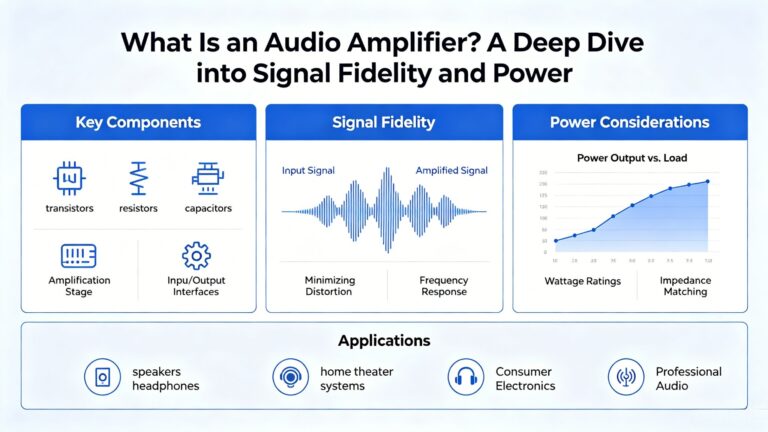
SN74LVC374ADBRE4 is listed in the Flip Flops range at ChipApex. The manufacturer field lists Texas Instruments. Its product description is IC FF D-TYPE SNGL…
Read More
Compare RC, crystal and MEMS oscillator circuits. Check ppm, jitter, load capacitance, startup margin and output compatibility before choosing a clock source.
Read More
See when an inductor behaves linearly, how DC bias and saturation reduce inductance, and which current and temperature curves to check.
Read More
The activity of extra discounts on wholesale prices is in full swing…
Please fill in your contact information and we will send you the latest wholesale price list.





