 ChipApex | Global Electronic Components Supplier

SEARCH
Search Product
Search Post
— IC芯片 | 连接器 | 传感器 | 被动器件 —
Search productSearch post
— IC芯片 | 连接器 | 传感器 | 被动器件 —
Consult the customer manager about the wholesale price.
consultation hotline:86-132-6715-2157
email:[email protected]
Contact the product manager for consultation. One-stop consultation is available.
Do you want a lower wholesale price? Please send us your inquiry and we will reply immediately.
The Blackburn STC9960 is a Type STC copper terminal lug designed for single-conductor applications. It features a hex head bolt mounting configuration and is constructed from copper material. This component is specified for use with conductors in the range of 600 kcmil to 1000 kcmil. The lug utilizes a one-hole mount design, ensuring secure electrical connections within low-voltage systems operating below 1000V.
Verify the specific manufacturer designation, as products may be labeled under Blackburn, ABB, or Thomas & Betts. Confirm the conductor size compatibility matches your project requirements of 600-1000 kcmil. Ensure the hex head bolt mounting style aligns with your installation hardware. Check for RoHS compliance status if required by your facility standards before finalizing procurement.
Select this component when a copper lug is required for large gauge conductors between 600 and 1000 kcmil. The Type STC designation indicates a specific barrel and insulation profile suitable for these sizes. Consider the hex head bolt feature if mechanical security via bolted connection is preferred over set screws. Ensure the application voltage remains below 1000V to match the component's rating.
This part belongs to the Blackburn Type STC series of copper terminal lugs. The series offers various sizes for different conductor gauges. The STC9960 specifically addresses the high-current needs of larger conductors. It is distributed under multiple brand names including Blackburn, ABB, and Thomas & Betts due to corporate branding structures.
Check for exact Type STC equivalents from the same manufacturer family. Verify that any substitute maintains the 600-1000 kcmil conductor range and hex head bolt mounting. Cross-reference material composition to ensure copper construction is retained for equivalent performance.
 STC9960

In the world of electronics, memory components play a critical role in system performance—and DRAM (Dynamic Random-Access Memory) is one of the most widely…
Read More
Tokyo / Munich / Tessenderlo, December 24, 2025As the global semiconductor industry enters the first year of the 2nm process era, international electronic component…
Read More
Understand load cell sensor output, bridge wiring and calibration. Learn how mV/V sensitivity, mechanics and ADC noise affect measurement accuracy.
Read MoreA digital-to-analog converter (DAC) turns a digital number into an analog voltage or current. It lets a controller set a physical output, such as…
Read More
Learn how a diode conducts, how to identify anode and cathode, and when to choose rectifier, TVS, Zener or photodiode types for a circuit.
Read More
ChipApex – May 8, 2026 Texas Instruments (TI), the global leader in analog and embedded semiconductors, has officially notified customers of an upcoming company-wide…
Read More
Selecting the right microcontroller (MCU) isn’t just about specs—it’s about balancing performance, power, cost, and supply chain reliability. As an engineer, you’ve probably faced…
Read More
Learn what data acquisition means, from sensors and conditioning to sampling and storage. Review channel timing, wiring, calibration and data quality.
Read More
Understand RF attenuator dB values, fixed and programmable types, impedance, power limits and noise tradeoffs before choosing parts for an RF signal path.
Read More
September 16, 2026 – Global — Leading semiconductor manufacturer ON Semiconductor (onsemi, NASDAQ: ON) has officially issued a formal price adjustment letter to global…
Read More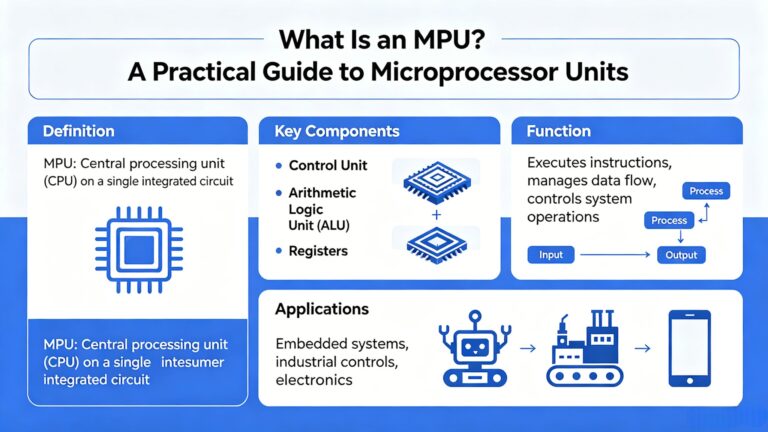
In embedded design, the tug-of-war between cost and performance is constant. On one side, you have Microcontrollers (MCUs)—cheap, simple, and efficient. On the other,…
Read More
Learn how an analog front end conditions sensor signals. Compare gain, noise, filtering, ADC settling and integration options before selecting components.
Read More
The activity of extra discounts on wholesale prices is in full swing…
Please fill in your contact information and we will send you the latest wholesale price list.




