 ChipApex | Global Electronic Components Supplier

SEARCH
Search Product
Search Post
— IC芯片 | 连接器 | 传感器 | 被动器件 —
Search productSearch post
— IC芯片 | 连接器 | 传感器 | 被动器件 —
Consult the customer manager about the wholesale price.
consultation hotline:86-132-6715-2157
email:[email protected]
Contact the product manager for consultation. One-stop consultation is available.
Do you want a lower wholesale price? Please send us your inquiry and we will reply immediately.
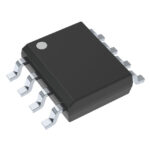
TPS6735ID is listed in the Voltage Regulators - DC DC Switching Regulators range at ChipApex. The manufacturer field lists Texas Instruments. Its product description is IC REG BUCK -5V 200MA 8SOIC. Review the specifications below when checking this part for your BOM.
The TPS6735ID is a synchronous inverting buck-boost DC/DC converter manufactured by Texas Instruments. It generates a regulated -5V output from positive input voltages, supporting an output current of 200mA. The device operates with a fixed switching frequency of 160kHz and draws a typical quiescent current of 1mA. It functions within an ambient temperature range of -40°C to +85°C and is housed in an SOIC-8 surface-mount package.
Verify the specific suffix against the manufacturer's official datasheet to confirm pinout compatibility and thermal characteristics. Ensure the selected variant matches the required operating temperature range and packaging style for your PCB layout. Cross-reference the ordering part number with the latest revision history to avoid obsolete components.
Select this component when designing compact systems requiring a single-inductor solution for negative voltage generation. It is suitable for applications prioritizing efficiency and reduced board space over ultra-low noise requirements. Consider external filtering strategies if powering sensitive analog front-ends that demand strict ripple specifications beyond the integrated capabilities.
This device belongs to the TPS6735 series of non-isolated DC/DC converters designed for mid-power negative rail applications. It simplifies design by integrating control logic and power switches into a single IC, reducing the component count compared to discrete solutions. The series targets industrial, medical, and portable test equipment markets where reliable negative supply generation is critical.
Consult the official replacement matrix for direct pin-compatible alternatives. Verify electrical parameters such as switching frequency and output current capability before substituting.
Explore related parts through Power Management (PMIC), Integrated Circuits (ICs), all product categories, ChipApex homepage.
 TPS6735ID

Understand RF attenuator dB values, fixed and programmable types, impedance, power limits and noise tradeoffs before choosing parts for an RF signal path.
Read More
TPS6735ID is listed in the Voltage Regulators - DC DC Switching Regulators range at ChipApex. The manufacturer field lists Texas Instruments. Its product description…
Read More
TPS6735ID is listed in the Voltage Regulators - DC DC Switching Regulators range at ChipApex. The manufacturer field lists Texas Instruments. Its product description…
Read More
TPS6735ID is listed in the Voltage Regulators - DC DC Switching Regulators range at ChipApex. The manufacturer field lists Texas Instruments. Its product description…
Read More
See when an inductor behaves linearly, how DC bias and saturation reduce inductance, and which current and temperature curves to check.
Read More
TPS6735ID is listed in the Voltage Regulators - DC DC Switching Regulators range at ChipApex. The manufacturer field lists Texas Instruments. Its product description…
Read More
Select a bridge rectifier by reverse voltage, capacitor charging current, startup surge and cooling. Work through a stated DC voltage and ripple example.
Read More
TPS6735ID is listed in the Voltage Regulators - DC DC Switching Regulators range at ChipApex. The manufacturer field lists Texas Instruments. Its product description…
Read More
Choose a DIP switch by contact type, coded positions, footprint and signal ratings. Check logic polarity, assembly conditions and PCB configuration behavior.
Read More
Understand tactile switches, PCB and keyboard differences, four-pin wiring, debounce, force, travel and replacement checks for reliable control inputs.
Read More
TPS6735ID is listed in the Voltage Regulators - DC DC Switching Regulators range at ChipApex. The manufacturer field lists Texas Instruments. Its product description…
Read More
Learn what an IMU measures, how accelerometers and gyroscopes work together, why orientation estimates drift, and what to compare.
Read More
The activity of extra discounts on wholesale prices is in full swing…
Please fill in your contact information and we will send you the latest wholesale price list.





