ChipApex | Global Electronic Components Supplier

SEARCH
Search Product
Search Post
— IC芯片 | 连接器 | 传感器 | 被动器件 —
Search productSearch post
— IC芯片 | 连接器 | 传感器 | 被动器件 —
Consult the customer manager about the wholesale price.
consultation hotline:86-132-6715-2157
email:[email protected]
Contact the product manager for consultation. One-stop consultation is available.
Do you want a lower wholesale price? Please send us your inquiry and we will reply immediately.
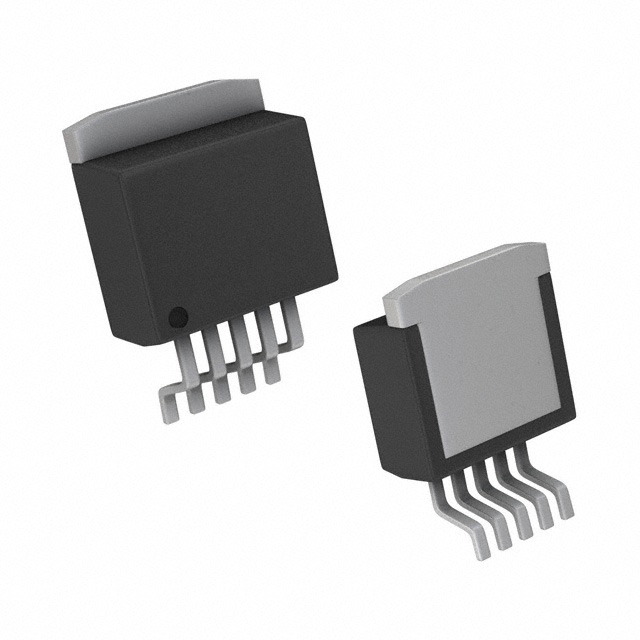
TPS72515KTTR is listed in the Voltage Regulators - Linear, Low Drop Out (LDO) Regulators range at ChipApex. The manufacturer field lists Texas Instruments. Its product description is IC REG LINEAR 1.5V 1A TO263. Review the specifications below when checking this part for your BOM.
The TPS72515KTTR is a fixed-output low-dropout linear regulator from Texas Instruments, providing a nominal 1.5-V output with a maximum continuous current of 1 A. It operates within an input voltage range of 1.8 V to 6 V and features a typical dropout voltage of 170 mV at full load. The device includes an integrated supervisor circuit that generates an active-low RESET signal when the output falls out of regulation, featuring a typical delay time of 50 ms. Ground current is typically 210 µA at full load, dropping below 80 µA at no load, with standby current less than 1 µA. It offers ±2% output voltage tolerance over line, load, and temperature conditions ranging from -40°C to +125°C.
Verify the specific package variant (KTT) and suffix (R for reel) matches the design requirement. Confirm the fixed 1.5-V output version aligns with system voltage rails. Ensure the PCB layout supports the thermal dissipation needs for the DDPAK package if high power loads are anticipated. Check for moisture sensitivity handling requirements during assembly.
Select this component when a stable 1.5-V supply is required for digital logic or memory components. The integrated supervisor simplifies system reset sequencing compared to discrete solutions. Consider the thermal resistance characteristics of the DDPAK package versus SOT223 based on available board copper area and airflow constraints for power dissipation management.
This part belongs to the TPS725xx family of low-input voltage LDO regulators designed for high-current applications. The family includes adjustable and fixed voltage options, sharing common features like low ground current and robust protection circuits. The TPS72515 specifically targets systems requiring a precise 1.5-V rail with integrated monitoring capabilities.
TPS72515DCQ (SOT223-5 package)
Explore related parts through Power Management (PMIC), Integrated Circuits (ICs), all product categories, ChipApex homepage.
 TPS72515KTTR
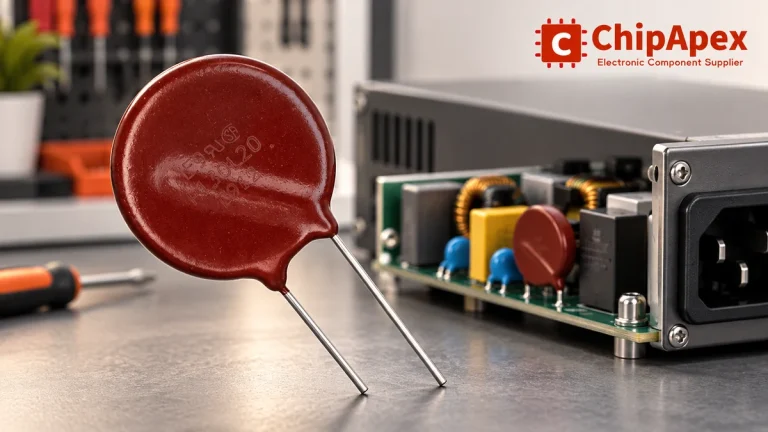
Select MOV varistors by continuous voltage, clamping behavior, surge waveform and repetition. Check thermal disconnection, fuse coordination and replacements.
Read More
Understand voltage controlled oscillator tuning, phase noise and PLL operation. Check supply noise, output loading and requirements before selection.
Read More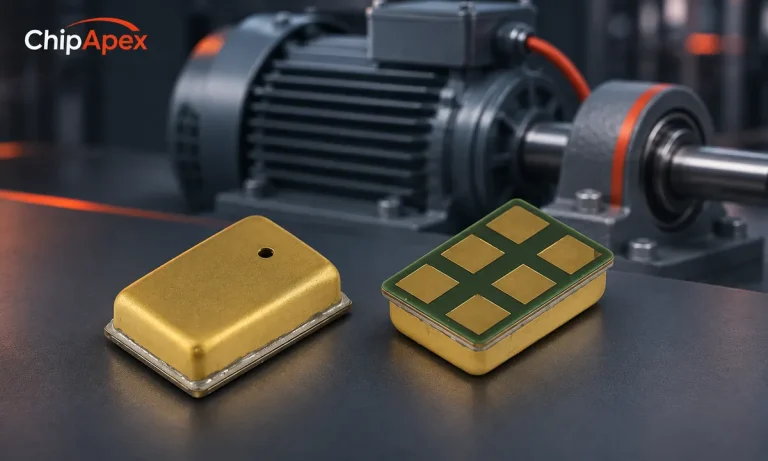
Choose a vibration sensor for machine monitoring. Compare sensing methods, bandwidth, noise and mounting, then define the signal-chain requirements.
Read More
TPS72515KTTR is listed in the Voltage Regulators - Linear, Low Drop Out (LDO) Regulators range at ChipApex. The manufacturer field lists Texas Instruments. Its…
Read More
TPS72515KTTR is listed in the Voltage Regulators - Linear, Low Drop Out (LDO) Regulators range at ChipApex. The manufacturer field lists Texas Instruments. Its…
Read More
TPS72515KTTR is listed in the Voltage Regulators - Linear, Low Drop Out (LDO) Regulators range at ChipApex. The manufacturer field lists Texas Instruments. Its…
Read More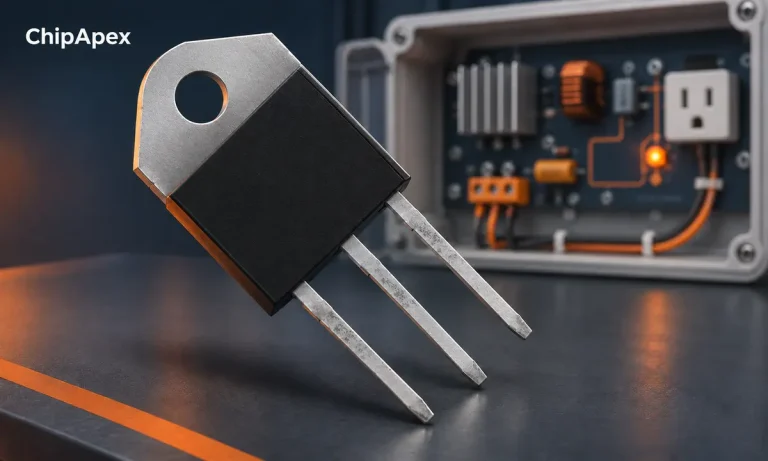
Learn how a TRIAC switches AC loads. Understand triggering, latching, holding current, phase control and thermal limits before choosing a component.
Read More
Understand load cell sensor output, bridge wiring and calibration. Learn how mV/V sensitivity, mechanics and ADC noise affect measurement accuracy.
Read More
TPS72515KTTR is listed in the Voltage Regulators - Linear, Low Drop Out (LDO) Regulators range at ChipApex. The manufacturer field lists Texas Instruments. Its…
Read More
Learn why PTC resistance rises with temperature, how it differs from NTC, and which ratings matter for sensing and protection.
Read More
TPS72515KTTR is listed in the Voltage Regulators - Linear, Low Drop Out (LDO) Regulators range at ChipApex. The manufacturer field lists Texas Instruments. Its…
Read More
Choose a DIP switch by contact type, coded positions, footprint and signal ratings. Check logic polarity, assembly conditions and PCB configuration behavior.
Read More
The activity of extra discounts on wholesale prices is in full swing…
Please fill in your contact information and we will send you the latest wholesale price list.