 ChipApex | Global Electronic Components Supplier

SEARCH
Search Product
Search Post
— IC芯片 | 连接器 | 传感器 | 被动器件 —
Search productSearch post
— IC芯片 | 连接器 | 传感器 | 被动器件 —
Consult the customer manager about the wholesale price.
consultation hotline:86-132-6715-2157
email:[email protected]
Contact the product manager for consultation. One-stop consultation is available.
Do you want a lower wholesale price? Please send us your inquiry and we will reply immediately.
Phoenix Contact part number 1405869 is a pre-assembled Ethernet network cable designed for industrial automation environments. It supports CAT5 specifications with data transmission rates up to 100 Mbps. The cable features a 4-position configuration and utilizes a PUR jacket that is halogen-free, colored water blue (RAL 5021). Connectivity is provided by an angled M12 plug on one end and an angled M12 connector on the other, both utilizing D-coding to ensure IP67 ingress protection ratings.
Verify the specific suffix or variant when ordering, as Phoenix Contact often uses length codes (e.g., /93E) to denote cable length. Confirm that the standard 1405869 designation aligns with the required physical dimensions and connector orientation for your installation. Check current availability status as distribution channels may list this item as obsolete or limited stock depending on the region.
Select this component when a shielded, halogen-free Ethernet solution with IP67 rated M12 connectivity is required. Ensure the application environment is compatible with PUR materials. Verify that the system voltage and frequency requirements fall within the standard Ethernet operational parameters. Consider the angled connector geometry for space-constrained mounting scenarios where straight plugs would obstruct adjacent components.
This component belongs to the Phoenix Contact automation cable portfolio, specifically within their Ethernet and network cabling category. It is part of a broader family of field-ready interconnect solutions designed for reliable data transmission in harsh industrial conditions. The product line emphasizes ease of installation through pre-assembly and standardized M12 interfaces common in factory automation.
Direct substitutes include variants such as 1405869/93E/0.9 and 1405869/93E/1.1, which share identical electrical and mechanical characteristics but differ in cable length. When replacing, ensure the new part maintains the same M12 D-coding and shielding configuration to preserve signal integrity and environmental sealing.
 1405869
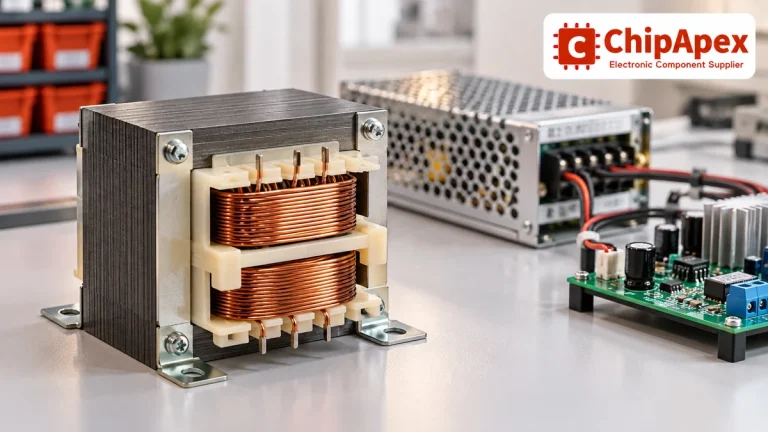
Select power transformers by input frequency, secondary VA, rectifier load, isolation, regulation and inrush. Build a clearer specification for your next RFQ.
Read More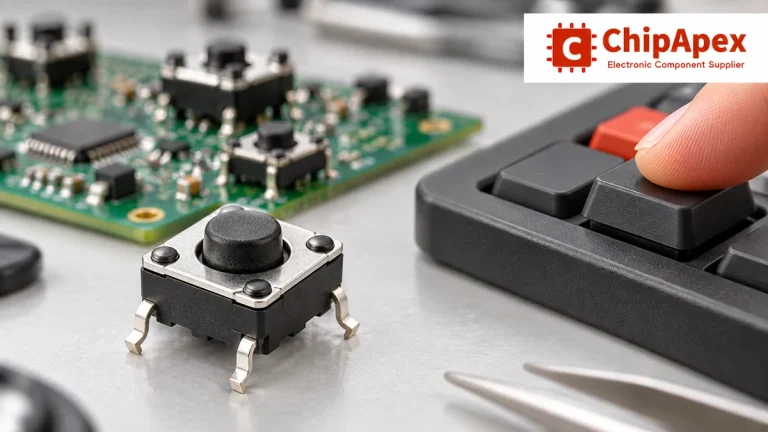
Choose tactile switches by operating force, travel, actuator height, footprint and lifetime. Check debounce, sealing and the assembled button mechanism.
Read More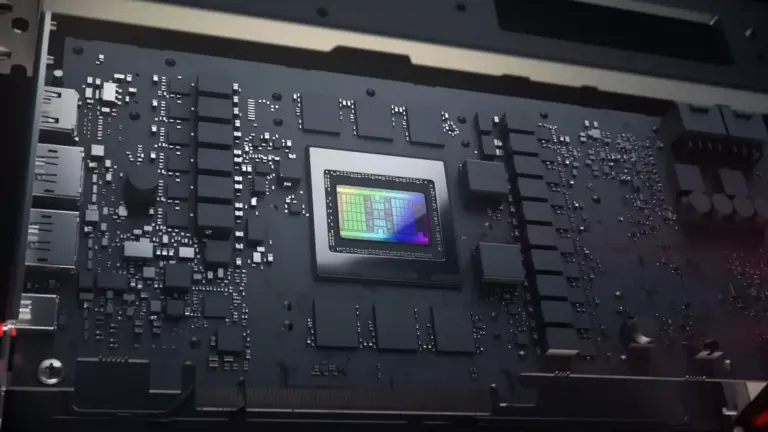
Latest updates from leading semiconductor manufacturers: Wolfspeed launches new SiC modules, AMD reveals MI430X with HBM4, TSMC eyes third Japan fab, and Samsung samples…
Read MoreA digital-to-analog converter (DAC) turns a digital number into an analog voltage or current. It lets a controller set a physical output, such as…
Read More
Recently, global semiconductor manufacturers have been constantly making moves in aspects such as technological cooperation, product manufacturing processes, and market layout, demonstrating the rapid…
Read More
If you’ve spent any time staring at a schematic, you’ve seen the triangle. Two inputs, one output, and a gain symbol that looks deceptively…
Read More
WILMINGTON, Mass. – July 3, 2026 – Analog Devices, Inc. (ADI), the global leading supplier of high-performance analog, mixed-signal and signal processing semiconductors, has…
Read More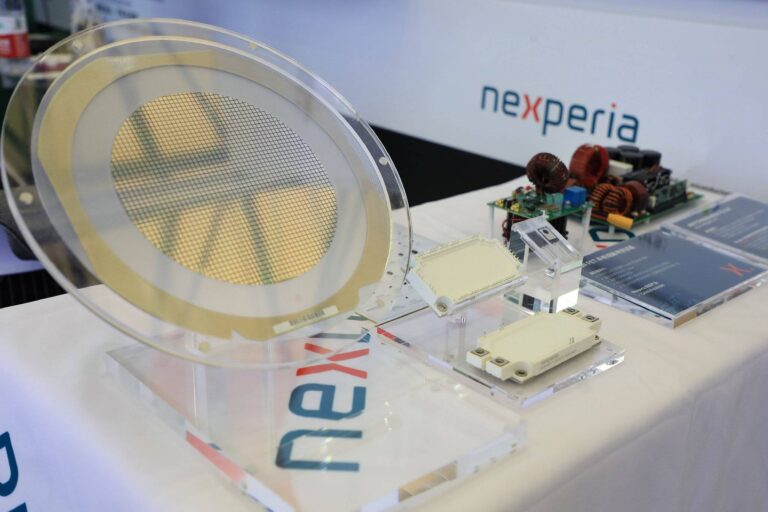
Dutch authorities announced on November 7 the lifting of control measures on Nexperia (formerly NXP Semiconductors’ Standard Products division), marking the end of a…
Read More
Learn how rectifiers convert AC to DC, compare half-wave and bridge circuits, and select voltage, current, recovery and thermal ratings for your design.
Read More
Manchester, New Hampshire, USA – March 22, 2026 – Allegro MicroSystems, Inc. (Nasdaq: ALGM), a global leader in high-performance power and sensing semiconductor solutions…
Read More
Understand how oscillators generate timing signals, how they differ from crystals, and which frequency, output and stability specs matter when choosing one.
Read More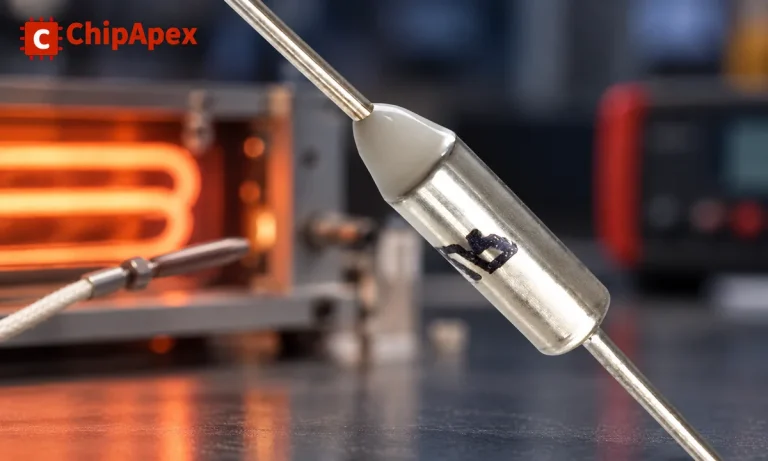
Understand thermal fuse operation, Tf, Th and Tm, electrical ratings and mounting. Check temperature limits and replacement requirements for your design.
Read More
The activity of extra discounts on wholesale prices is in full swing…
Please fill in your contact information and we will send you the latest wholesale price list.




