 ChipApex | Global Electronic Components Supplier

SEARCH
Search Product
Search Post
— IC芯片 | 连接器 | 传感器 | 被动器件 —
Search productSearch post
— IC芯片 | 连接器 | 传感器 | 被动器件 —
Consult the customer manager about the wholesale price.
consultation hotline:86-132-6715-2157
email:[email protected]
Contact the product manager for consultation. One-stop consultation is available.
Do you want a lower wholesale price? Please send us your inquiry and we will reply immediately.
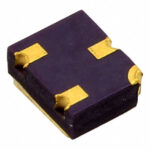
1N4148UBCA/TR is listed in the Diode Arrays range at ChipApex. The manufacturer field lists Microchip Technology. Its product description is DIODE ARRAY GP 75V 200MA UB. Review the specifications below when checking this part for your BOM.
The Microchip Technology 1N4148UBCA/TR is a ceramic surface-mount switching diode qualified per MIL-PRF-19500/116. It features a common anode configuration within the UB package. Key electrical parameters include a maximum breakdown voltage of 100 V, a working peak reverse voltage of 75 V, and an average rectified forward current of 200 mA at 75°C. The device exhibits a reverse recovery time of 5 ns and a capacitance of 4.0 pF at 0 V bias. Operating temperatures range from -65°C to +200°C.
Verify that the specific ordering suffix matches the required polarity and qualification level. Confirm tape and reel packaging specifications against EIA-418D standards if automated assembly is planned. Ensure the component meets the intended environmental operating temperature range requirements before finalizing procurement orders.
Select this component when a robust ceramic surface mount solution is required for harsh environments. The common anode configuration distinguishes it from standard unidirectional variants. Consider the thermal resistance values for circuit layout planning to ensure reliable operation under continuous load conditions.
This part belongs to the 1N4148 family of small signal switching diodes. It serves as the surface mount equivalent of the popular JEDEC registered 1N4148 number. The product line includes other packages such as UBC, UB2, DO-35, and DO-213AA to accommodate different mounting and space constraints.
Direct replacements must match the UB package dimensions and common anode polarity. Verify that substitute components meet the same MIL-PRF-19500/116 qualification levels and thermal performance characteristics.
The CA suffix indicates that the diode has a common anode polarity configuration.
Yes, the component is RoHS compliant by design.
The maximum junction and storage temperature is +200°C.
Explore related parts through Rectifiers, Diodes, Discrete Semiconductor Products, all product categories.
 1N4148UBCA/TR

Learn what an IMU measures, how accelerometers and gyroscopes work together, why orientation estimates drift, and what to compare.
Read More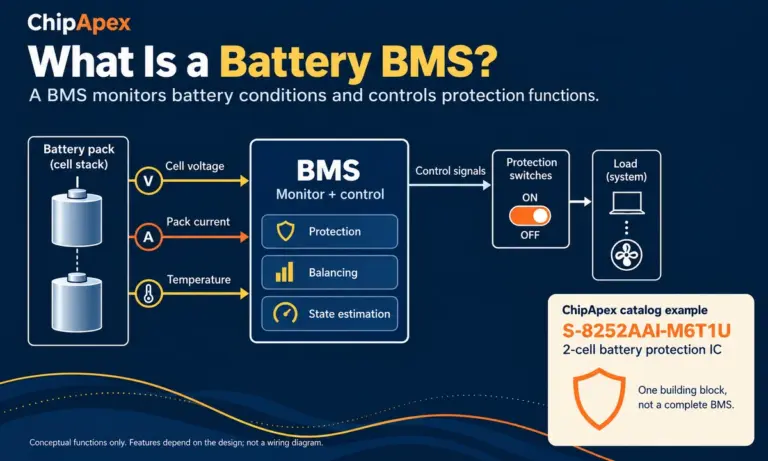
Learn what a battery BMS does, how protection differs from charging, and which pack specifications to check when sourcing BMS components through ChipApex.
Read More
1N4148UBCA/TR is listed in the Diode Arrays range at ChipApex. The manufacturer field lists Microchip Technology. Its product description is DIODE ARRAY GP 75V…
Read More
1N4148UBCA/TR is listed in the Diode Arrays range at ChipApex. The manufacturer field lists Microchip Technology. Its product description is DIODE ARRAY GP 75V…
Read More
1N4148UBCA/TR is listed in the Diode Arrays range at ChipApex. The manufacturer field lists Microchip Technology. Its product description is DIODE ARRAY GP 75V…
Read More
1N4148UBCA/TR is listed in the Diode Arrays range at ChipApex. The manufacturer field lists Microchip Technology. Its product description is DIODE ARRAY GP 75V…
Read More
1N4148UBCA/TR is listed in the Diode Arrays range at ChipApex. The manufacturer field lists Microchip Technology. Its product description is DIODE ARRAY GP 75V…
Read More
1N4148UBCA/TR is listed in the Diode Arrays range at ChipApex. The manufacturer field lists Microchip Technology. Its product description is DIODE ARRAY GP 75V…
Read More
1N4148UBCA/TR is listed in the Diode Arrays range at ChipApex. The manufacturer field lists Microchip Technology. Its product description is DIODE ARRAY GP 75V…
Read More
1N4148UBCA/TR is listed in the Diode Arrays range at ChipApex. The manufacturer field lists Microchip Technology. Its product description is DIODE ARRAY GP 75V…
Read More1N4148UBCA/TR is listed in the Diode Arrays range at ChipApex. The manufacturer field lists Microchip Technology. Its product description is DIODE ARRAY GP 75V…
Read More
Learn why PTC resistance rises with temperature, how it differs from NTC, and which ratings matter for sensing and protection.
Read More
The activity of extra discounts on wholesale prices is in full swing…
Please fill in your contact information and we will send you the latest wholesale price list.





