 ChipApex | Global Electronic Components Supplier

SEARCH
Search Product
Search Post
— IC芯片 | 连接器 | 传感器 | 被动器件 —
Search productSearch post
— IC芯片 | 连接器 | 传感器 | 被动器件 —
Consult the customer manager about the wholesale price.
consultation hotline:86-132-6715-2157
email:[email protected]
Contact the product manager for consultation. One-stop consultation is available.
Do you want a lower wholesale price? Please send us your inquiry and we will reply immediately.
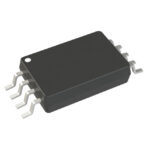
23A256-I/ST is listed in the Memory IC range at ChipApex. The manufacturer field lists Microchip Technology. Its product description is IC SRAM 256KBIT SPI 20MHZ 8TSSOP. Review the specifications below when checking this part for your BOM.
The Microchip Technology 23A256-I/ST is a 256-Kbit Serial SRAM device accessed via a SPI-compatible serial bus. It features a 32,768 x 8-bit organization and supports a maximum clock frequency of 20 MHz. The supply voltage range is 1.5V to 1.95V. Operating temperature spans -40°C to +85°C. It utilizes low-power CMOS technology with standby current up to 4 µA at +85°C. The device is housed in an 8-lead TSSOP package.
Verify the specific suffix 'I' confirms the Industrial temperature range (-40°C to +85°C) and 'ST' denotes the 8-TSSOP package. Confirm the 'A' variant indicates the 1.5V-1.95V supply voltage requirement, distinct from the 'K' variant. Ensure compatibility with system voltage levels before integration.
Select this component when low-voltage operation between 1.5V and 1.95V is required. Choose over the 23K256 variant if the system operates below 2.7V. Consider the HOLD pin functionality if interrupt handling requires pausing serial transactions. Verify SPI master compatibility with the device's clock polarity and phase requirements.
This part belongs to the 23X256 family of 256-Kbit Serial SRAMs. It shares architectural similarities with the 23K256 but differs primarily in supply voltage specifications. The family supports various packages including PDIP, SOIC, and TSSOP. It is designed for direct interfacing with popular microcontroller families.
The HOLD pin suspends transmission when pulled low while SCK is low. Transitions on SI, SCK, and SO are ignored until HOLD is released high, allowing the host to service higher priority interrupts without retransmitting the sequence.
Page mode limits read/write operations within a 32-byte page boundary, wrapping the internal address counter upon reaching the end. Sequential mode ignores page boundaries, automatically incrementing the address across the entire array until it rolls over to zero.
Explore related parts through Memory, Integrated Circuits (ICs), all product categories, ChipApex homepage.
 23A256-I/ST
23A256-I/ST is listed in the Memory IC range at ChipApex. The manufacturer field lists Microchip Technology. Its product description is IC SRAM 256KBIT SPI…
Read More
23A256-I/ST is listed in the Memory IC range at ChipApex. The manufacturer field lists Microchip Technology. Its product description is IC SRAM 256KBIT SPI…
Read More
Choose a DIP switch by contact type, coded positions, footprint and signal ratings. Check logic polarity, assembly conditions and PCB configuration behavior.
Read More
23A256-I/ST is listed in the Memory IC range at ChipApex. The manufacturer field lists Microchip Technology. Its product description is IC SRAM 256KBIT SPI…
Read More
23A256-I/ST is listed in the Memory IC range at ChipApex. The manufacturer field lists Microchip Technology. Its product description is IC SRAM 256KBIT SPI…
Read More
23A256-I/ST is listed in the Memory IC range at ChipApex. The manufacturer field lists Microchip Technology. Its product description is IC SRAM 256KBIT SPI…
Read More
23A256-I/ST is listed in the Memory IC range at ChipApex. The manufacturer field lists Microchip Technology. Its product description is IC SRAM 256KBIT SPI…
Read More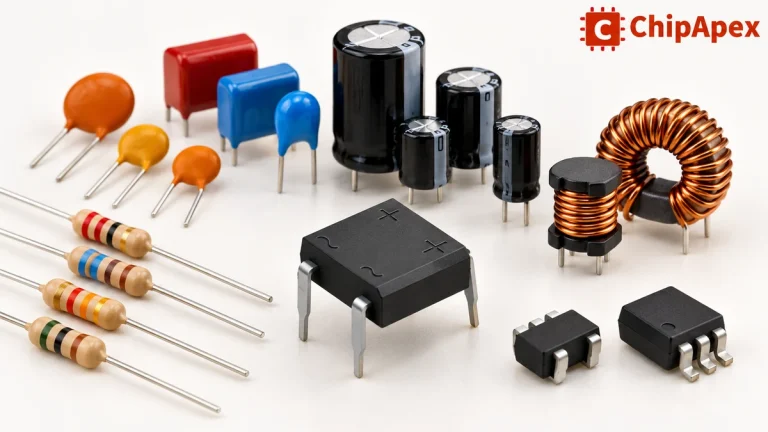
Explore electronic component types, functions, packages and datasheets. Learn selection, replacement and BOM checks before ordering parts for your PCB.
Read More
23A256-I/ST is listed in the Memory IC range at ChipApex. The manufacturer field lists Microchip Technology. Its product description is IC SRAM 256KBIT SPI…
Read More
Choose logic inverter ICs by thresholds, supply, output drive and delay. Compare standard and Schmitt-trigger inputs, power sequencing and replacement checks.
Read More
23A256-I/ST is listed in the Memory IC range at ChipApex. The manufacturer field lists Microchip Technology. Its product description is IC SRAM 256KBIT SPI…
Read More
See when an inductor behaves linearly, how DC bias and saturation reduce inductance, and which current and temperature curves to check.
Read More
The activity of extra discounts on wholesale prices is in full swing…
Please fill in your contact information and we will send you the latest wholesale price list.





