ChipApex | Global Electronic Components Supplier

SEARCH
Search Product
Search Post
— IC芯片 | 连接器 | 传感器 | 被动器件 —
Search productSearch post
— IC芯片 | 连接器 | 传感器 | 被动器件 —
Consult the customer manager about the wholesale price.
consultation hotline:86-132-6715-2157
email:[email protected]
Contact the product manager for consultation. One-stop consultation is available.
Do you want a lower wholesale price? Please send us your inquiry and we will reply immediately.
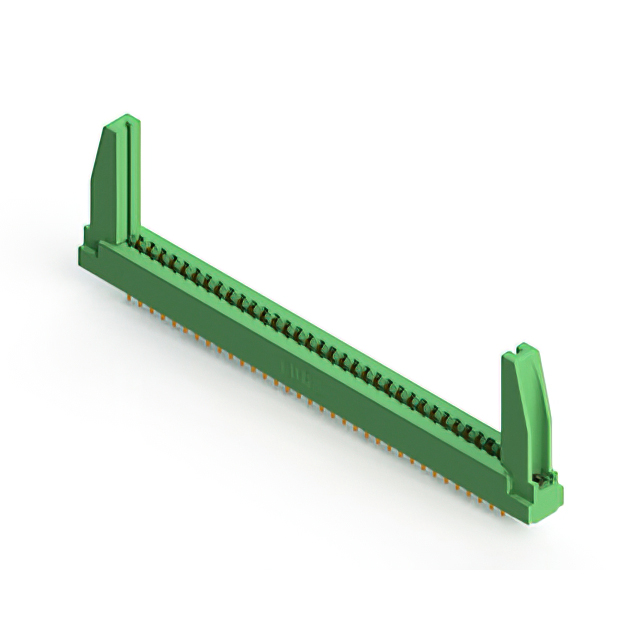
305-068-520-578 is listed in the Edgeboard Connectors range at ChipApex. The manufacturer field lists EDAC Inc.. Its product description is CONN EDGE DUAL FMALE 68POS 0.156. Review the specifications below when checking this part for your BOM.
The EDAC Inc. 305-068-520-578 is a standard card edge connector designed for panel mounting applications. This component features 68 positions arranged in a dual-row configuration with a contact spacing of 3.96 mm (0.156 inches). It utilizes gold-plated copper alloy contacts and employs a solder pin termination type. The connector is engineered to accept printed circuit boards with a nominal thickness of 1.57 mm. The insulator body is green, and the unit operates within a temperature range of -40°C to +105°C.
Verify the specific ordering suffix against the manufacturer's current datasheet to confirm exact pin count and plating specifications. Ensure compatibility with the target PCB thickness of 1.57 mm before integration. Confirm that the panel mounting requirements align with the vertical installation angle specified for this series. Cross-reference the RoHS status if environmental compliance is mandatory for the end application.
Select this model when a dual-row card edge interface with 3.96 mm spacing is required. The 68-position count suits moderate-density board connections. Consider the 5A current rating for power distribution needs. Verify that the green insulator color meets visual identification standards. Ensure the solder pin termination method matches the available PCB fabrication capabilities.
This part belongs to the EDAC 305 Series, which offers various position counts and row configurations. The series is characterized by its standardized 3.96 mm pitch and durable construction suitable for general-purpose electronic assemblies. Similar parts in the series differ primarily in the number of positions and specific tail bend codes.
Direct substitutes include other EDAC 305 series variants with matching 68 positions and 3.96 mm spacing, such as 305-068-520-568, provided the tail bend code matches the mechanical constraints.
Explore related parts through Connectors, Interconnects, all product categories, ChipApex homepage.
 305-068-520-578

Learn why PTC resistance rises with temperature, how it differs from NTC, and which ratings matter for sensing and protection.
Read More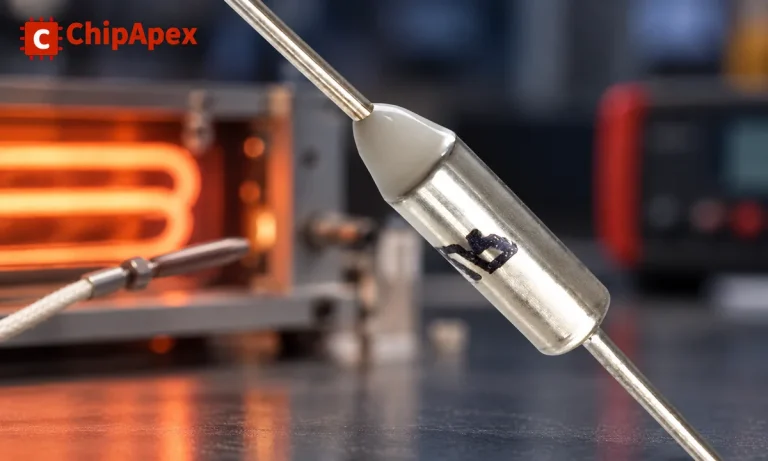
Understand thermal fuse operation, Tf, Th and Tm, electrical ratings and mounting. Check temperature limits and replacement requirements for your design.
Read More
Compare RC, crystal and MEMS oscillator circuits. Check ppm, jitter, load capacitance, startup margin and output compatibility before choosing a clock source.
Read More
305-068-520-578 is listed in the Edgeboard Connectors range at ChipApex. The manufacturer field lists EDAC Inc.. Its product description is CONN EDGE DUAL FMALE…
Read More
305-068-520-578 is listed in the Edgeboard Connectors range at ChipApex. The manufacturer field lists EDAC Inc.. Its product description is CONN EDGE DUAL FMALE…
Read More
305-068-520-578 is listed in the Edgeboard Connectors range at ChipApex. The manufacturer field lists EDAC Inc.. Its product description is CONN EDGE DUAL FMALE…
Read More
305-068-520-578 is listed in the Edgeboard Connectors range at ChipApex. The manufacturer field lists EDAC Inc.. Its product description is CONN EDGE DUAL FMALE…
Read More
305-068-520-578 is listed in the Edgeboard Connectors range at ChipApex. The manufacturer field lists EDAC Inc.. Its product description is CONN EDGE DUAL FMALE…
Read More
305-068-520-578 is listed in the Edgeboard Connectors range at ChipApex. The manufacturer field lists EDAC Inc.. Its product description is CONN EDGE DUAL FMALE…
Read More
See how a MEMS gyroscope measures angular rate, why its angle estimate drifts, and which range, noise, interface and temperature specs to compare.
Read More
305-068-520-578 is listed in the Edgeboard Connectors range at ChipApex. The manufacturer field lists EDAC Inc.. Its product description is CONN EDGE DUAL FMALE…
Read More
Understand how oscillators generate timing signals, how they differ from crystals, and which frequency, output and stability specs matter when choosing one.
Read More
The activity of extra discounts on wholesale prices is in full swing…
Please fill in your contact information and we will send you the latest wholesale price list.