 ChipApex | Global Electronic Components Supplier

SEARCH
Search Product
Search Post
— IC芯片 | 连接器 | 传感器 | 被动器件 —
Search productSearch post
— IC芯片 | 连接器 | 传感器 | 被动器件 —
Consult the customer manager about the wholesale price.
consultation hotline:86-132-6715-2157
email:[email protected]
Contact the product manager for consultation. One-stop consultation is available.
Do you want a lower wholesale price? Please send us your inquiry and we will reply immediately.
40.52.9.024.5001 is listed in the Power Relays, Over 2 Amps range at ChipApex. The manufacturer field lists Finder Relays, Inc.. Its product description is RELAY GEN PURPOSE DPDT 8A 24V. Review the specifications below when checking this part for your BOM.
The Finder Relays Inc. model 40.52.9.024.5001 is a miniature plug-in electromagnetic relay designed for industrial control applications. It features a double-pole double-throw (DPDT) contact configuration, providing two Form C switching circuits. The unit operates with a 24V DC coil and supports a maximum contact current of 8A. Key electrical specifications include a coil resistance of 900 Ohms and a power consumption of 500mW. The contacts are constructed from AgNi material with gold plating to ensure reliable signal and power switching. The device offers IP20 protection against solid objects and utilizes a standard 5.3mm pin pitch for socket compatibility.
Verify the specific ordering suffix to confirm coil voltage and contact configuration. Ensure the procurement documentation matches the exact part number 40.52.9.024.5001 to avoid confusion with similar models in the 40 series that may have different current ratings or coil powers. Confirm socket compatibility requirements before installation.
Select this component when a DPDT switching function is necessary within a 24V DC control environment. The 8A rating makes it suitable for moderate load applications. Consider the 500mW coil power for thermal management in enclosed spaces. Verify that the 5.3mm pin pitch aligns with existing PCB or socket infrastructure.
This relay belongs to the Finder Series 40 family of miniature PCB and plug-in relays. The series is characterized by its small footprint and standardized dimensions, allowing for high-density mounting in modern electronic assemblies. The 40.52 variant specifically denotes the DPDT configuration within this product line.
Direct substitutes must match the 24V DC coil voltage, DPDT contact form, and 8A current rating. Verify physical dimensions and pin pitch compatibility to ensure interchangeability without mechanical modification.
Explore related parts through Relays, all product categories, ChipApex homepage.
 40.52.9.024.5001
 is listed in the Power Relays, Over 2 Amps range at ChipApex. The manufacturer field lists Finder Relays, Inc.. Its product description is…
Read More
40.52.9.024.5001 is listed in the Power Relays, Over 2 Amps range at ChipApex. The manufacturer field lists Finder Relays, Inc.. Its product description is…
Read More
40.52.9.024.5001 is listed in the Power Relays, Over 2 Amps range at ChipApex. The manufacturer field lists Finder Relays, Inc.. Its product description is…
Read More
Learn why PTC resistance rises with temperature, how it differs from NTC, and which ratings matter for sensing and protection.
Read More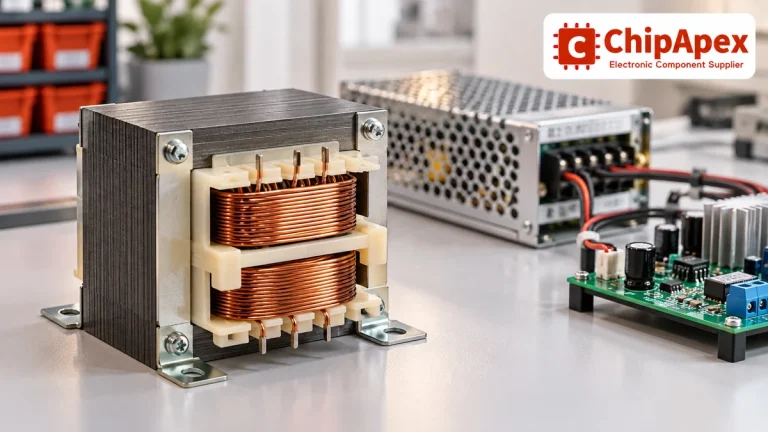
Select power transformers by input frequency, secondary VA, rectifier load, isolation, regulation and inrush. Build a clearer specification for your next RFQ.
Read More
40.52.9.024.5001 is listed in the Power Relays, Over 2 Amps range at ChipApex. The manufacturer field lists Finder Relays, Inc.. Its product description is…
Read More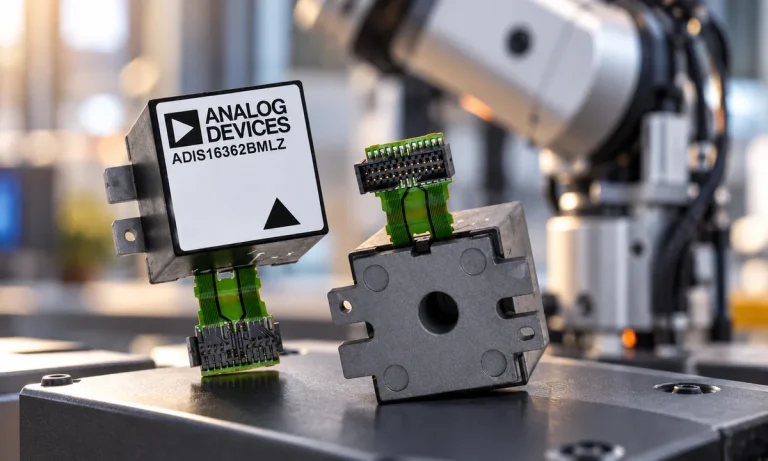
Learn what an IMU measures, how accelerometers and gyroscopes work together, why orientation estimates drift, and what to compare.
Read More
Compare thermistors, RTDs, thermocouples and temperature ICs. Learn how range, accuracy, response, interfaces and mounting affect component selection.
Read More
40.52.9.024.5001 is listed in the Power Relays, Over 2 Amps range at ChipApex. The manufacturer field lists Finder Relays, Inc.. Its product description is…
Read More
Understand how oscillators generate timing signals, how they differ from crystals, and which frequency, output and stability specs matter when choosing one.
Read More
40.52.9.024.5001 is listed in the Power Relays, Over 2 Amps range at ChipApex. The manufacturer field lists Finder Relays, Inc.. Its product description is…
Read More
See when an inductor behaves linearly, how DC bias and saturation reduce inductance, and which current and temperature curves to check.
Read More
The activity of extra discounts on wholesale prices is in full swing…
Please fill in your contact information and we will send you the latest wholesale price list.





