 ChipApex | Global Electronic Components Supplier

SEARCH
Search Product
Search Post
— IC芯片 | 连接器 | 传感器 | 被动器件 —
Search productSearch post
— IC芯片 | 连接器 | 传感器 | 被动器件 —
Consult the customer manager about the wholesale price.
consultation hotline:86-132-6715-2157
email:[email protected]
Contact the product manager for consultation. One-stop consultation is available.
Do you want a lower wholesale price? Please send us your inquiry and we will reply immediately.
402F1601XIJR is listed in the Crystals range at ChipApex. The manufacturer field lists CTS-Frequency Controls. Its product description is CRYSTAL 16.0000MHZ 9PF SMD. Review the specifications below when checking this part for your BOM.
The CTS-Frequency Controls 402F1601XIJR is a surface-mount MHz crystal designed for frequency control applications. It operates at a fundamental frequency of 16 MHz with a load capacitance of 9 pF and an equivalent series resistance (ESR) of 120 Ohms. The component features a frequency stability and tolerance of ±15 ppm, ensuring precise timing performance. It is housed in a compact 4-SMD, No Lead package with dimensions of 2.00mm x 1.60mm and a maximum seated height of 0.55mm. The device supports an operating temperature range of -20°C to 70°C and is RoHS3 compliant.
Verify the specific suffix 'I' against the official CTS datasheet to confirm the exact temperature range and tolerance specifications. Ensure the ordering quantity matches the tape and reel packaging requirements. Confirm that the 16 MHz frequency and 9 pF load capacitance align with the target circuit design before procurement.
Select this component when a 16 MHz fundamental frequency with ±15 ppm stability is required. The 9 pF load capacitance must match the oscillator circuit's external capacitor values. Consider the 4-SMD footprint constraints and the -20°C to 70°C operating range for suitability in commercial environments.
This part belongs to the CTS 402 series of crystals, which are characterized by small size and high reliability. The series utilizes quartz resonators suitable for various commercial applications. The 402F1601XIJR specifically targets applications needing a 16 MHz reference with standard commercial temperature ratings.
Direct substitutes include other 16 MHz crystals with 9 pF load capacitance and similar ESR values in a 4-SMD package. Verify pin compatibility and electrical parameters such as frequency tolerance and operating temperature range before substitution.
Explore related parts through Crystals, Oscillators, Resonators, all product categories, ChipApex homepage.
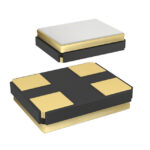 402F1601XIJR

402F1601XIJR is listed in the Crystals range at ChipApex. The manufacturer field lists CTS-Frequency Controls. Its product description is CRYSTAL 16.0000MHZ 9PF SMD. Review…
Read More
402F1601XIJR is listed in the Crystals range at ChipApex. The manufacturer field lists CTS-Frequency Controls. Its product description is CRYSTAL 16.0000MHZ 9PF SMD. Review…
Read More
Learn what a battery BMS does, how protection differs from charging, and which pack specifications to check when sourcing BMS components through ChipApex.
Read More
Choose logic inverter ICs by thresholds, supply, output drive and delay. Compare standard and Schmitt-trigger inputs, power sequencing and replacement checks.
Read More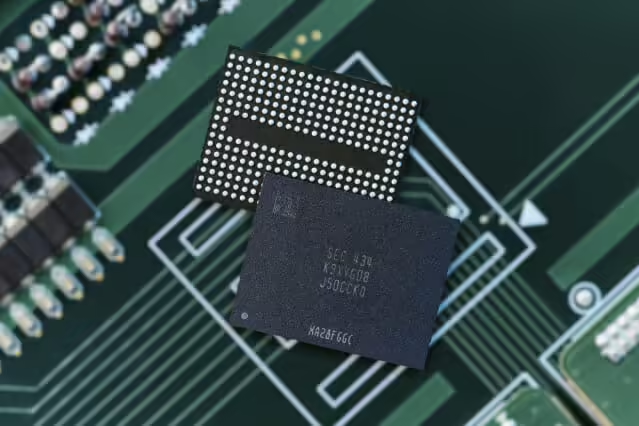
402F1601XIJR is listed in the Crystals range at ChipApex. The manufacturer field lists CTS-Frequency Controls. Its product description is CRYSTAL 16.0000MHZ 9PF SMD. Review…
Read More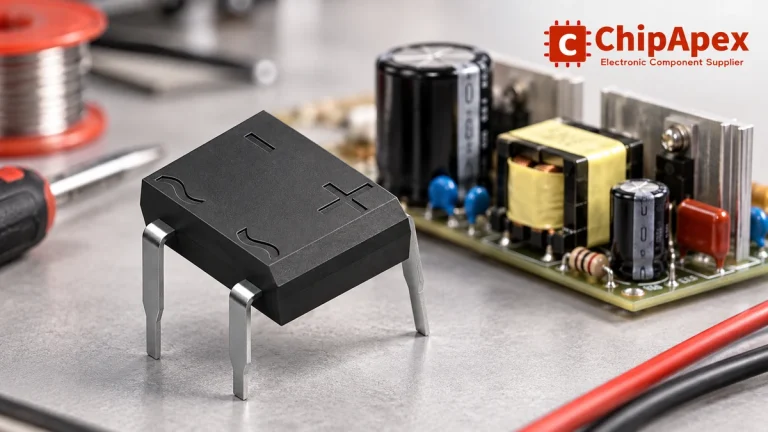
Select a bridge rectifier by reverse voltage, capacitor charging current, startup surge and cooling. Work through a stated DC voltage and ripple example.
Read More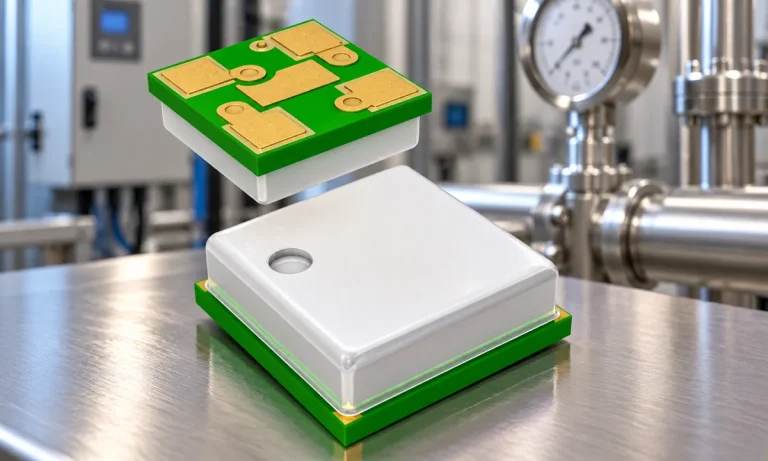
Learn how a pressure transducer converts pressure into voltage, current, or digital output, and compare pressure references and key selection specs.
Read More
Learn what an integrated circuit is, how ICs work, the main types and the specs to check before choosing a part for your design…
Read More
402F1601XIJR is listed in the Crystals range at ChipApex. The manufacturer field lists CTS-Frequency Controls. Its product description is CRYSTAL 16.0000MHZ 9PF SMD. Review…
Read More
402F1601XIJR is listed in the Crystals range at ChipApex. The manufacturer field lists CTS-Frequency Controls. Its product description is CRYSTAL 16.0000MHZ 9PF SMD. Review…
Read More
402F1601XIJR is listed in the Crystals range at ChipApex. The manufacturer field lists CTS-Frequency Controls. Its product description is CRYSTAL 16.0000MHZ 9PF SMD. Review…
Read More
See when an inductor behaves linearly, how DC bias and saturation reduce inductance, and which current and temperature curves to check.
Read More
The activity of extra discounts on wholesale prices is in full swing…
Please fill in your contact information and we will send you the latest wholesale price list.




