 ChipApex | Global Electronic Components Supplier

SEARCH
Search Product
Search Post
— IC芯片 | 连接器 | 传感器 | 被动器件 —
Search productSearch post
— IC芯片 | 连接器 | 传感器 | 被动器件 —
Consult the customer manager about the wholesale price.
consultation hotline:86-132-6715-2157
email:[email protected]
Contact the product manager for consultation. One-stop consultation is available.
Do you want a lower wholesale price? Please send us your inquiry and we will reply immediately.
74LVC1G125DBVRG4 is listed in the Buffers, Drivers, Receivers, Transceivers range at ChipApex. The manufacturer field lists Texas Instruments. Its product description is IC BUFF NON-INVERT 5.5V SOT23-5. Review the specifications below when checking this part for your BOM.
The SN74LVC1G125DBVRG4 is a single bus buffer gate with three-state output from the Texas Instruments LVC series. It operates within a supply voltage range of 1.65 V to 5.5 V and features non-inverting logic. The device provides high drive capability with output currents of ±32 mA. It is housed in a SOT-23-5 surface-mount package and supports operation across an extended temperature range from -40°C to +125°C.
Verify the complete part number including the G4 suffix, which indicates lead-free status and RoHS compliance. Confirm the specific package variant matches the required footprint. Ensure the ordering quantity aligns with the manufacturer's standard reel sizes or cut tape availability. Cross-reference the datasheet revision to confirm electrical characteristics match the design requirements.
Select this component when a single-buffer solution with three-state functionality is required in a minimal footprint. The wide voltage range allows direct interfacing between 1.8V, 2.5V, 3.3V, and 5V domains. The high drive strength supports moderate capacitive loads without external buffering. Consider the thermal performance and package size constraints during PCB layout planning.
This device belongs to the SN74LVC1G125 family of single buffers with three-state outputs. It is part of Texas Instruments' broader portfolio of low-voltage CMOS logic devices designed for battery-powered applications. The family offers various packaging options to suit different space-constrained designs while maintaining consistent logical functionality and electrical specifications.
SN74LVC1G125DBVR
The device supports an output current of ±32 mA.
Yes, the Ioff feature supports partial power-down mode and hot insertion protection.
Explore related parts through Logic, Integrated Circuits (ICs), all product categories, ChipApex homepage.
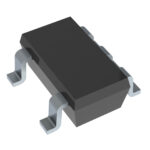 74LVC1G125DBVRG4
Plan electronics thermal management with power-loss estimates, thermal metrics, sensor placement and fan control. Check heat paths and validate your system.
Read More
74LVC1G125DBVRG4 is listed in the Buffers, Drivers, Receivers, Transceivers range at ChipApex. The manufacturer field lists Texas Instruments. Its product description is IC BUFF…
Read More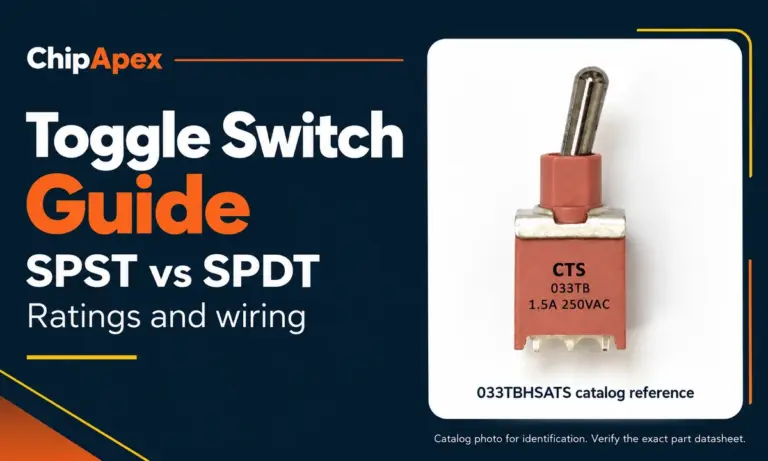
Compare SPST and SPDT toggle switches, understand AC/DC ratings, and follow wiring examples. Check contact action, mounting and parts in the ChipApex catalog.
Read More
74LVC1G125DBVRG4 is listed in the Buffers, Drivers, Receivers, Transceivers range at ChipApex. The manufacturer field lists Texas Instruments. Its product description is IC BUFF…
Read More
74LVC1G125DBVRG4 is listed in the Buffers, Drivers, Receivers, Transceivers range at ChipApex. The manufacturer field lists Texas Instruments. Its product description is IC BUFF…
Read More
Select a bridge rectifier by reverse voltage, capacitor charging current, startup surge and cooling. Work through a stated DC voltage and ripple example.
Read More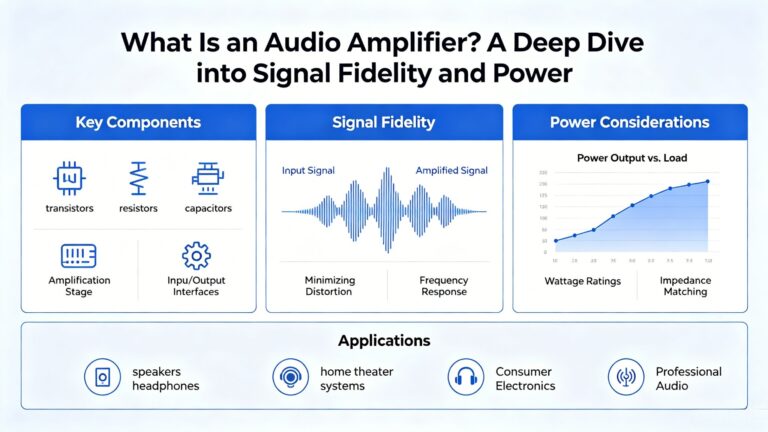
74LVC1G125DBVRG4 is listed in the Buffers, Drivers, Receivers, Transceivers range at ChipApex. The manufacturer field lists Texas Instruments. Its product description is IC BUFF…
Read More
Learn what a transistor does in a circuit. Compare switching and amplification, BJT and MOSFET drive, operating limits and practical component selection.
Read More
74LVC1G125DBVRG4 is listed in the Buffers, Drivers, Receivers, Transceivers range at ChipApex. The manufacturer field lists Texas Instruments. Its product description is IC BUFF…
Read More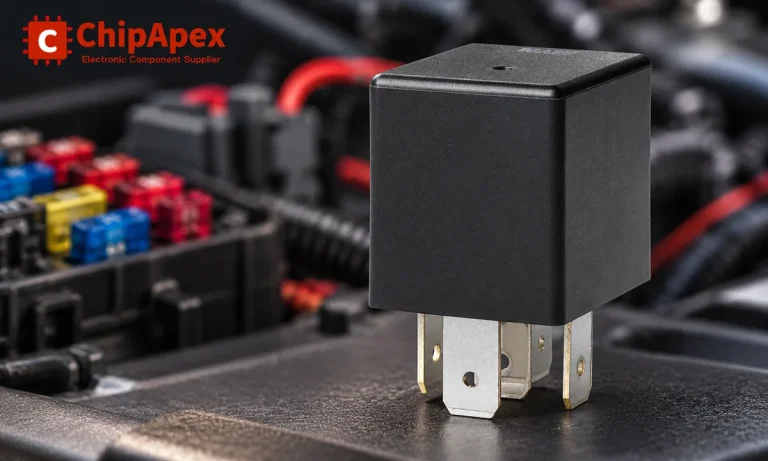
Learn the relay definition, coil and contact operation, NO and NC forms, load ratings and suppression choices. Compare mechanical, reed and solid-state types.
Read More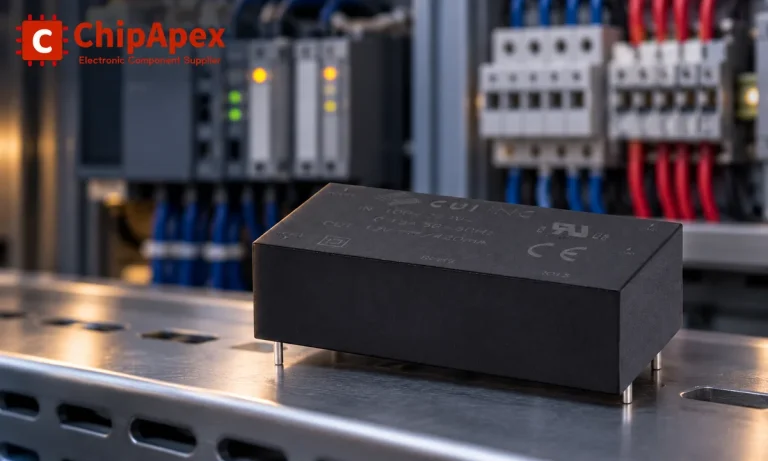
Choose an AC to DC converter by input range, output demand, isolation, efficiency and thermal derating. Compare architectures and check installation needs.
Read More
See when an inductor behaves linearly, how DC bias and saturation reduce inductance, and which current and temperature curves to check.
Read More
The activity of extra discounts on wholesale prices is in full swing…
Please fill in your contact information and we will send you the latest wholesale price list.





