ChipApex | Global Electronic Components Supplier

SEARCH
Search Product
Search Post
— IC芯片 | 连接器 | 传感器 | 被动器件 —
Search productSearch post
— IC芯片 | 连接器 | 传感器 | 被动器件 —
Consult the customer manager about the wholesale price.
consultation hotline:86-132-6715-2157
email:[email protected]
Contact the product manager for consultation. One-stop consultation is available.
Do you want a lower wholesale price? Please send us your inquiry and we will reply immediately.
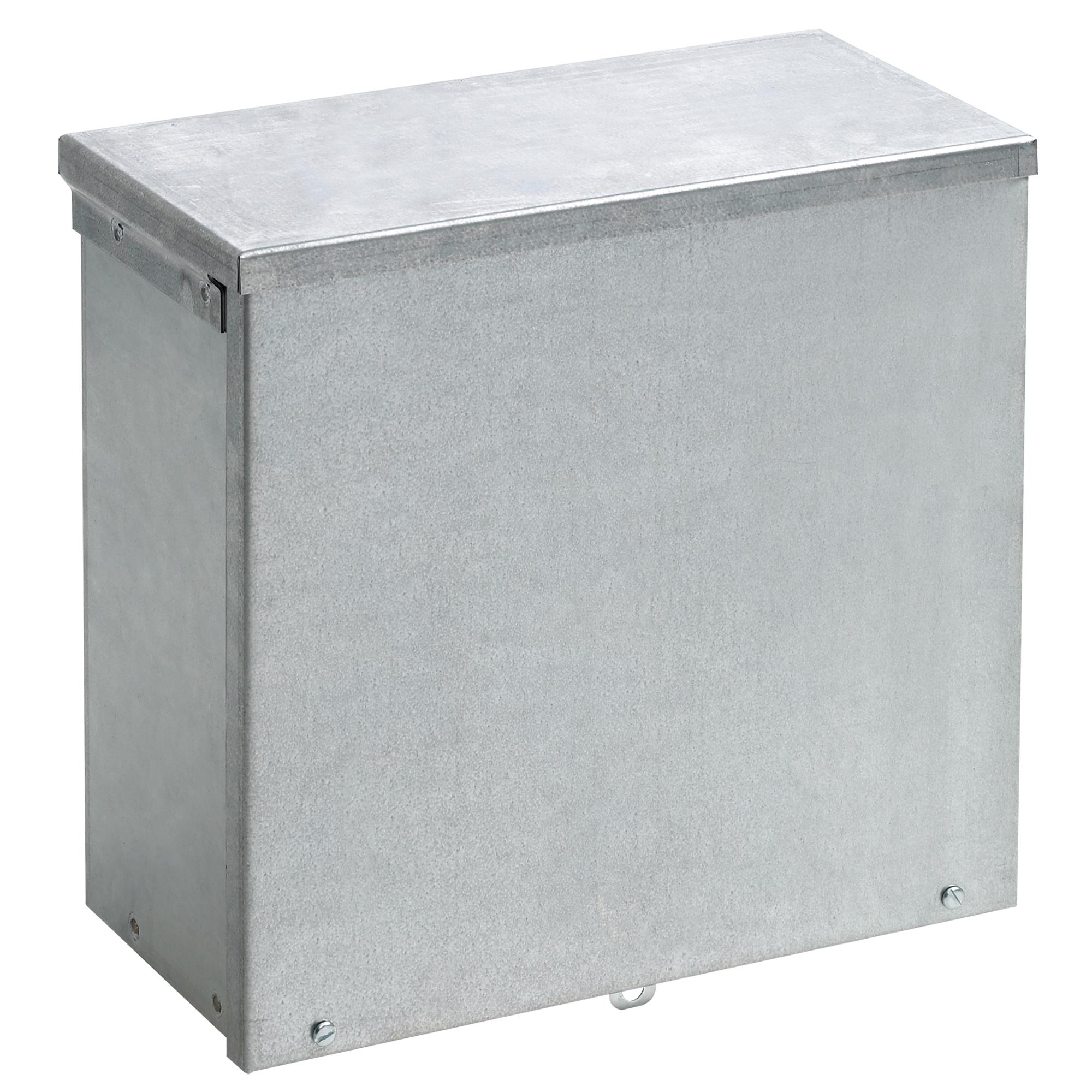
The Hoffman Enclosures Inc. A10R106GV is a galvanized steel pull box enclosure designed for outdoor or harsh environments. It features a Type 3R and IP32 protection rating, safeguarding internal components against falling dirt, windblown dust, dripping water, and splashing. The unit measures 10 inches in height, 10 inches in width, and 6 inches in depth (254 mm x 254 mm x 152 mm). Constructed from 16-gauge mild steel with a galvanized finish, it utilizes a slip-on removable cover secured by plated steel screws along the bottom edge. The back includes embossed mounting holes, and the design provides provisions for padlocking to enhance security.
Verify the specific NEMA Type 3R and IP32 ratings match environmental requirements. Confirm dimensions (10x10x6 inches) and material thickness (16 gauge) align with mechanical constraints. Ensure the galvanized finish is suitable for the intended corrosive environment. Check that the slip-on cover mechanism meets maintenance access needs. Validate padlocking provisions if security is required.
Select this model when outdoor protection against rain and debris is necessary. The galvanized steel offers durability in harsh conditions. Consider the 16-gauge thickness for structural integrity. The Type 3R rating specifically addresses dripping water and falling dirt. Ensure the 10x10x6 inch footprint fits the installation space. Verify compatibility with existing conduit or cable entries.
This component belongs to the Hoffman Enclosures line of metallic pull boxes. It is part of a series designed for electrical system protection. Similar models may vary in size, material, or protection rating. The A10R106GV is distinct due to its specific galvanized finish and Type 3R certification. It serves as a protective housing rather than an active electronic component.
Public confirmed substitute part numbers are not available in the provided documentation. Verify exact dimensional and rating matches when considering alternatives. Ensure replacement units maintain Type 3R compliance and galvanized steel construction. Check for compatible mounting hole patterns and cover mechanisms.
 A10R106GV
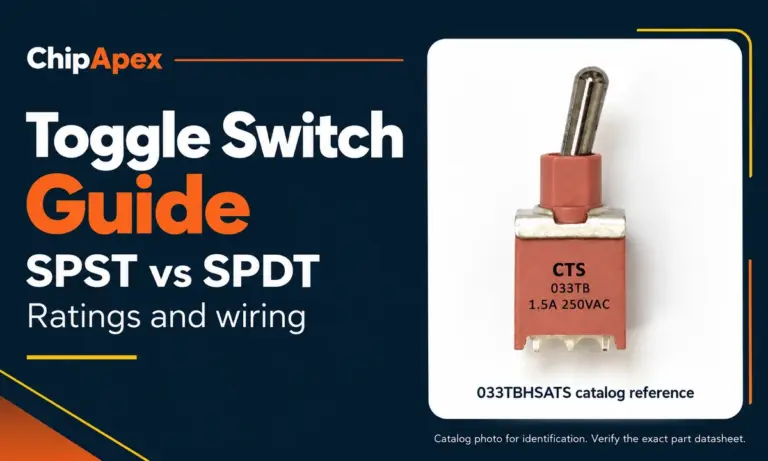
Compare SPST and SPDT toggle switches, understand AC/DC ratings, and follow wiring examples. Check contact action, mounting and parts in the ChipApex catalog.
Read More
The rapid advancement of artificial intelligence (AI) is transforming industries across the globe, and the world of electronic components is no exception. From smarter…
Read More
Find out when a bare shock switch needs a pull resistor, when an MCU internal pull-up is enough, and why sensor modules and piezo…
Read More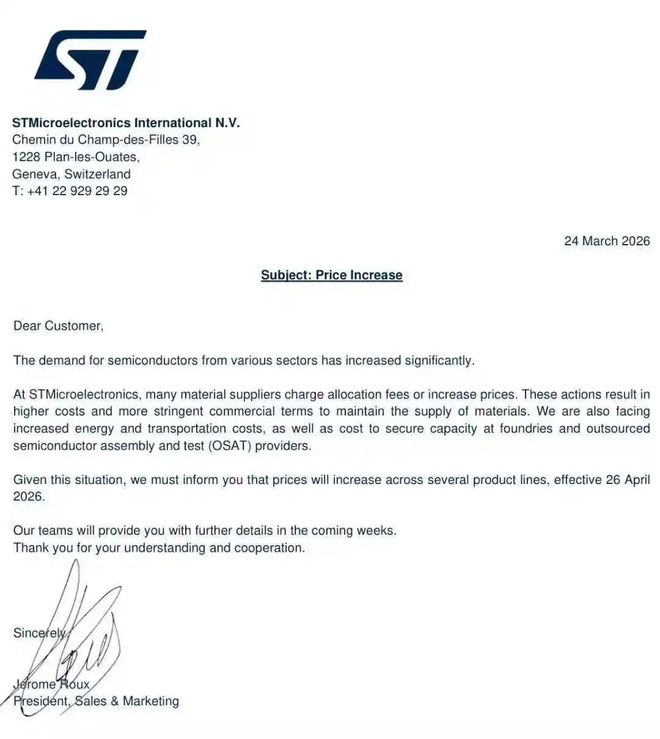
Geneva, Switzerland – March 25, 2026 – STMicroelectronics N.V. (NYSE: STM), a global semiconductor leader serving customers across the electronics applications spectrum, has announced…
Read More
CHICAGO, USA – May 27, 2026 – Global leading interconnect manufacturer Molex officially issued a global distributor price adjustment notice on May 27, confirming…
Read More
Understand how oscillators generate timing signals, how they differ from crystals, and which frequency, output and stability specs matter when choosing one.
Read More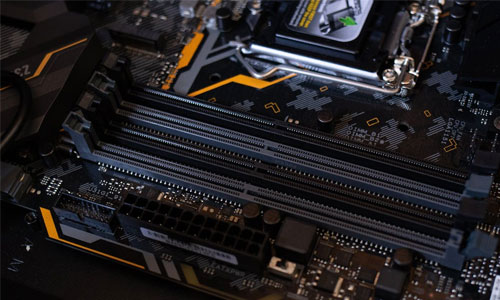
Embedded Integrated Circuit Modules: The Backbone of Modern Technology Embedded Integrated Circuit Modules (EICMs) have become an indispensable part of modern technology. Serving as…
Read More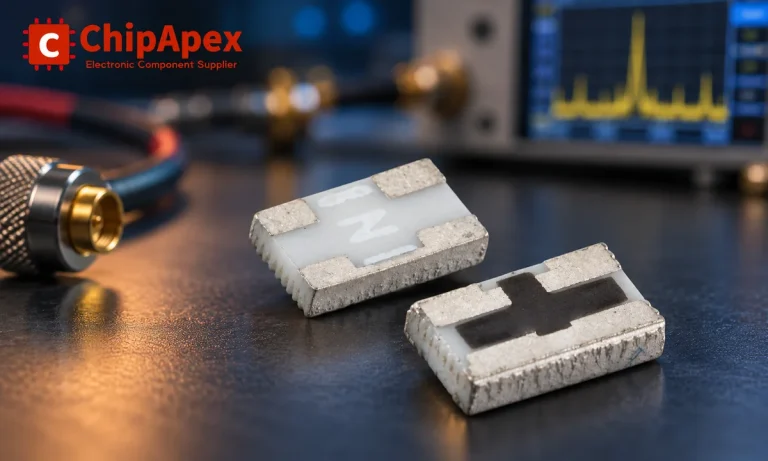
Understand RF attenuator dB values, fixed and programmable types, impedance, power limits and noise tradeoffs before choosing parts for an RF signal path.
Read More
On September 22nd, it was reported that Samsung Electronics, the South Korean tech giant, had successfully passed NVIDIA’s certification test for its 12-layer HBM3E…
Read More
Learn how a pressure transducer converts pressure into voltage, current, or digital output, and compare pressure references and key selection specs.
Read More
See how a MEMS gyroscope measures angular rate, why its angle estimate drifts, and which range, noise, interface and temperature specs to compare.
Read More
Compare RC, crystal and MEMS oscillator circuits. Check ppm, jitter, load capacitance, startup margin and output compatibility before choosing a clock source.
Read More
The activity of extra discounts on wholesale prices is in full swing…
Please fill in your contact information and we will send you the latest wholesale price list.