ChipApex | Global Electronic Components Supplier

SEARCH
Search Product
Search Post
— IC芯片 | 连接器 | 传感器 | 被动器件 —
Search productSearch post
— IC芯片 | 连接器 | 传感器 | 被动器件 —
Consult the customer manager about the wholesale price.
consultation hotline:86-132-6715-2157
email:[email protected]
Contact the product manager for consultation. One-stop consultation is available.
Do you want a lower wholesale price? Please send us your inquiry and we will reply immediately.
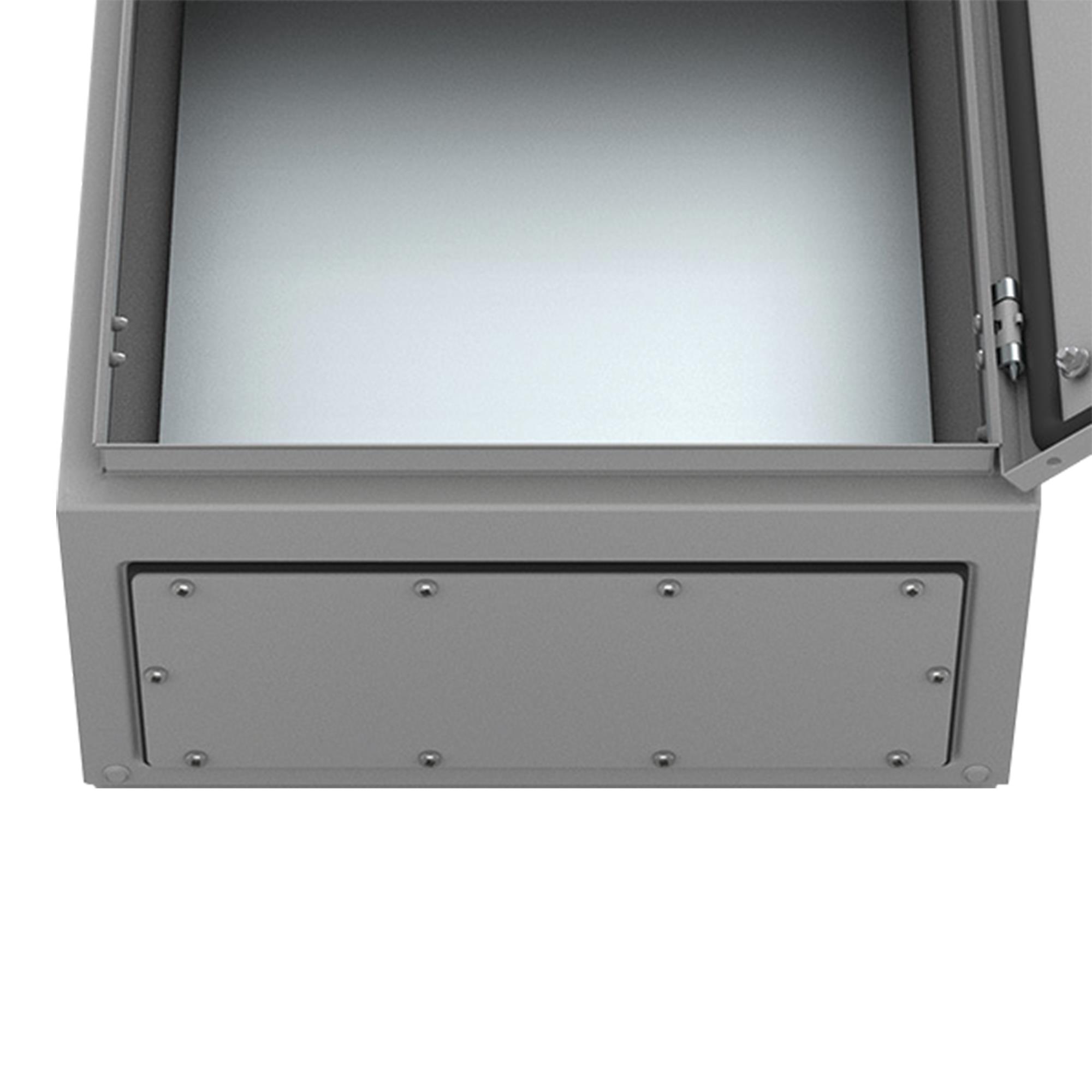
The AF03SR5 is a standard gland plate manufactured by nVent HOFFMAN, designed for Type 3S applications. It features a light gray powder-coated finish and is constructed from steel. The component has specific dimensions of 400 mm width, 210 mm depth, and 400 mm height. It is engineered to accommodate an opening size of 410 x 56 mm, facilitating cable entry into compatible enclosures while maintaining environmental protection standards.
Verify the exact opening dimensions required (410 x 56 mm) against the target enclosure specifications before procurement. Confirm that the Type 3S rating aligns with the operational environment's requirements for sleet and ice resistance. Ensure compatibility with the specific Hoffman enclosure model intended for installation to guarantee proper fit and seal integrity.
Select this gland plate when a Type 3S rated solution is necessary for protecting cable entries against sleet and ice. Consider the material composition and finish for corrosion resistance in outdoor or harsh industrial settings. Evaluate the dimensional constraints of the enclosure to ensure the 400x400mm plate fits the designated mounting area without modification.
This component belongs to the nVent HOFFMAN AF series of gland plates, which are accessories used to seal openings in metal enclosures. These plates are part of a broader ecosystem of enclosure solutions designed to meet various NEMA and IP ratings, ensuring equipment safety and reliability in diverse operating conditions.
No direct substitute part numbers are publicly confirmed for this specific model. Verify if generic gland plates with matching dimensions and Type 3S ratings can serve as alternatives, though original equipment manufacturer parts are recommended for guaranteed compatibility.
 AF03SR5
Learn what data acquisition means, from sensors and conditioning to sampling and storage. Review channel timing, wiring, calibration and data quality.
Read More
Tokyo / Munich / Tessenderlo, December 24, 2025As the global semiconductor industry enters the first year of the 2nm process era, international electronic component…
Read More
Compare RC, crystal and MEMS oscillator circuits. Check ppm, jitter, load capacitance, startup margin and output compatibility before choosing a clock source.
Read More
Understand how a comparator switches at a voltage threshold, why hysteresis prevents chatter, and which output and input specs matter.
Read More
Learn what an integrated circuit is, how ICs work, the main types and the specs to check before choosing a part for your design…
Read More
In embedded design, the tug-of-war between cost and performance is constant. On one side, you have Microcontrollers (MCUs)—cheap, simple, and efficient. On the other,…
Read More
Choose logic inverter ICs by thresholds, supply, output drive and delay. Compare standard and Schmitt-trigger inputs, power sequencing and replacement checks.
Read More
Choose a DIP switch by contact type, coded positions, footprint and signal ratings. Check logic polarity, assembly conditions and PCB configuration behavior.
Read More
The Dutch government’s intervention in the control of Nexperia (Anshi Semiconductor) is triggering a chain reaction of turmoil in the global power semiconductor market.…
Read More
Understand UART protocol framing, baud rate and electrical interfaces. Learn 8N1 timing, TX/RX wiring, buffering and practical troubleshooting steps.
Read More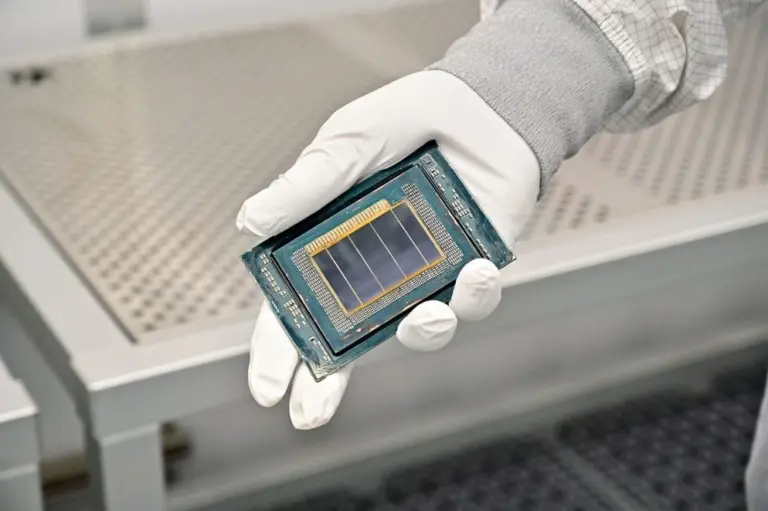
Recently, global semiconductor manufacturers have been constantly taking actions and presenting numerous new developments in aspects such as process technology and product research and…
Read More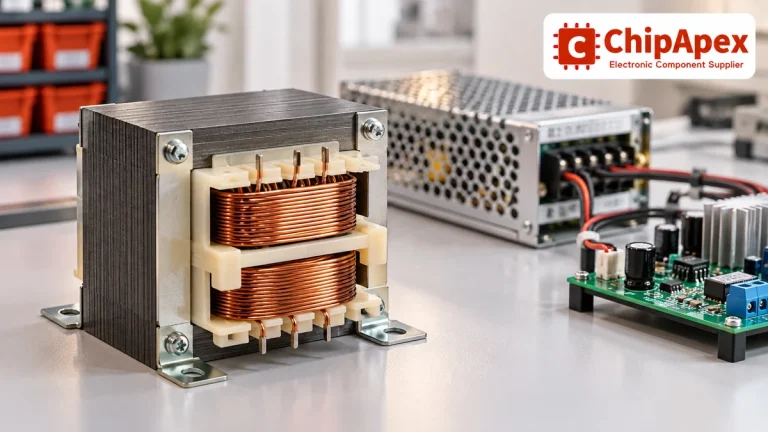
Select power transformers by input frequency, secondary VA, rectifier load, isolation, regulation and inrush. Build a clearer specification for your next RFQ.
Read More
The activity of extra discounts on wholesale prices is in full swing…
Please fill in your contact information and we will send you the latest wholesale price list.