ChipApex | Global Electronic Components Supplier

SEARCH
Search Product
Search Post
— IC芯片 | 连接器 | 传感器 | 被动器件 —
Search productSearch post
— IC芯片 | 连接器 | 传感器 | 被动器件 —
Consult the customer manager about the wholesale price.
consultation hotline:86-132-6715-2157
email:[email protected]
Contact the product manager for consultation. One-stop consultation is available.
Do you want a lower wholesale price? Please send us your inquiry and we will reply immediately.
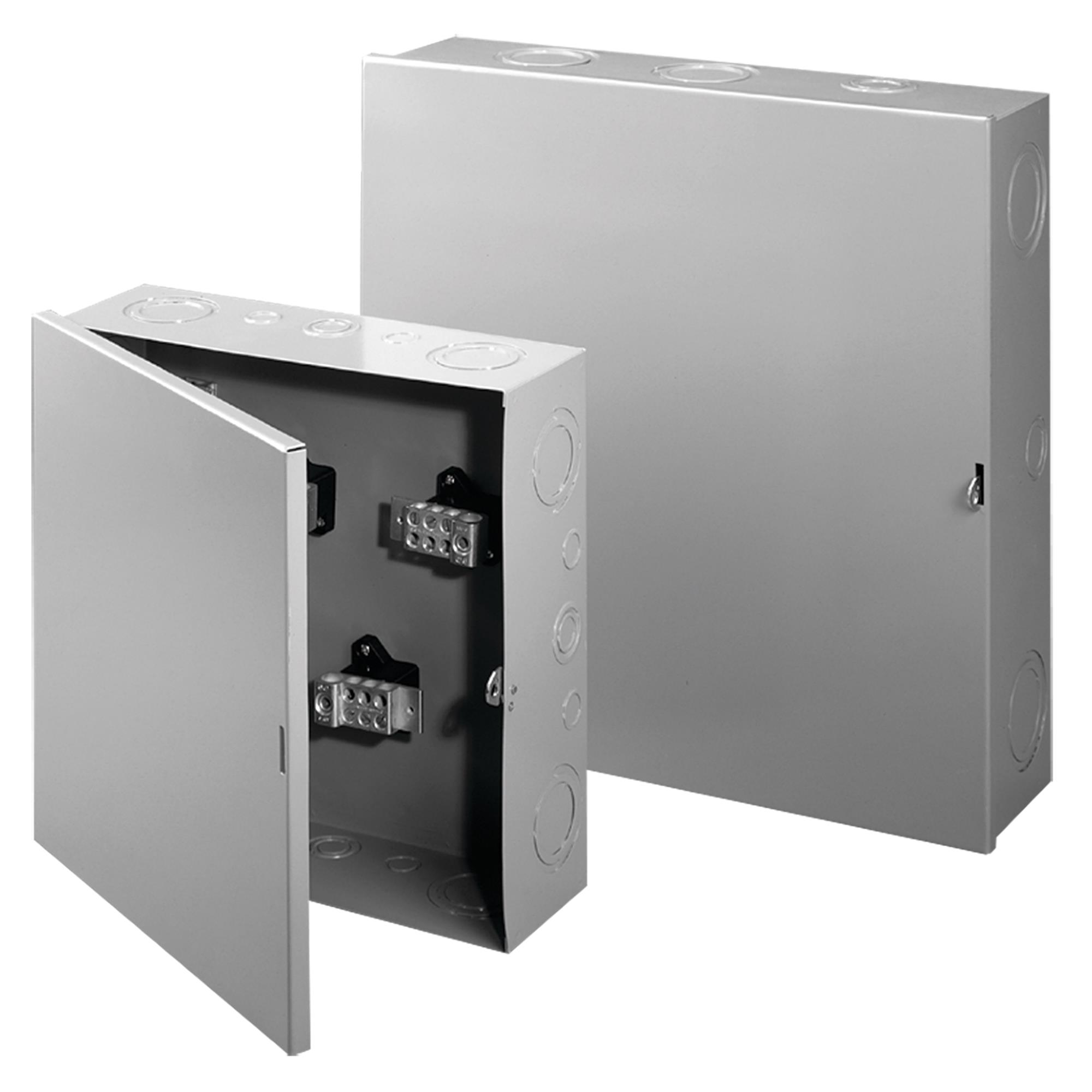
The Hoffman Enclosures ASB403R is a Type 1 splitter box constructed from steel with a gray finish. It measures 22 inches in length, 22 inches in width, and 6 inches in depth (559mm x 559mm x 152mm). The unit features a standard pull latch and hinge mechanism for the door. It is designed to split feeder circuit conductors into multiple branch circuits. The enclosure includes pre-installed terminal blocks suitable for three- and four-wire configurations.
Verify that the application environment meets NEMA Type 1 requirements, as this enclosure is intended for indoor use only. Confirm that the physical dimensions of 22x22x6 inches fit the installation space. Ensure the electrical load does not exceed the rated capacities of the main lugs (400A) or branch lugs (285A). Check for compatibility with existing conduit knockouts, which include two 2-1/2 inch and three 3-1/2 inch entries.
Select this model when indoor conductor splitting is required without environmental sealing. Compare against sealed enclosures if outdoor or washdown conditions are present. Verify that the 400A main rating and 285A branch rating align with the circuit design. Consider the steel construction and gray finish for aesthetic consistency with other equipment.
This component belongs to the Hoffman splitter box series, designed for electrical distribution tasks. It serves as an intermediate distribution point between feeders and branch circuits. The product line typically includes various sizes and ratings to accommodate different current loads and spatial constraints within industrial and commercial electrical panels.
Direct substitutes may include models from the same manufacturer with identical dimensions and ratings. Verify that any replacement maintains the 400A main and 285A branch lug ratings. Ensure the new unit supports the required wire configuration and knockout sizes.
 ASB403R

Tokyo / Munich / Tessenderlo, December 24, 2025As the global semiconductor industry enters the first year of the 2nm process era, international electronic component…
Read More
As the backbone of modern technology, electronic components are undergoing revolutionary changes, driven by advancements in materials science, miniaturization, and smart manufacturing. From ultra-efficient…
Read More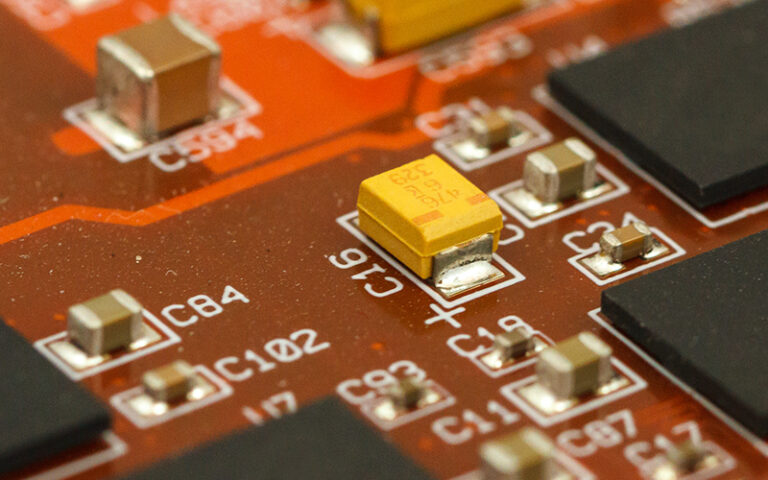
The global electronics industry is facing an escalating shortage of tantalum capacitors, a critical passive component, as surging demand from AI servers, automotive electronics,…
Read More
On September 22nd, it was reported that Samsung Electronics, the South Korean tech giant, had successfully passed NVIDIA’s certification test for its 12-layer HBM3E…
Read More
Over the past week, the global electronic components sector has witnessed dual transformations in policy and technology: Coupled with mounting pressure from a worsening…
Read More
Understand RF attenuator dB values, fixed and programmable types, impedance, power limits and noise tradeoffs before choosing parts for an RF signal path.
Read More
Learn what an IMU measures, how accelerometers and gyroscopes work together, why orientation estimates drift, and what to compare.
Read More
Learn how a pressure transducer converts pressure into voltage, current, or digital output, and compare pressure references and key selection specs.
Read More
Learn how an analog front end conditions sensor signals. Compare gain, noise, filtering, ADC settling and integration options before selecting components.
Read More
Learn how a diode conducts, how to identify anode and cathode, and when to choose rectifier, TVS, Zener or photodiode types for a circuit.
Read More
Understand UART protocol framing, baud rate and electrical interfaces. Learn 8N1 timing, TX/RX wiring, buffering and practical troubleshooting steps.
Read More
In the vast landscape of memory technology, EEPROM (Electrically Erasable Programmable Read-Only Memory) often plays the unsung hero. While NAND Flash grabs headlines for…
Read More
The activity of extra discounts on wholesale prices is in full swing…
Please fill in your contact information and we will send you the latest wholesale price list.