ChipApex | Global Electronic Components Supplier

SEARCH
Search Product
Search Post
— IC芯片 | 连接器 | 传感器 | 被动器件 —
Search productSearch post
— IC芯片 | 连接器 | 传感器 | 被动器件 —
Consult the customer manager about the wholesale price.
consultation hotline:86-132-6715-2157
email:[email protected]
Contact the product manager for consultation. One-stop consultation is available.
Do you want a lower wholesale price? Please send us your inquiry and we will reply immediately.
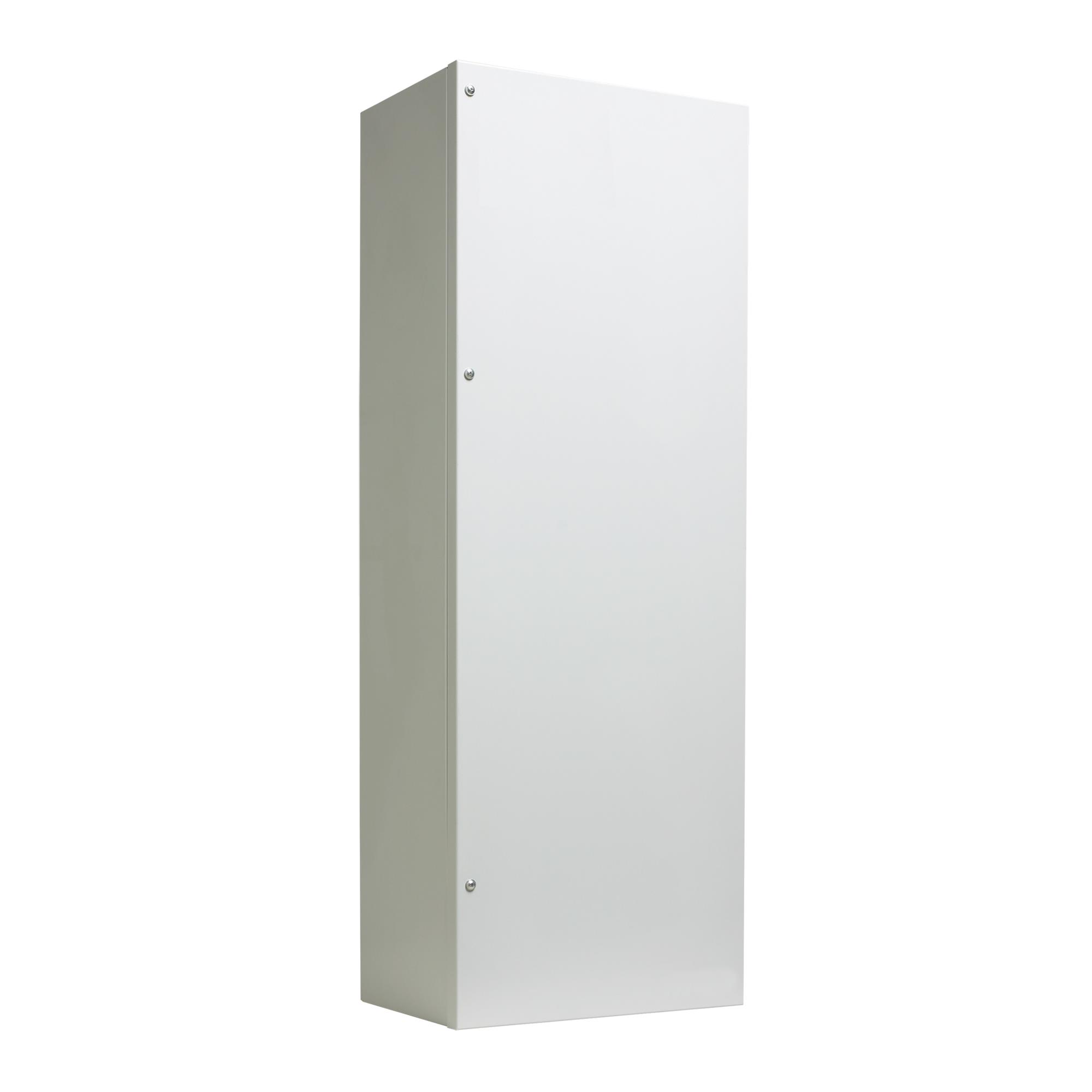
The Hoffman Enclosures CR430816GW010 is a water-cooled enclosure air conditioner designed for indoor and outdoor use. It provides a cooling capacity of 8500 BTU/hr (2490 Watts) using 115 VAC power at 50/60 Hz with a current rating of 13 A. The unit features a UL Type 4 standard construction, ensuring protection against environmental ingress. Its physical dimensions are 43.31 inches in height, 15.75 inches in width, and 10.25 inches in depth, with a weight of approximately 86 lbs.
Verify that the facility has a reliable source of cooling water compatible with the unit's requirements. Confirm that the electrical supply matches the 115 VAC, 50/60 Hz specification and can support the 13 A load. Ensure the enclosure dimensions accommodate the unit's footprint and height constraints. Check for any specific mounting hardware requirements not included in the standard package.
Select this model when high reliability and sealed enclosure integrity are prioritized over fan-based cooling systems. It is suitable for applications where dust, moisture, or corrosive agents would compromise traditional air-to-air coolers. Consider the availability of water supply and drainage infrastructure before choosing this water-cooled solution over air-cooled alternatives.
This unit belongs to the Hoffman CR43WC series of water-cooled climate control devices. These units are engineered to maintain internal temperatures within specified limits without exchanging air with the outside environment. The series is part of nVent HOFFMAN's broader range of industrial enclosure cooling solutions.
Direct replacement requires matching the 8500 BTU/hr capacity and 115 VAC input. Verify dimensional compatibility with the existing enclosure opening. Ensure the new unit supports the same UL Type 4 rating if environmental exposure remains a factor.
No, the CR430816GW010 uses water to cool the refrigerant and does not utilize external air movers or fans for heat exchange.
The unit meets UL Type 4 standards as its standard configuration.
 CR430816GW010
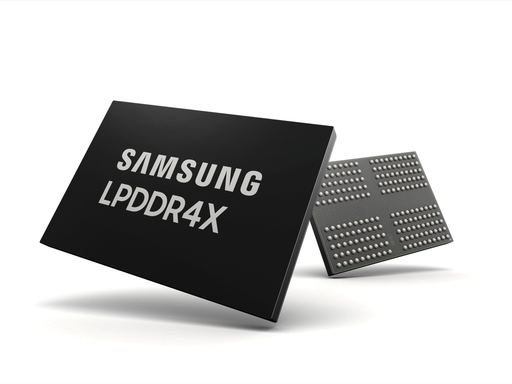
Samsung Electronics, the world’s largest memory chip manufacturer, has officially confirmed the end-of-life (EOL) for its LPDDR4 and LPDDR4X low-power DRAM products, marking a…
Read More
Learn what data acquisition means, from sensors and conditioning to sampling and storage. Review channel timing, wiring, calibration and data quality.
Read More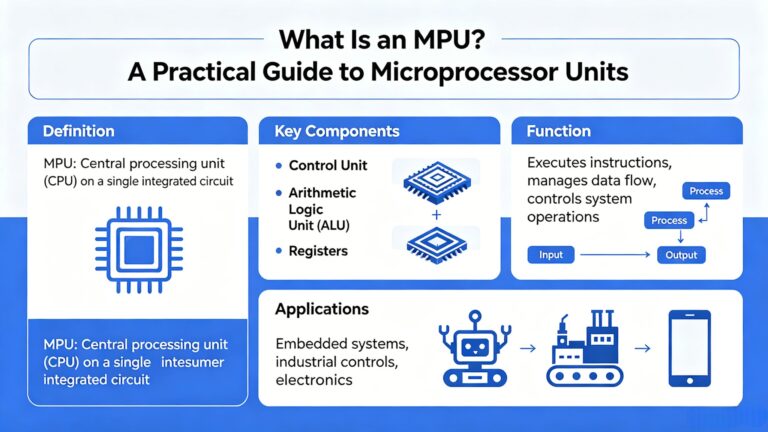
In embedded design, the tug-of-war between cost and performance is constant. On one side, you have Microcontrollers (MCUs)—cheap, simple, and efficient. On the other,…
Read More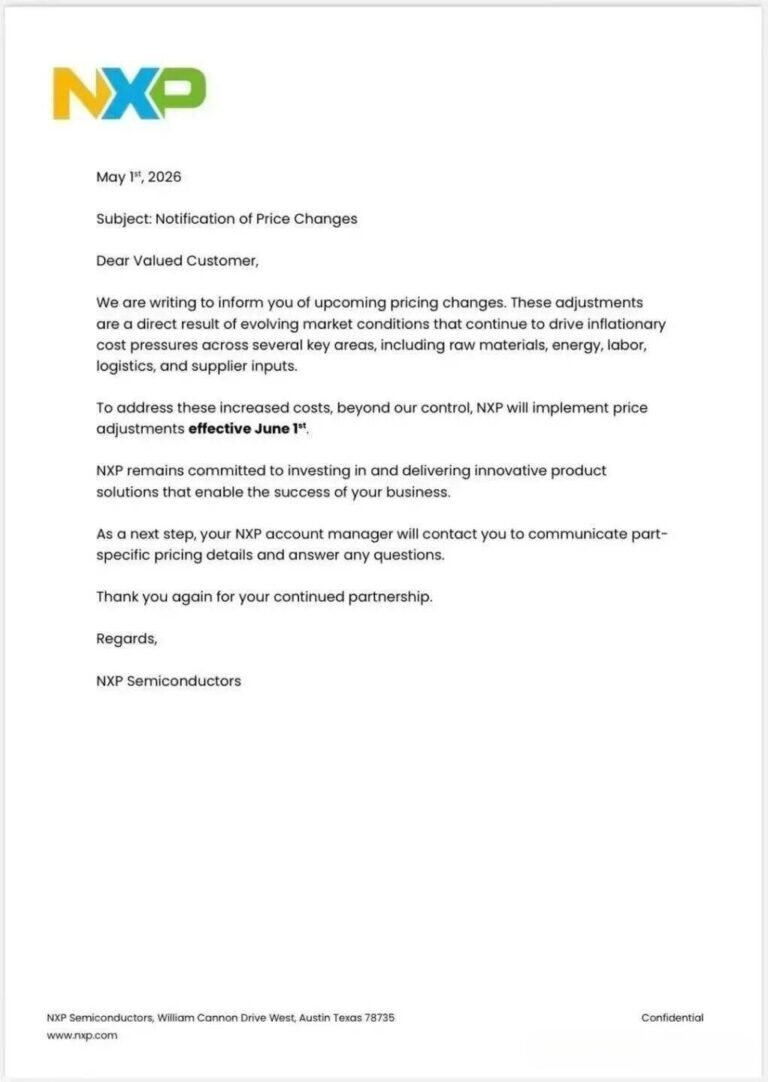
May 8, 2026 – Eindhoven, Netherlands NXP Semiconductors (NXPI), a global leader in automotive and industrial semiconductor solutions, has officially notified its worldwide channel…
Read More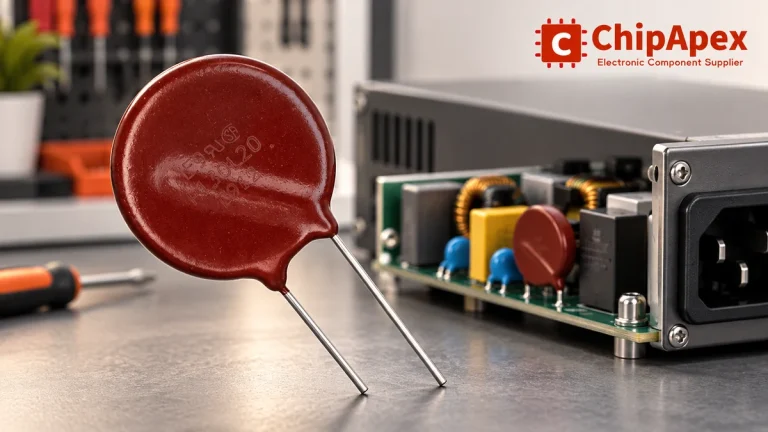
Select MOV varistors by continuous voltage, clamping behavior, surge waveform and repetition. Check thermal disconnection, fuse coordination and replacements.
Read More
Understand how oscillators generate timing signals, how they differ from crystals, and which frequency, output and stability specs matter when choosing one.
Read More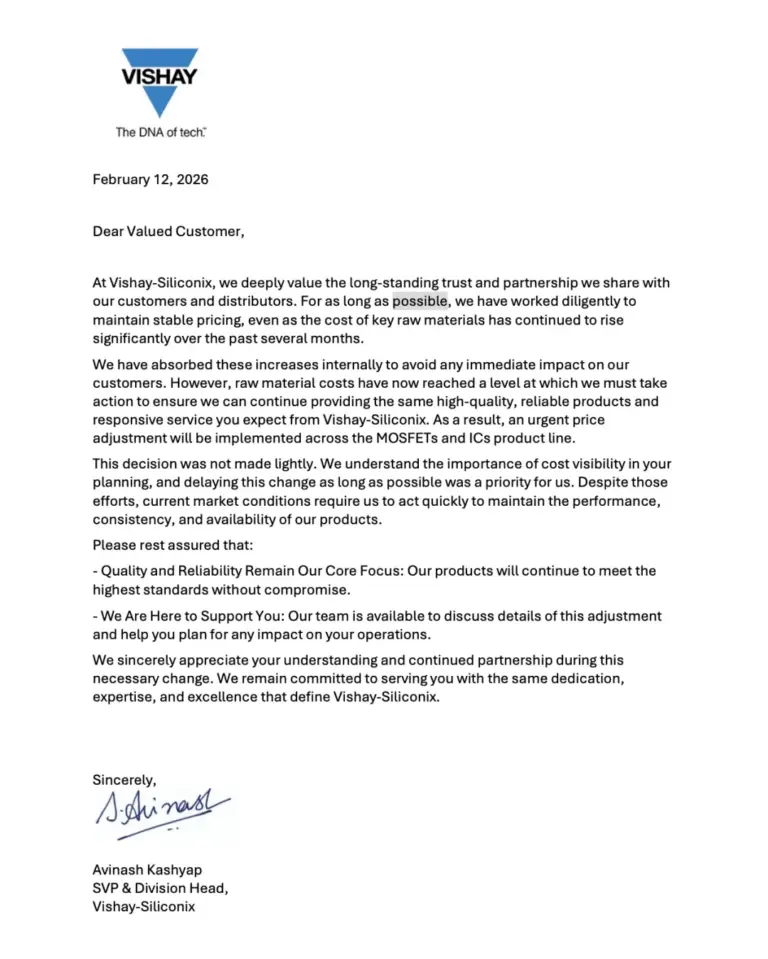
Vishay Intertechnology, Inc., a global leader in discrete semiconductors and passive electronic components, has officially announced a price adjustment for its Metal-Oxide-Semiconductor Field-Effect Transistors…
Read More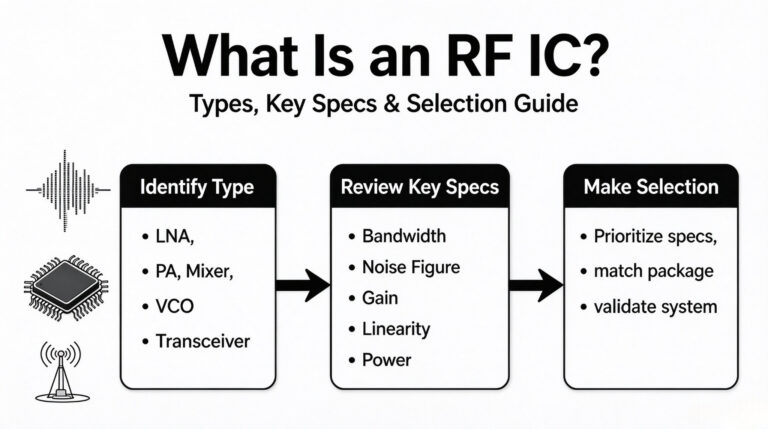
An RF IC, or radio-frequency integrated circuit, is a chip that processes wireless signals between the antenna and the baseband processor. Instead of building…
Read More
Learn how an analog front end conditions sensor signals. Compare gain, noise, filtering, ADC settling and integration options before selecting components.
Read More
On September 22nd, it was reported that Samsung Electronics, the South Korean tech giant, had successfully passed NVIDIA’s certification test for its 12-layer HBM3E…
Read More
TOKYO, April 15, 2026 – Taiyo Yuden Co., Ltd. (TAIYO YUDEN), a leading global manufacturer of passive electronic components, has officially notified its worldwide…
Read More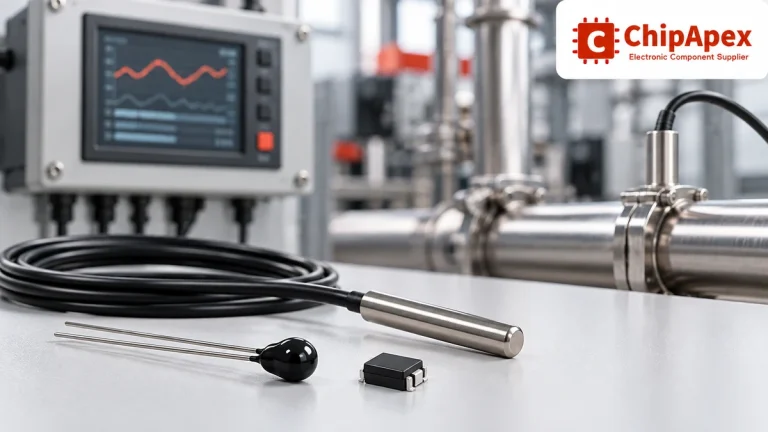
Compare thermistors, RTDs, thermocouples and temperature ICs. Learn how range, accuracy, response, interfaces and mounting affect component selection.
Read More
The activity of extra discounts on wholesale prices is in full swing…
Please fill in your contact information and we will send you the latest wholesale price list.