 ChipApex | Global Electronic Components Supplier

SEARCH
Search Product
Search Post
— IC芯片 | 连接器 | 传感器 | 被动器件 —
Search productSearch post
— IC芯片 | 连接器 | 传感器 | 被动器件 —
Consult the customer manager about the wholesale price.
consultation hotline:86-132-6715-2157
email:[email protected]
Contact the product manager for consultation. One-stop consultation is available.
Do you want a lower wholesale price? Please send us your inquiry and we will reply immediately.
CTCB0805F-320S is listed in the Chip Ferrite Bead range at ChipApex. The manufacturer field lists Central Technologies. Its product description is FERRITE BEAD 32 OHM 0805 1LN. Review the specifications below when checking this part for your BOM.
The CTCB0805F-320S is a multi-layer chip bead manufactured by Central Technologies, designed for high-frequency noise suppression in electronic circuits. This component belongs to the CTCBF series and utilizes an 0805 (2012 Metric) surface-mount package. It provides an impedance of 32 Ohms at a frequency of 100 MHz. The device supports a maximum current rating of 1.5 Amperes and features a low DC resistance of 120 milliohms. These specifications define its electrical performance characteristics within the ferrite bead category.
Verify the specific impedance value and current rating against the official Central Technologies datasheet before procurement. Ensure the 0805 package dimensions match the target PCB footprint. Confirm that the 120 milliohm DC resistance meets the circuit's voltage drop requirements. Cross-reference the part number CTCB0805F-320S with authorized distributors to ensure authenticity and availability of the correct manufacturing batch.
Select this component when a 32 Ohm impedance at 100 MHz is required for noise attenuation. The 1.5 Ampere current rating makes it suitable for applications with moderate power consumption. The 0805 package offers a balance between size and thermal performance. Consider the low DC resistance to minimize power loss in the signal path. Evaluate the multi-layer technology for its effectiveness in the specific frequency range of interest.
Central Technologies produces the CTCBF series of ferrite beads, which includes various impedance values and package sizes. The CTCB0805F-320S is part of the 0805 family, offering a wide impedance range from 60 to 2200 Ohms across the series. This product line serves OEMs requiring reliable inductive components for EMI suppression. The company focuses on providing industry-standard magnetics for global markets.
Direct substitutes may include other 0805 ferrite beads with similar 32 Ohm impedance and 1.5A current ratings. Verify compatibility with existing PCB layouts and thermal constraints. Check if alternative manufacturers offer equivalent multi-layer chip beads with matching electrical parameters.
Explore related parts through Filters, all product categories, ChipApex homepage.
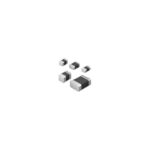 CTCB0805F-320S

CTCB0805F-320S is listed in the Chip Ferrite Bead range at ChipApex. The manufacturer field lists Central Technologies. Its product description is FERRITE BEAD 32…
Read More
CTCB0805F-320S is listed in the Chip Ferrite Bead range at ChipApex. The manufacturer field lists Central Technologies. Its product description is FERRITE BEAD 32…
Read More
CTCB0805F-320S is listed in the Chip Ferrite Bead range at ChipApex. The manufacturer field lists Central Technologies. Its product description is FERRITE BEAD 32…
Read More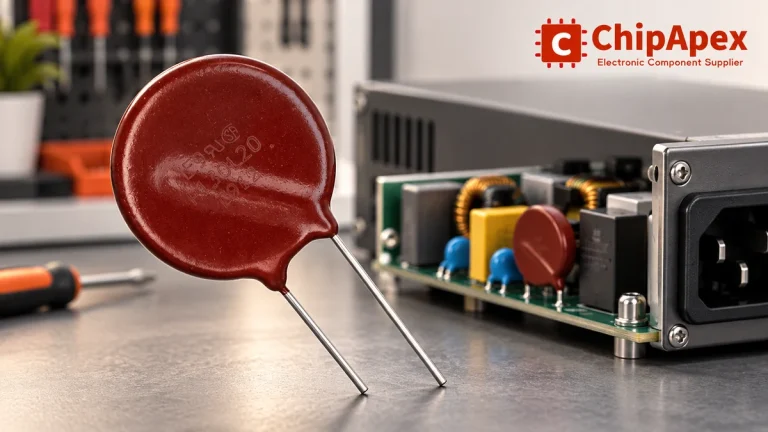
Select MOV varistors by continuous voltage, clamping behavior, surge waveform and repetition. Check thermal disconnection, fuse coordination and replacements.
Read More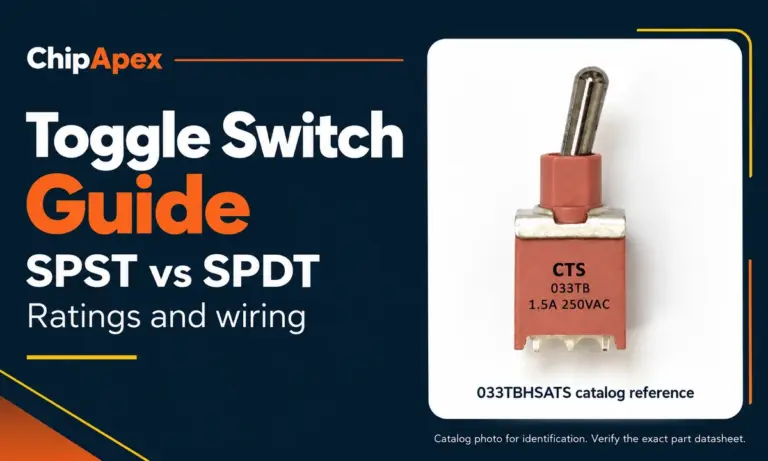
Compare SPST and SPDT toggle switches, understand AC/DC ratings, and follow wiring examples. Check contact action, mounting and parts in the ChipApex catalog.
Read More
CTCB0805F-320S is listed in the Chip Ferrite Bead range at ChipApex. The manufacturer field lists Central Technologies. Its product description is FERRITE BEAD 32…
Read More
CTCB0805F-320S is listed in the Chip Ferrite Bead range at ChipApex. The manufacturer field lists Central Technologies. Its product description is FERRITE BEAD 32…
Read More
Select a bridge rectifier by reverse voltage, capacitor charging current, startup surge and cooling. Work through a stated DC voltage and ripple example.
Read More
CTCB0805F-320S is listed in the Chip Ferrite Bead range at ChipApex. The manufacturer field lists Central Technologies. Its product description is FERRITE BEAD 32…
Read More
Understand how oscillators generate timing signals, how they differ from crystals, and which frequency, output and stability specs matter when choosing one.
Read More
See when an inductor behaves linearly, how DC bias and saturation reduce inductance, and which current and temperature curves to check.
Read More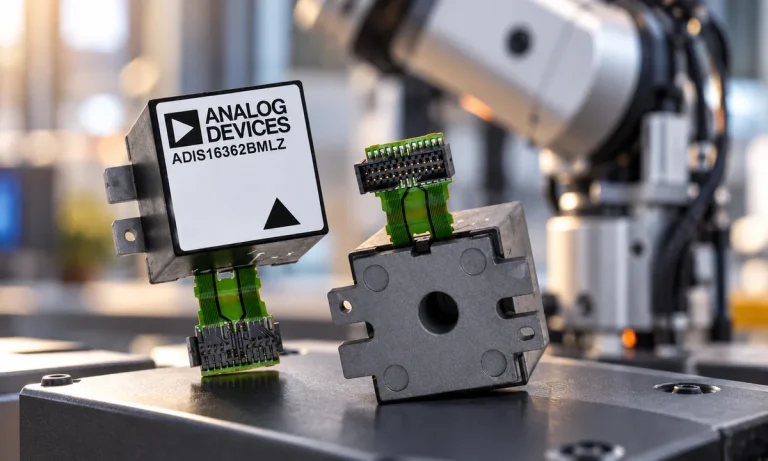
Learn what an IMU measures, how accelerometers and gyroscopes work together, why orientation estimates drift, and what to compare.
Read More
The activity of extra discounts on wholesale prices is in full swing…
Please fill in your contact information and we will send you the latest wholesale price list.





