ChipApex | Global Electronic Components Supplier

SEARCH
Search Product
Search Post
— IC芯片 | 连接器 | 传感器 | 被动器件 —
Search productSearch post
— IC芯片 | 连接器 | 传感器 | 被动器件 —
Consult the customer manager about the wholesale price.
consultation hotline:86-132-6715-2157
email:[email protected]
Contact the product manager for consultation. One-stop consultation is available.
Do you want a lower wholesale price? Please send us your inquiry and we will reply immediately.
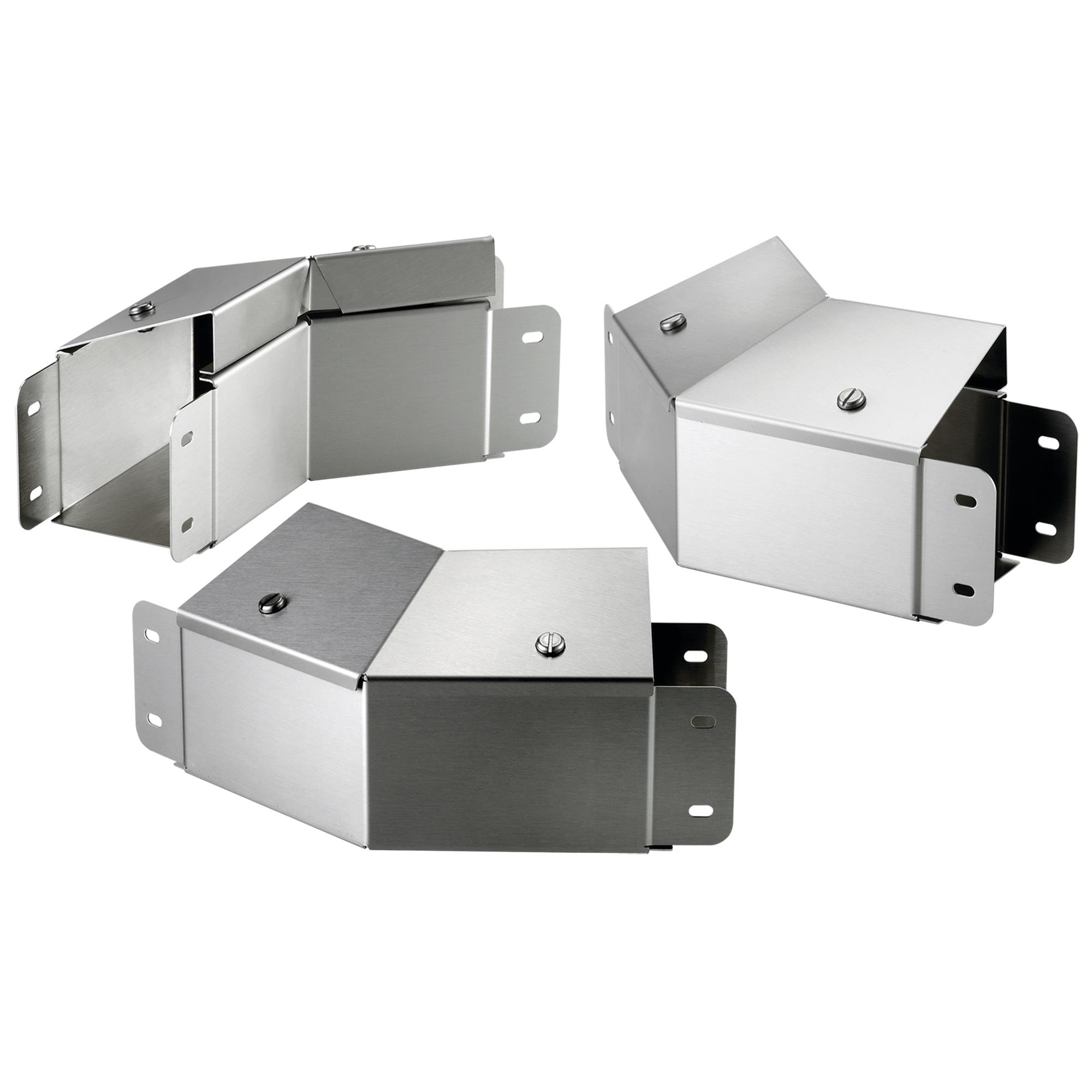
The Hoffman Enclosures CTS44EFCO45SS is a stainless steel enclosure designed for industrial applications. It features a hinged door with a quarter-turn fastener mechanism and includes a built-in fan for thermal management. The unit is constructed from corrosion-resistant stainless steel material, ensuring durability in harsh environments. Key specifications include an IP66 ingress protection rating to prevent dust and water ingress, and UL Type 4X certification for washdown suitability. The enclosure provides secure housing for electronic components while maintaining environmental integrity.
Verify the specific voltage and frequency requirements of the integrated fan against local power standards before installation. Confirm that the mounting surface can support the weight of the stainless steel construction. Ensure that cable entry points align with existing conduit systems. Check for any required accessories such as additional gaskets or mounting hardware not included in the standard package.
Select this model when high corrosion resistance and strict environmental sealing are required. The stainless steel construction offers superior durability compared to aluminum or polycarbonate alternatives in chemical or washdown environments. The integrated fan makes it suitable for applications generating significant heat where passive cooling is insufficient. Consider the external dimensions to ensure fit within the designated panel space.
This part belongs to the Hoffman CTS series of stainless steel enclosures. The series is designed for demanding industrial environments requiring robust protection. The CTS line typically offers various sizes and configurations to accommodate different component layouts. Hoffman Enclosures, Inc. specializes in protective housings for electronic and mechanical equipment.
Direct replacements may include other stainless steel enclosures with similar IP66 ratings and internal dimensions. Verify compatibility with existing mounting holes and cable gland positions. Alternative models from the same manufacturer with different door styles or fan specifications may be considered if dimensional constraints allow.
 CTS44EFCO45SS

If you’ve spent any time staring at a schematic, you’ve seen the triangle. Two inputs, one output, and a gain symbol that looks deceptively…
Read More
Choose a DIP switch by contact type, coded positions, footprint and signal ratings. Check logic polarity, assembly conditions and PCB configuration behavior.
Read More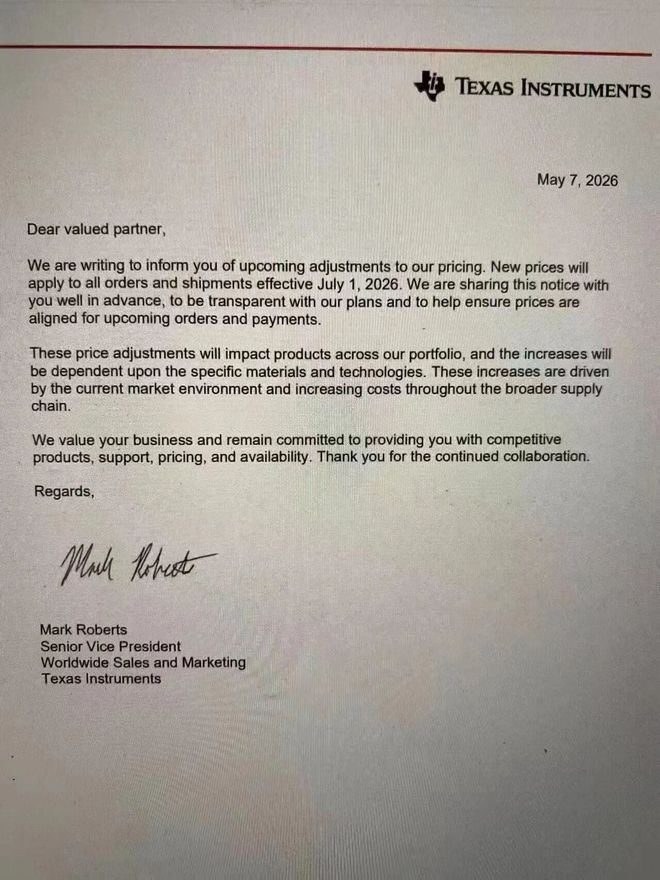
ChipApex – May 8, 2026 Texas Instruments (TI), the global leader in analog and embedded semiconductors, has officially notified customers of an upcoming company-wide…
Read More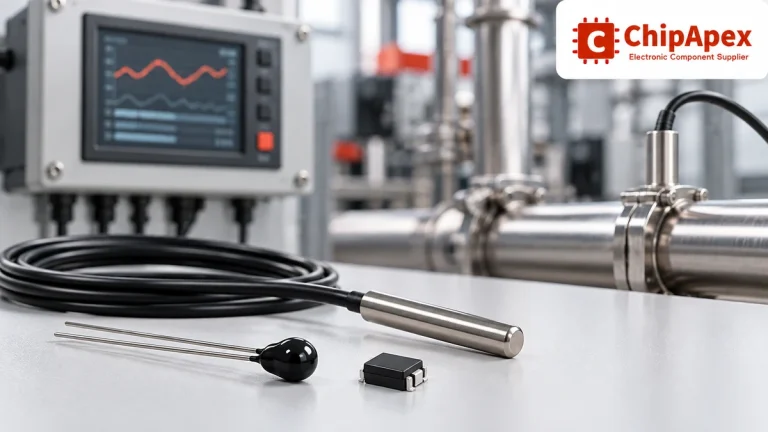
Compare thermistors, RTDs, thermocouples and temperature ICs. Learn how range, accuracy, response, interfaces and mounting affect component selection.
Read MoreA digital-to-analog converter (DAC) turns a digital number into an analog voltage or current. It lets a controller set a physical output, such as…
Read More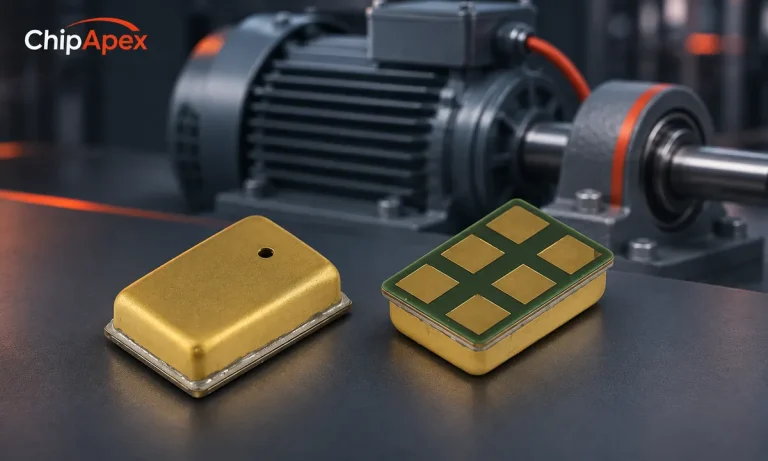
Choose a vibration sensor for machine monitoring. Compare sensing methods, bandwidth, noise and mounting, then define the signal-chain requirements.
Read More
Stay ahead with ChipApex Insights — technical deep dives, market trends, and sourcing tips for memory, microcontrollers, power management, and industrial-grade components. Trusted by…
Read More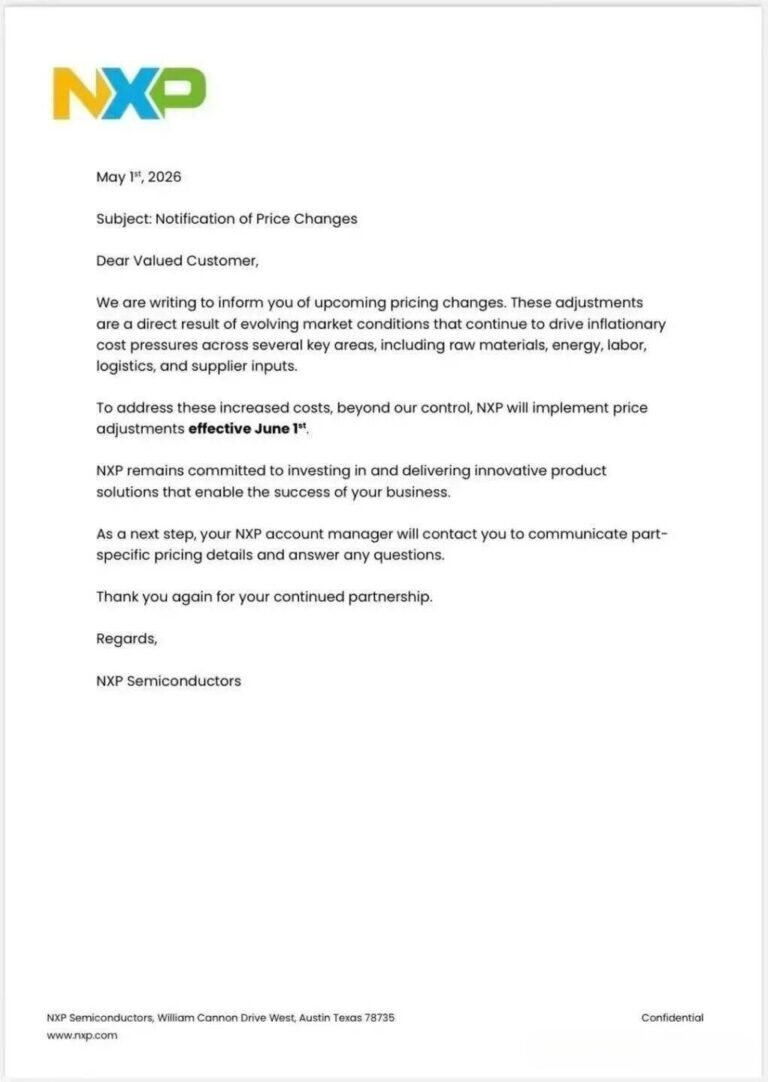
May 8, 2026 – Eindhoven, Netherlands NXP Semiconductors (NXPI), a global leader in automotive and industrial semiconductor solutions, has officially notified its worldwide channel…
Read More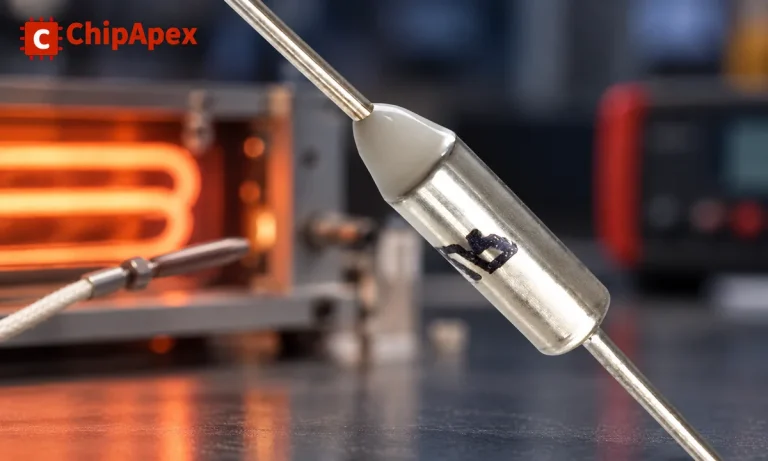
Understand thermal fuse operation, Tf, Th and Tm, electrical ratings and mounting. Check temperature limits and replacement requirements for your design.
Read More
Hsinchu, Taiwan – April 18, 2026 – United Microelectronics Corporation (UMC, NYSE: UMC), a leading global semiconductor foundry specializing in mature process technologies, has…
Read More
Learn how a diode conducts, how to identify anode and cathode, and when to choose rectifier, TVS, Zener or photodiode types for a circuit.
Read More
Find out when a bare shock switch needs a pull resistor, when an MCU internal pull-up is enough, and why sensor modules and piezo…
Read More
The activity of extra discounts on wholesale prices is in full swing…
Please fill in your contact information and we will send you the latest wholesale price list.