 ChipApex | Global Electronic Components Supplier

SEARCH
Search Product
Search Post
— IC芯片 | 连接器 | 传感器 | 被动器件 —
Search productSearch post
— IC芯片 | 连接器 | 传感器 | 被动器件 —
Consult the customer manager about the wholesale price.
consultation hotline:86-132-6715-2157
email:[email protected]
Contact the product manager for consultation. One-stop consultation is available.
Do you want a lower wholesale price? Please send us your inquiry and we will reply immediately.
DD104N12KKHPSA1 is listed in the Diode Arrays range at ChipApex. The manufacturer field lists Infineon Technologies. Its product description is DIODE MOD GP 1200V 104A POWRBLOK. Review the specifications below when checking this part for your BOM.
The DD104N12KKHPSA1 is a silicon diode module from Infineon Technologies, classified as a general-purpose rectifier within the POW-R-BLOK family. It features a single pair of serially connected diodes rated for a maximum DC reverse voltage of 1200 V and an average rectified current of 104 A per diode. The device exhibits a forward voltage of 1.4 V at 300 A and a reverse leakage current of 20 mA at 1200 V. Designed for base mounting, it supports junction temperatures up to 150°C with standard recovery characteristics exceeding 500 ns.
Verify component authenticity through official Infineon channels or authorized distributors due to end-of-life status. Confirm package integrity and pin alignment against datasheet specifications before integration. Check for obsolescence notices and transition plans to ensure long-term supply chain stability for production runs.
Select this module when designing circuits requiring 1200 V blocking voltage and 104 A continuous current handling. Ensure the application supports screw-mount or base-mount thermal interfaces compatible with the POW-R-BLOK form factor. Evaluate thermal resistance requirements against system cooling capabilities to maintain junction temperature within safe operating limits.
This component belongs to the DD104N series of bipolar semiconductor diode modules manufactured by Infineon Technologies. It utilizes standard silicon technology optimized for high-power industrial applications. The module integrates two diodes in a serial arrangement to facilitate efficient AC-to-DC conversion in high-voltage scenarios.
Consult official Infineon documentation for qualified substitute part numbers. Verify electrical parameters and mechanical dimensions match existing board layouts. Confirm availability status as the original part may be discontinued.
Explore related parts through Rectifiers, Diodes, Discrete Semiconductor Products, all product categories.
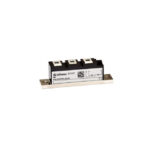 DD104N12KKHPSA1

Compare RC, crystal and MEMS oscillator circuits. Check ppm, jitter, load capacitance, startup margin and output compatibility before choosing a clock source.
Read More
DD104N12KKHPSA1 is listed in the Diode Arrays range at ChipApex. The manufacturer field lists Infineon Technologies. Its product description is DIODE MOD GP 1200V…
Read More
DD104N12KKHPSA1 is listed in the Diode Arrays range at ChipApex. The manufacturer field lists Infineon Technologies. Its product description is DIODE MOD GP 1200V…
Read More
Select a common mode choke using noise frequency, current, insulation and signal integrity. Understand impedance curves, layout and filter limitations.
Read More
DD104N12KKHPSA1 is listed in the Diode Arrays range at ChipApex. The manufacturer field lists Infineon Technologies. Its product description is DIODE MOD GP 1200V…
Read More
Learn how rectifiers convert AC to DC, compare half-wave and bridge circuits, and select voltage, current, recovery and thermal ratings for your design.
Read More
DD104N12KKHPSA1 is listed in the Diode Arrays range at ChipApex. The manufacturer field lists Infineon Technologies. Its product description is DIODE MOD GP 1200V…
Read More
DD104N12KKHPSA1 is listed in the Diode Arrays range at ChipApex. The manufacturer field lists Infineon Technologies. Its product description is DIODE MOD GP 1200V…
Read More
DD104N12KKHPSA1 is listed in the Diode Arrays range at ChipApex. The manufacturer field lists Infineon Technologies. Its product description is DIODE MOD GP 1200V…
Read More
Understand UART protocol framing, baud rate and electrical interfaces. Learn 8N1 timing, TX/RX wiring, buffering and practical troubleshooting steps.
Read More
DD104N12KKHPSA1 is listed in the Diode Arrays range at ChipApex. The manufacturer field lists Infineon Technologies. Its product description is DIODE MOD GP 1200V…
Read More
Compare Pt100 and Pt1000 RTDs, two-, three- and four-wire connections, excitation and self-heating. Build an error budget from element to reported temperature.
Read More
The activity of extra discounts on wholesale prices is in full swing…
Please fill in your contact information and we will send you the latest wholesale price list.





