 ChipApex | Global Electronic Components Supplier

SEARCH
Search Product
Search Post
— IC芯片 | 连接器 | 传感器 | 被动器件 —
Search productSearch post
— IC芯片 | 连接器 | 传感器 | 被动器件 —
Consult the customer manager about the wholesale price.
consultation hotline:86-132-6715-2157
email:[email protected]
Contact the product manager for consultation. One-stop consultation is available.
Do you want a lower wholesale price? Please send us your inquiry and we will reply immediately.
DRV134PA Audio Line Driver IC from Texas Instruments is listed at ChipApex. The listed supplier package is 8-PDIP. Compare the device specifications below with your signal-path and BOM requirements before requesting availability or a quote. Browse related special purpose audio ICs.
The DRV134PA is a dual balanced line driver manufactured by Texas Instruments, designed for high-performance audio applications. It converts single-ended inputs into differential outputs using an internal operational amplifier and precision resistors. The device operates on a supply voltage range of ±4.5V to ±18V and supports an operating temperature range from -55°C to +125°C. Housed in an 8-pin DIP package, it features low distortion (0.001% THD+N), a slew rate of 15 V/µs, and a 3dB bandwidth of 1.5 MHz. It draws 5.2 mA of quiescent current per channel.
Verify the specific ordering suffix against the manufacturer's datasheet to confirm pinout compatibility and electrical specifications. Confirm that the 8-DIP tube packaging aligns with manual insertion requirements. Check for moisture sensitivity levels if the component has been stored without proper environmental controls.
Select this component when a dual-channel solution is required for driving balanced lines with low noise. Ensure the design accommodates the ±4.5V to ±18V supply rails. Consider the 8-DIP package constraints for PCB layout and verify that the thermal dissipation capabilities meet the system's power budget within the specified temperature range.
The DRV134PA belongs to the DRV134 family of balanced line drivers. It serves as a direct replacement for legacy components like the SSM2142 in many designs. The PA suffix denotes the 8-pin plastic DIP package variant, distinct from surface-mount options like the UA or PB suffixes.
The DRV134UA and DRV134PB are functionally equivalent alternatives offering different package types. Verify pin-to-pin compatibility before substitution. Ensure the replacement part meets the same ±4.5V to ±18V supply and -55°C to +125°C temperature specifications.
Explore related parts through Integrated Circuits (ICs), all product categories, ChipApex homepage.
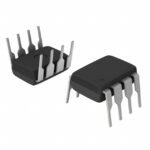 DRV134PA

DRV134PA Audio Line Driver IC from Texas Instruments is listed at ChipApex. The listed supplier package is 8-PDIP. Compare the device specifications below with…
Read More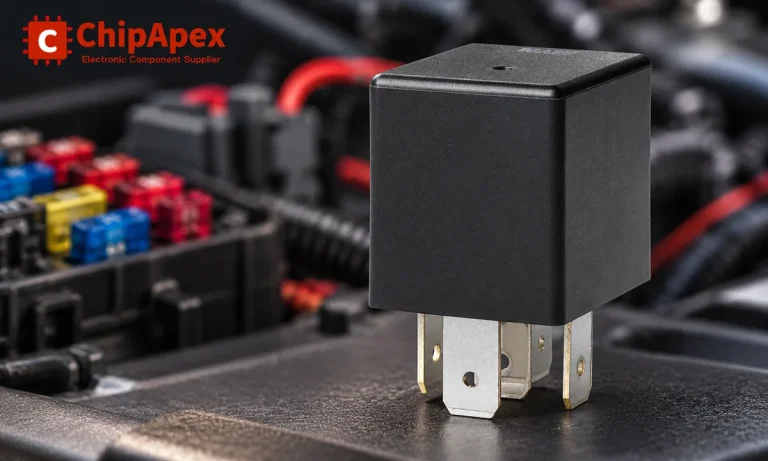
Learn the relay definition, coil and contact operation, NO and NC forms, load ratings and suppression choices. Compare mechanical, reed and solid-state types.
Read More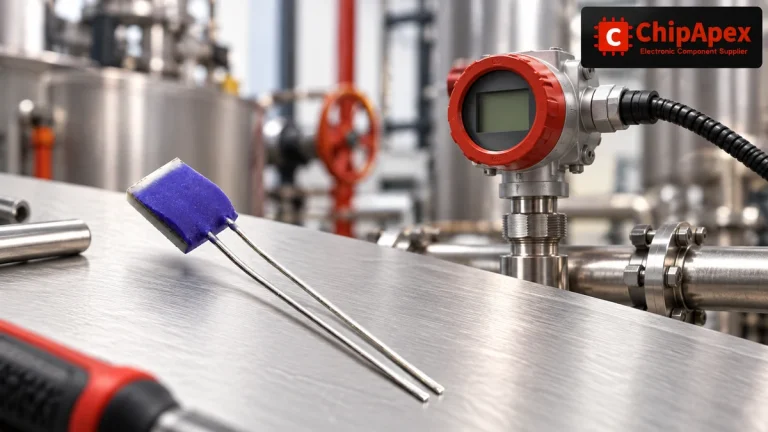
Compare Pt100 and Pt1000 RTDs, two-, three- and four-wire connections, excitation and self-heating. Build an error budget from element to reported temperature.
Read More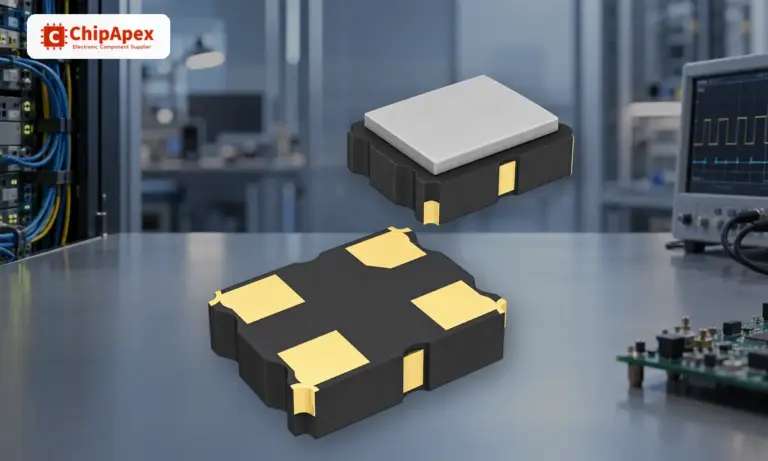
Understand how oscillators generate timing signals, how they differ from crystals, and which frequency, output and stability specs matter when choosing one.
Read More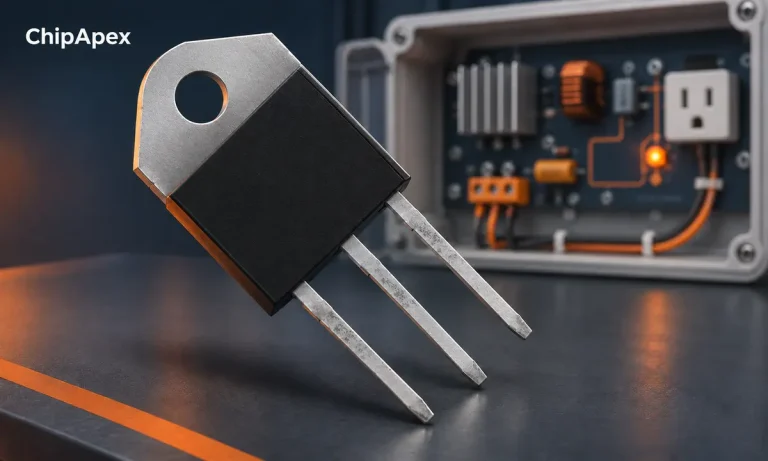
Learn how a TRIAC switches AC loads. Understand triggering, latching, holding current, phase control and thermal limits before choosing a component.
Read More
DRV134PA Audio Line Driver IC from Texas Instruments is listed at ChipApex. The listed supplier package is 8-PDIP. Compare the device specifications below with…
Read More
DRV134PA Audio Line Driver IC from Texas Instruments is listed at ChipApex. The listed supplier package is 8-PDIP. Compare the device specifications below with…
Read More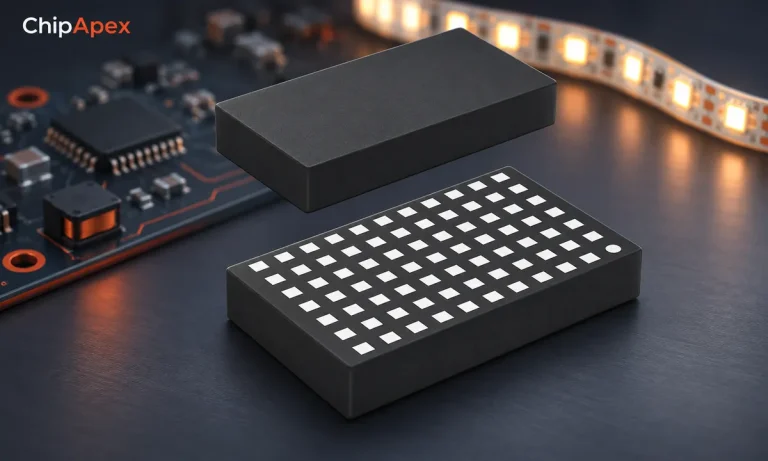
Choose LED drivers by current, string voltage, dimming and thermal limits. Understand constant-current operation and the checks needed for your load.
Read More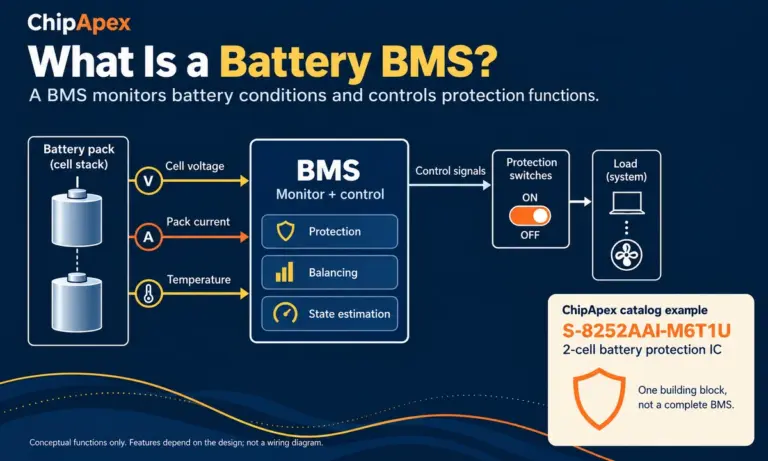
Learn what a battery BMS does, how protection differs from charging, and which pack specifications to check when sourcing BMS components through ChipApex.
Read More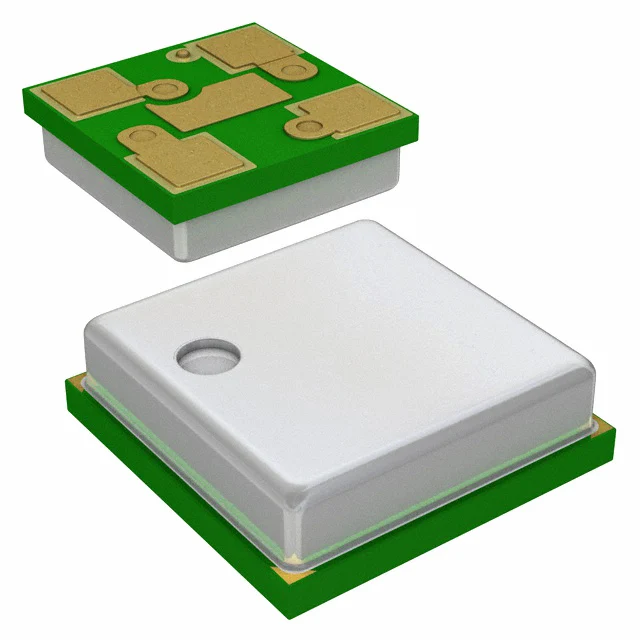
Interpret MAP sensor readings using local atmospheric pressure, convert a ratiometric signal to kPa and distinguish a pressure change from a signal fault.
Read More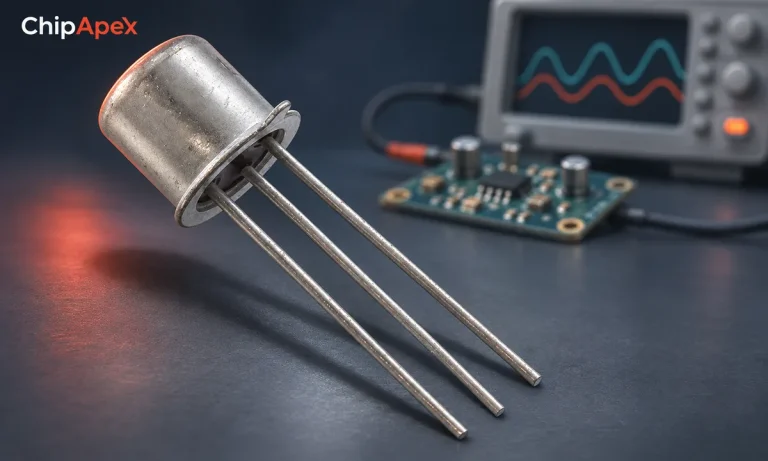
Learn what a transistor does in a circuit. Compare switching and amplification, BJT and MOSFET drive, operating limits and practical component selection.
Read More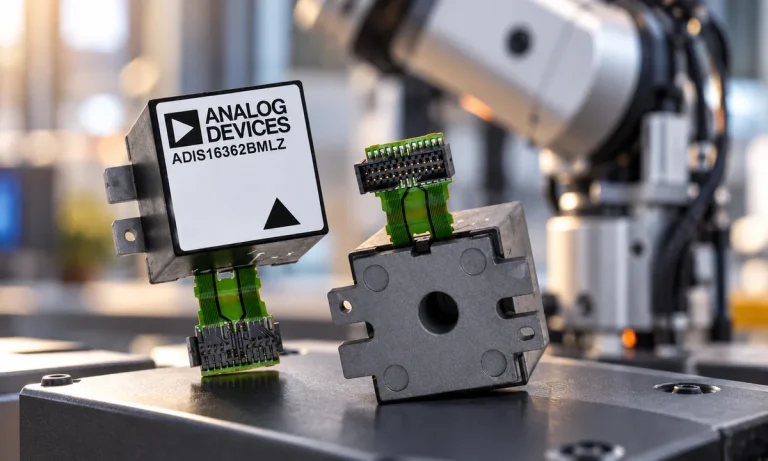
Learn what an IMU measures, how accelerometers and gyroscopes work together, why orientation estimates drift, and what to compare.
Read More
The activity of extra discounts on wholesale prices is in full swing…
Please fill in your contact information and we will send you the latest wholesale price list.






