ChipApex | Global Electronic Components Supplier

SEARCH
Search Product
Search Post
— IC芯片 | 连接器 | 传感器 | 被动器件 —
Search productSearch post
— IC芯片 | 连接器 | 传感器 | 被动器件 —
Consult the customer manager about the wholesale price.
consultation hotline:86-132-6715-2157
email:[email protected]
Contact the product manager for consultation. One-stop consultation is available.
Do you want a lower wholesale price? Please send us your inquiry and we will reply immediately.
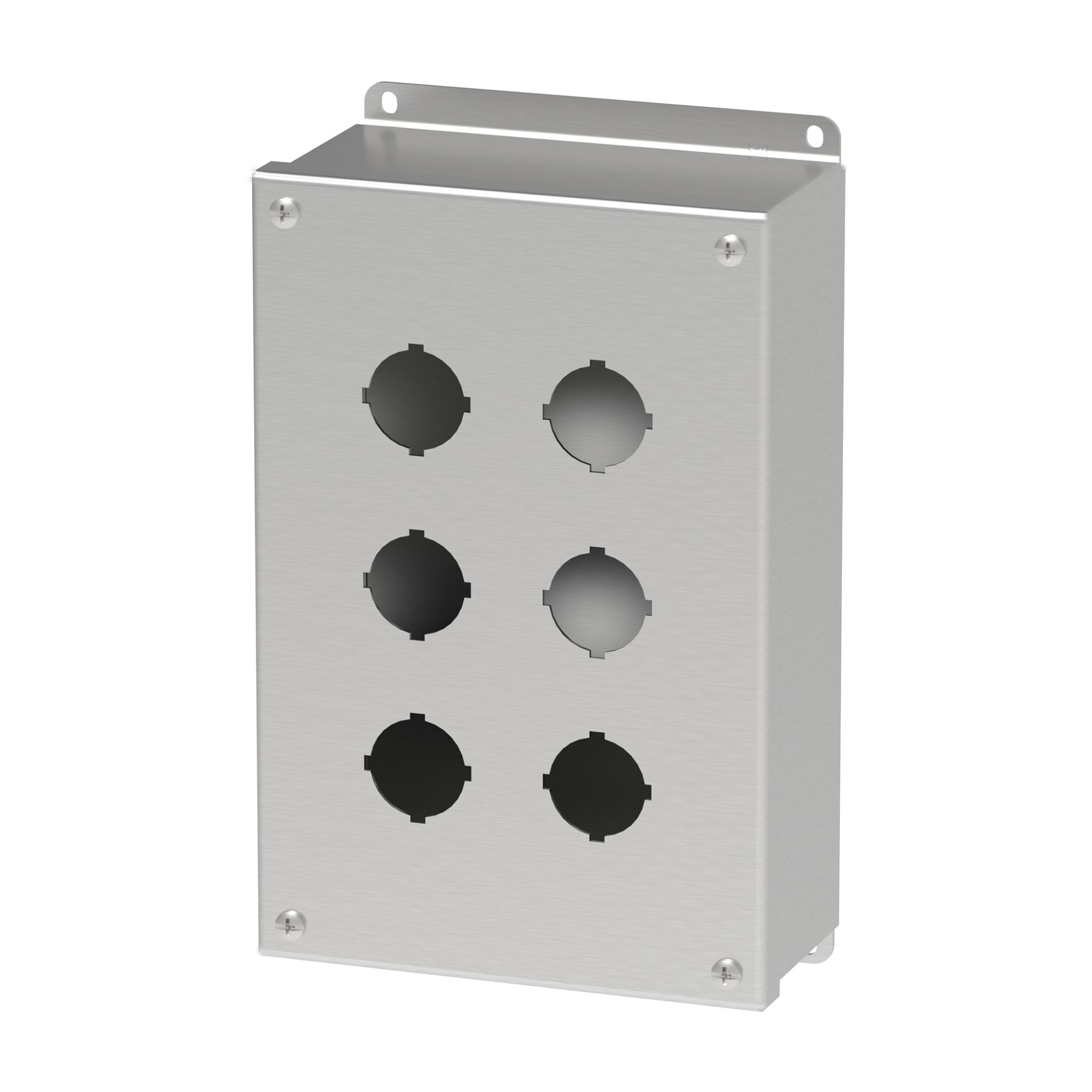
The Hoffman E6PBSS6 is a pushbutton enclosure constructed from 14-gauge 316L stainless steel with a #4 smooth brushed finish. It measures 9.5 inches in length, 6.25 inches in width, and 3 inches in depth. The unit features six device holes arranged in two vertical rows, designed to accommodate either 30.5-mm or 22.5-mm oil-tight pushbuttons. It provides NEMA 4X, IP66, NEMA 12, and NEMA 13 protection ratings and holds UL 508A, CUL, and CSA C22.2 approvals.
Verify that the specific application requires 316L stainless steel construction rather than standard 304 grade. Confirm that the installed devices match the 30.5-mm or 22.5-mm diameter specifications supported by the six-hole configuration. Ensure compliance with UL 508A and CSA C22.2 standards is required for the final assembly. Check that the #4 smooth brushed finish meets aesthetic requirements. Validate that the 3-inch depth accommodates the internal components without obstruction.
Select this model when high corrosion resistance is necessary due to the 316L material composition. Choose this enclosure if the installation demands NEMA 4X and IP66 ratings for dust and water tightness. Opt for this unit when the control interface requires exactly six pushbutton locations in a compact footprint. Consider this option where continuous welding and smooth surfaces are specified for hygiene or durability. Verify that the 9.5 by 6.25 inch dimensions fit the available panel space.
This component belongs to the nVent Hoffman pushbutton enclosure series designed for industrial control applications. It is part of a lineup offering various sizes and materials, specifically targeting environments where standard enclosures may fail due to chemical exposure or moisture. The E6PBSS6 variant focuses on providing robust protection through its stainless steel build and specific sealing features.
No public confirmed substitute part numbers are available.
 E6PBSS6

Choose an AC to DC converter by input range, output demand, isolation, efficiency and thermal derating. Compare architectures and check installation needs.
Read More
As the backbone of modern technology, electronic components are undergoing revolutionary changes, driven by advancements in materials science, miniaturization, and smart manufacturing. From ultra-efficient…
Read More
If you’ve spent any time staring at a schematic, you’ve seen the triangle. Two inputs, one output, and a gain symbol that looks deceptively…
Read More
Recently, the global electronic components market has been constantly evolving, and different regions and enterprises have witnessed new moves in aspects such as technological…
Read More
Learn why PTC resistance rises with temperature, how it differs from NTC, and which ratings matter for sensing and protection.
Read More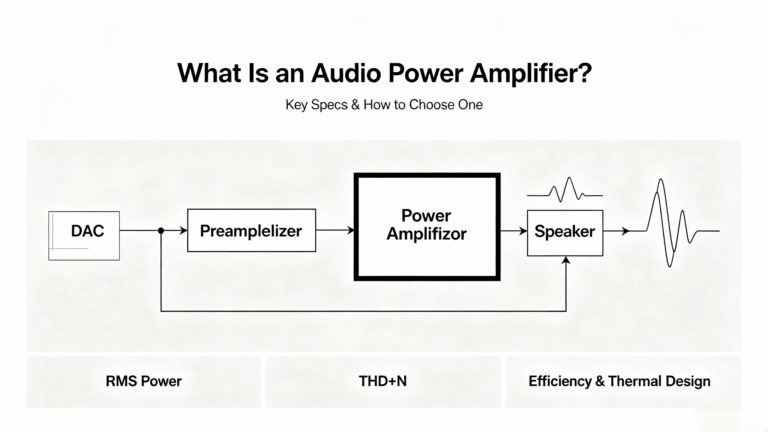
Every audio power amplifier design starts with the same fundamental challenge: converting a low-voltage line-level signal into the high-current drive required by a reactive…
Read More
Select a bridge rectifier by reverse voltage, capacitor charging current, startup surge and cooling. Work through a stated DC voltage and ripple example.
Read More
The global memory market is entering an unprecedented supply-constrained phase as soaring demand from artificial intelligence (AI) infrastructure collides with strategic capacity reallocations by…
Read More
Learn how a diode conducts, how to identify anode and cathode, and when to choose rectifier, TVS, Zener or photodiode types for a circuit.
Read More
As 2025 draws to a close, the global semiconductor industry stands at a crossroads. Intertwined with escalating geopolitical tensions, supply chain disruptions, and groundbreaking…
Read More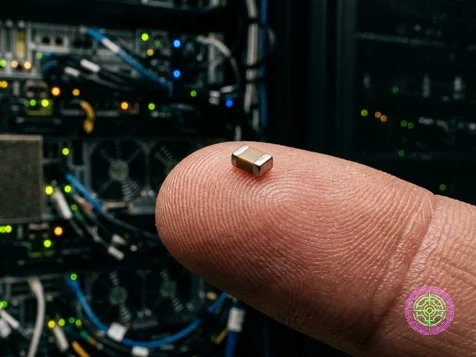
The multilayer ceramic capacitor (MLCC) market has fallen into a severe structural supply crunch in the third quarter of 2026, driven by explosive demand…
Read More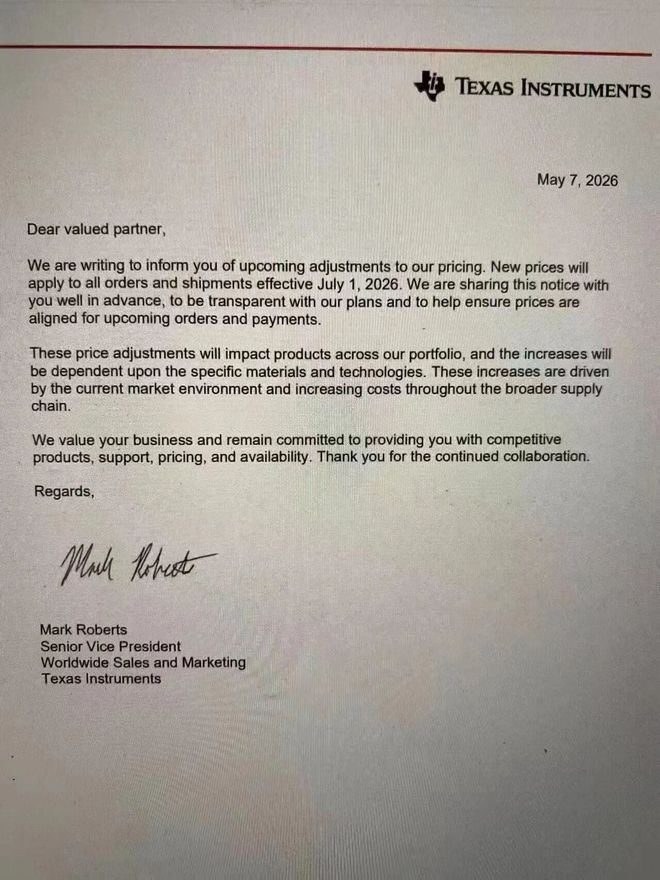
ChipApex – May 8, 2026 Texas Instruments (TI), the global leader in analog and embedded semiconductors, has officially notified customers of an upcoming company-wide…
Read More
The activity of extra discounts on wholesale prices is in full swing…
Please fill in your contact information and we will send you the latest wholesale price list.