ChipApex | Global Electronic Components Supplier

SEARCH
Search Product
Search Post
— IC芯片 | 连接器 | 传感器 | 被动器件 —
Search productSearch post
— IC芯片 | 连接器 | 传感器 | 被动器件 —
Consult the customer manager about the wholesale price.
consultation hotline:86-132-6715-2157
email:[email protected]
Contact the product manager for consultation. One-stop consultation is available.
Do you want a lower wholesale price? Please send us your inquiry and we will reply immediately.
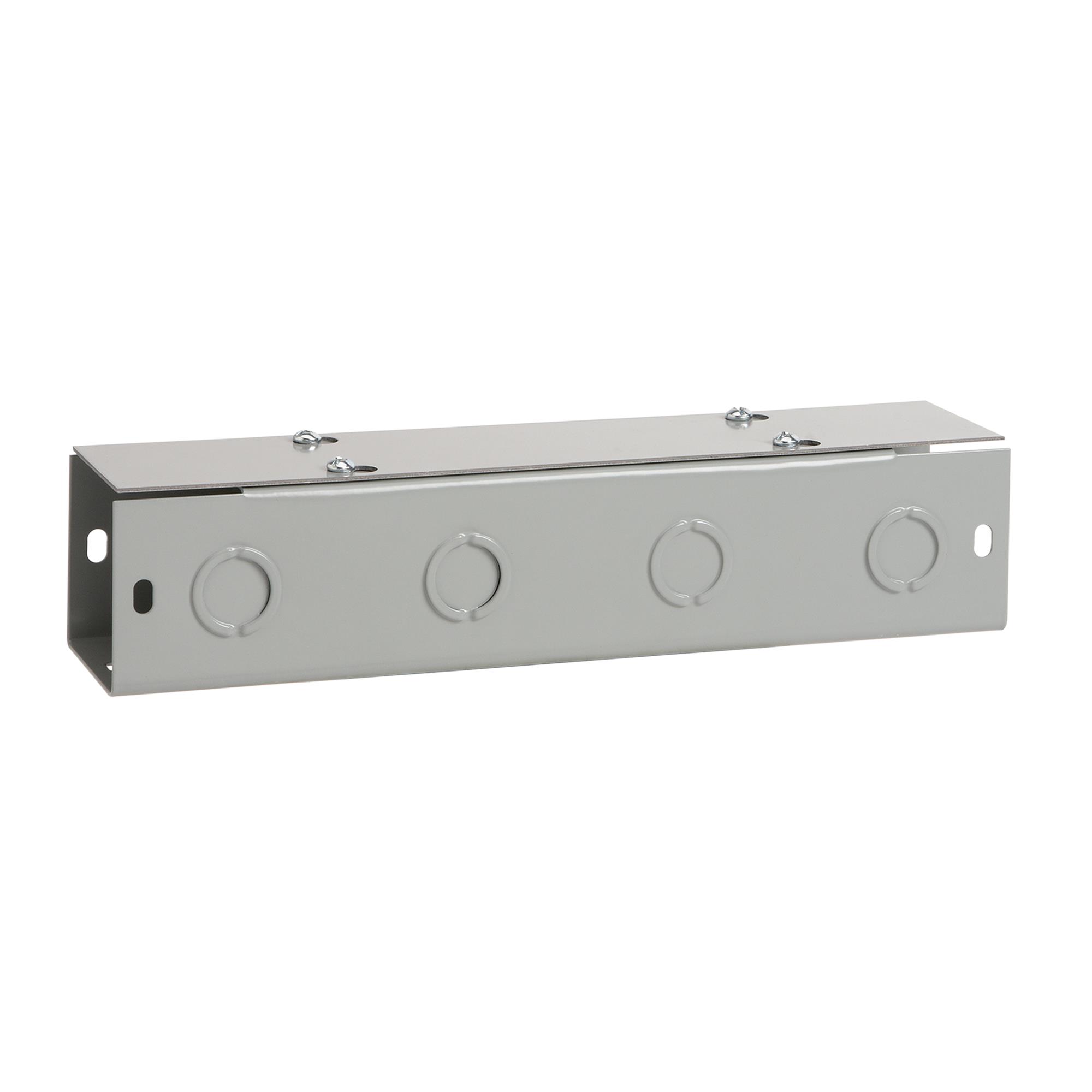
The Hoffman Enclosures F44T136GVP is a straight section wireway designed for indoor power distribution applications. It features a NEMA Type 1 rating and utilizes a lay-in flat cover design. The unit measures 4 inches in width, 4 inches in height, and 36 inches in length. Constructed from 16/14 gauge steel, it provides a durable enclosure for wires and cables. The exterior finish is ANSI 61 gray polyester powder paint. This component is certified to UL 870 standards, ensuring compliance with safety requirements for wireways.
Verify the specific model number F44T136GVP matches the required dimensions of 4x4x36 inches. Confirm that the NEMA Type 1 rating and lay-in cover style are suitable for the intended indoor application. Ensure compatibility with existing Hoffman Enclosures wireway accessories and fittings. Check for UL 870 certification marks on the product documentation to guarantee regulatory compliance before purchase.
Select this model when a straight section with a lay-in flat cover is required for indoor use. The 4-inch by 4-inch cross-section supports standard wireway capacities. The 36-inch length offers modular flexibility for routing. The gray painted steel construction is appropriate for general industrial environments where NEMA Type 1 protection suffices. Consider screw-cover alternatives if enhanced security or weather resistance is needed.
This part belongs to the Hoffman Enclosures wireway system, specifically the straight section category. It is designed to integrate with other components in the same series to create continuous cable pathways. The product line focuses on providing robust, code-compliant solutions for organizing electrical wiring in commercial and industrial facilities. It serves as a fundamental building block for structured cabling infrastructure.
Direct substitutes may include other Hoffman Enclosures straight sections with identical 4x4x36 dimensions and lay-in cover styles. Verify that any replacement maintains the NEMA Type 1 rating and UL 870 listing. Cross-referencing with nVent Hoffman catalogs is recommended to ensure mechanical and electrical compatibility with existing installations.
 F44T136GVP

Compare thermistors, RTDs, thermocouples and temperature ICs. Learn how range, accuracy, response, interfaces and mounting affect component selection.
Read More
Latest updates from leading semiconductor manufacturers: Wolfspeed launches new SiC modules, AMD reveals MI430X with HBM4, TSMC eyes third Japan fab, and Samsung samples…
Read More
Learn the relay definition, coil and contact operation, NO and NC forms, load ratings and suppression choices. Compare mechanical, reed and solid-state types.
Read More
Understand tactile switches, PCB and keyboard differences, four-pin wiring, debounce, force, travel and replacement checks for reliable control inputs.
Read More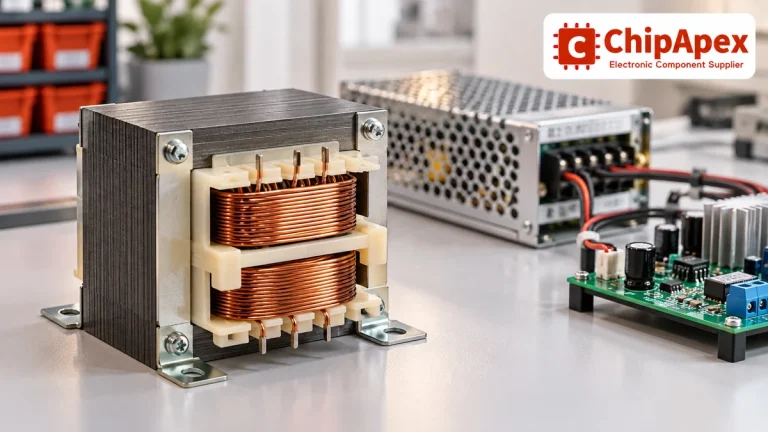
Select power transformers by input frequency, secondary VA, rectifier load, isolation, regulation and inrush. Build a clearer specification for your next RFQ.
Read More
Learn what an integrated circuit is, how ICs work, the main types and the specs to check before choosing a part for your design…
Read More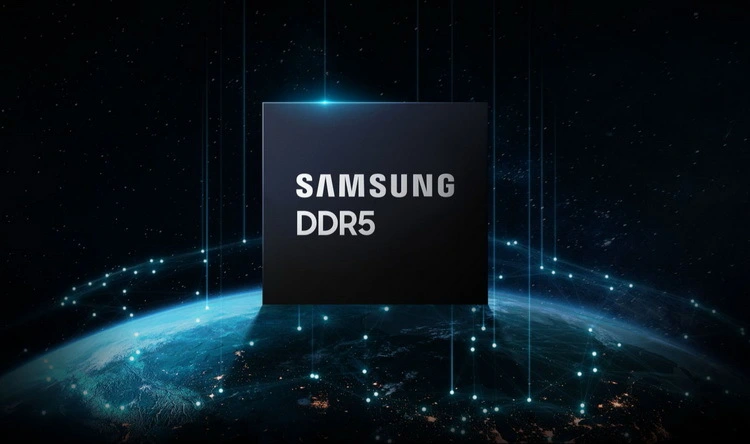
The global memory market is entering an unprecedented supply-constrained phase as soaring demand from artificial intelligence (AI) infrastructure collides with strategic capacity reallocations by…
Read More
Selecting the right microcontroller (MCU) isn’t just about specs—it’s about balancing performance, power, cost, and supply chain reliability. As an engineer, you’ve probably faced…
Read More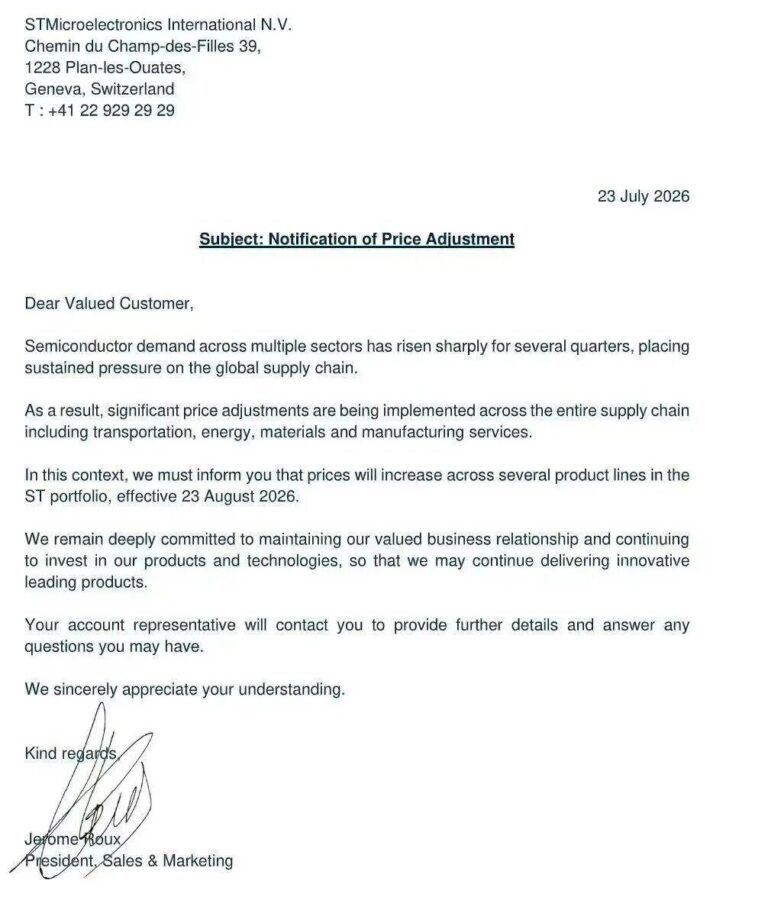
Geneva, Switzerland – August 20, 2026 – Global leading semiconductor manufacturer STMicroelectronics (ST) has officially issued a new global price adjustment notice to global…
Read More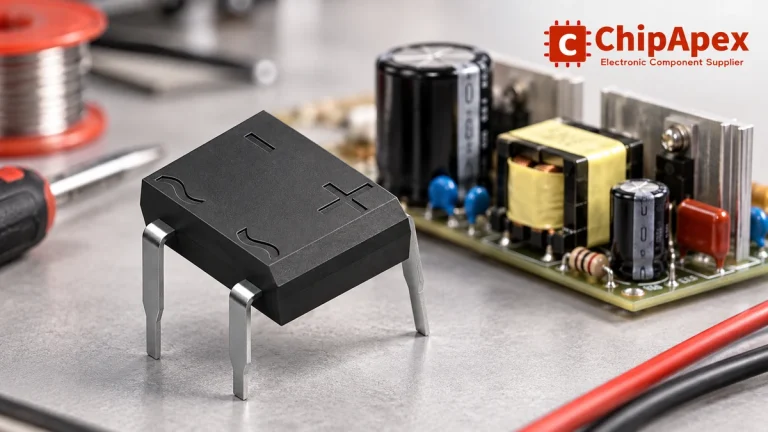
Select a bridge rectifier by reverse voltage, capacitor charging current, startup surge and cooling. Work through a stated DC voltage and ripple example.
Read More
Recently, a survey by the Electronic Components Industry Association (ECIA) revealed that the sales sentiment of global electronic components remained optimistic in the third…
Read More
Learn what an IMU measures, how accelerometers and gyroscopes work together, why orientation estimates drift, and what to compare.
Read More
The activity of extra discounts on wholesale prices is in full swing…
Please fill in your contact information and we will send you the latest wholesale price list.