ChipApex | Global Electronic Components Supplier

SEARCH
Search Product
Search Post
— IC芯片 | 连接器 | 传感器 | 被动器件 —
Search productSearch post
— IC芯片 | 连接器 | 传感器 | 被动器件 —
Consult the customer manager about the wholesale price.
consultation hotline:86-132-6715-2157
email:[email protected]
Contact the product manager for consultation. One-stop consultation is available.
Do you want a lower wholesale price? Please send us your inquiry and we will reply immediately.
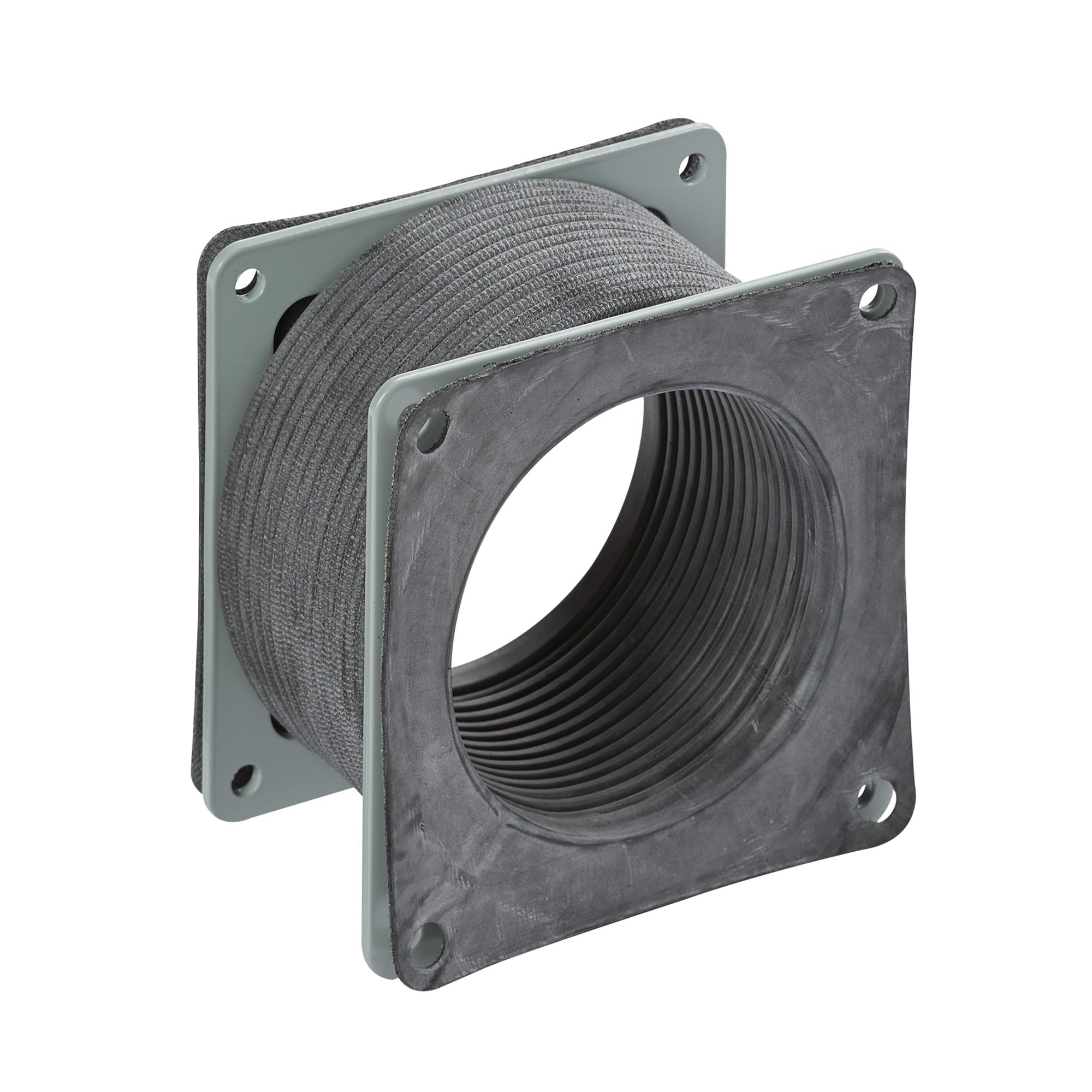
The Hoffman Enclosures F44WFF is a flexible fitting designed for wireway applications. It measures 4.00 inches by 4.00 inches (102 mm x 102 mm). The component features a rubber bellow construction, specifically Hypalon rubber, to provide flexibility and durability. It is rated for NEMA Type 12 environments, ensuring dust resistance. The fitting includes a painted steel finish on its structural components. This part is intended for indoor feed-through installations where isolation from shock and vibration is required.
Verify the specific material composition matches project requirements, as sources cite Hypalon rubber. Confirm the NEMA Type 12 rating aligns with environmental protection needs. Ensure the 4x4 inch dimensions fit the designated wireway opening. Check if the painted steel finish meets corrosion resistance standards for the installation site. Validate that the flexible fitting design supports the required angle of entry or exit.
Select this model when vibration isolation or misalignment compensation is necessary within a wireway system. The NEMA Type 12 rating makes it suitable for indoor industrial environments requiring dust resistance. The 4x4 inch size dictates the maximum conduit or cable bundle diameter. Consider the Hypalon material properties for chemical or temperature compatibility with the surrounding environment.
This flexible fitting belongs to the nVent Hoffman line of wire and cable management accessories. It complements rigid enclosures and wireways by allowing dynamic connections. The product serves as a transition piece between fixed structures and moving or vibrating equipment. It is part of a broader range of fittings available in various sizes and materials.
Public confirmed substitute part numbers are not available in the provided documentation. Verify dimensional compatibility with existing wireway systems before considering alternative flexible fittings. Ensure any replacement maintains the NEMA Type 12 rating and similar material specifications.
 F44WFF

In the world of embedded electronics, getting a device to “think” is only half the battle. The other half is getting it to communicate…
Read More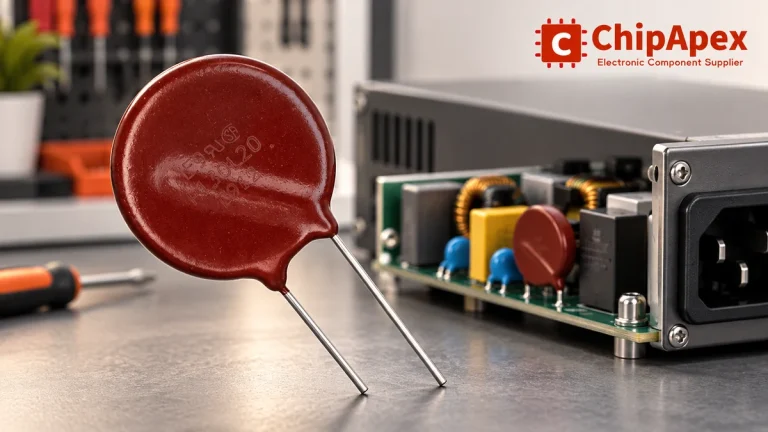
Select MOV varistors by continuous voltage, clamping behavior, surge waveform and repetition. Check thermal disconnection, fuse coordination and replacements.
Read More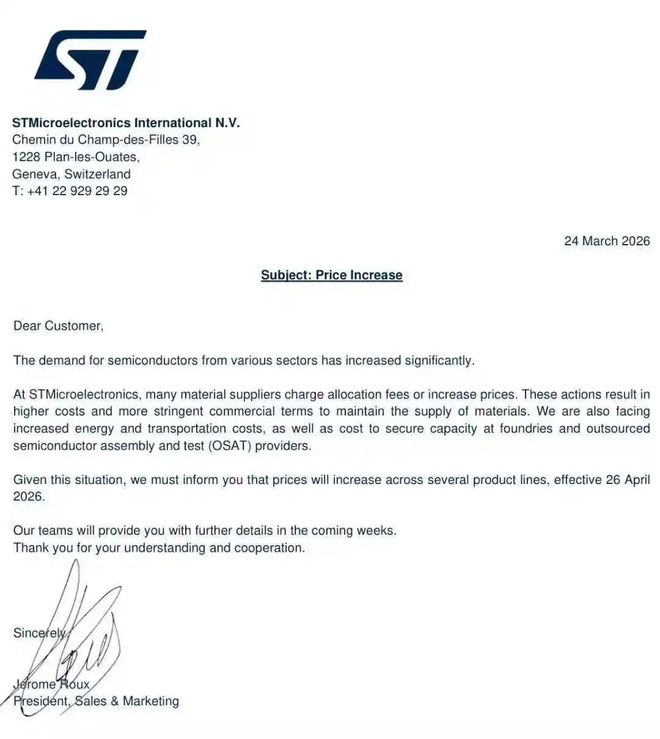
Geneva, Switzerland – March 25, 2026 – STMicroelectronics N.V. (NYSE: STM), a global semiconductor leader serving customers across the electronics applications spectrum, has announced…
Read More
Learn how a diode conducts, how to identify anode and cathode, and when to choose rectifier, TVS, Zener or photodiode types for a circuit.
Read More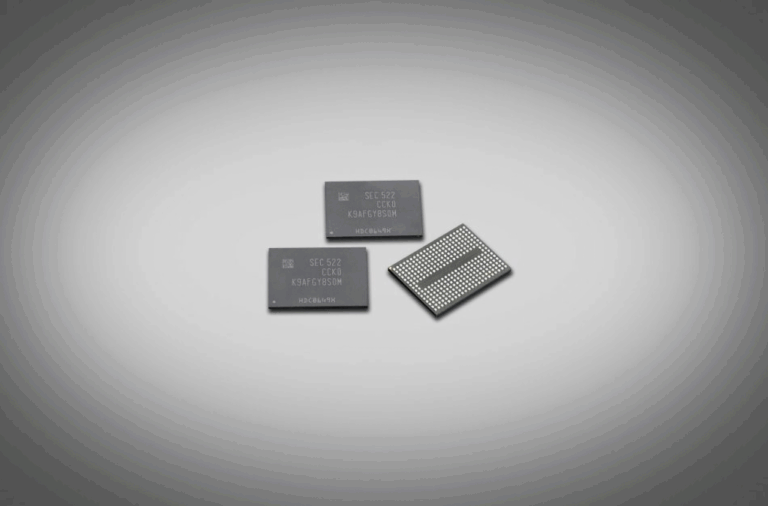
Date: May 13, 2026 The global memory industry is facing an unprecedented supply crunch in legacy MLC NAND Flash. Leading manufacturers including Samsung Electronics…
Read More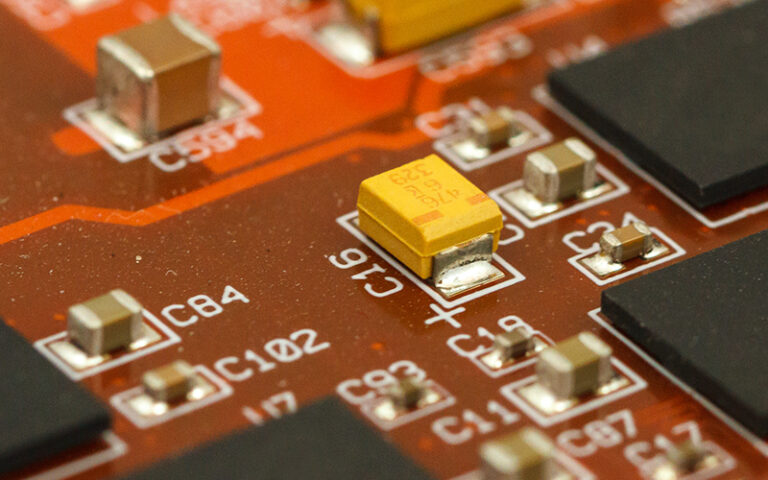
The global electronics industry is facing an escalating shortage of tantalum capacitors, a critical passive component, as surging demand from AI servers, automotive electronics,…
Read More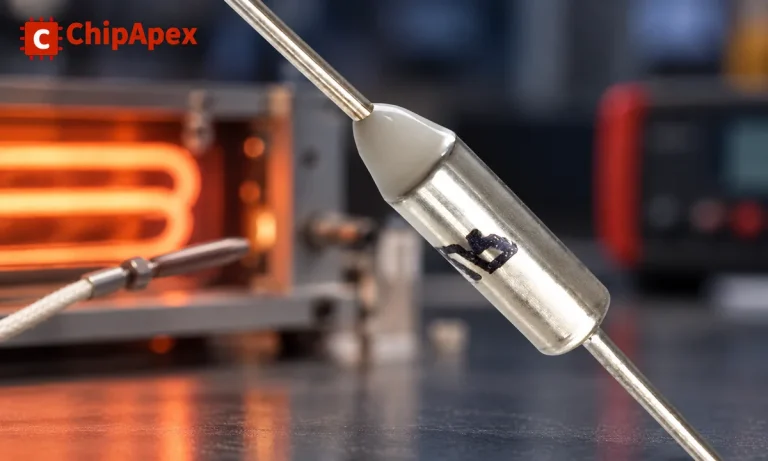
Understand thermal fuse operation, Tf, Th and Tm, electrical ratings and mounting. Check temperature limits and replacement requirements for your design.
Read More
Find out when a bare shock switch needs a pull resistor, when an MCU internal pull-up is enough, and why sensor modules and piezo…
Read More
Wilmington, Mass. & Milpitas, Calif. – May 19, 2026 – Analog Devices, Inc. (NASDAQ: ADI), a global leader in high-performance analog and mixed-signal semiconductors,…
Read More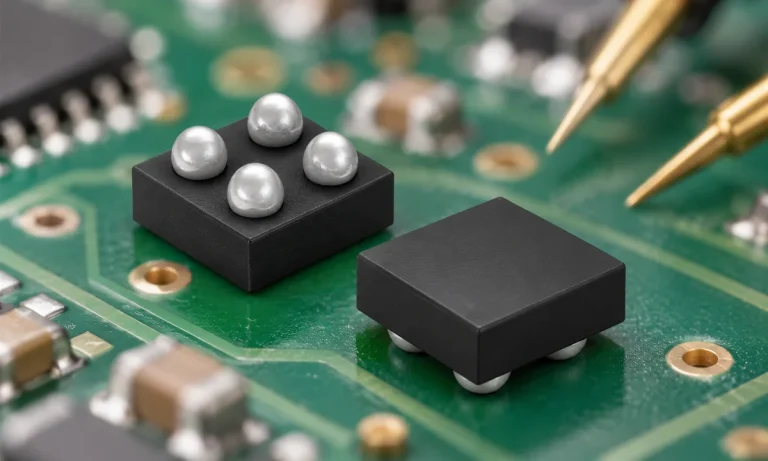
Understand how a comparator switches at a voltage threshold, why hysteresis prevents chatter, and which output and input specs matter.
Read More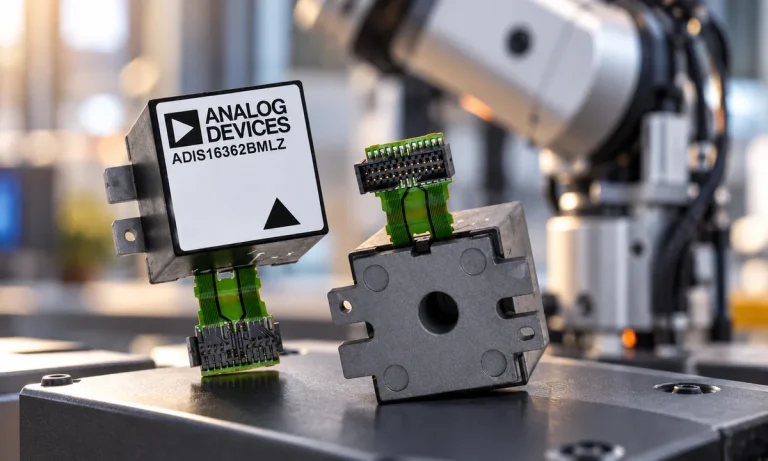
Learn what an IMU measures, how accelerometers and gyroscopes work together, why orientation estimates drift, and what to compare.
Read More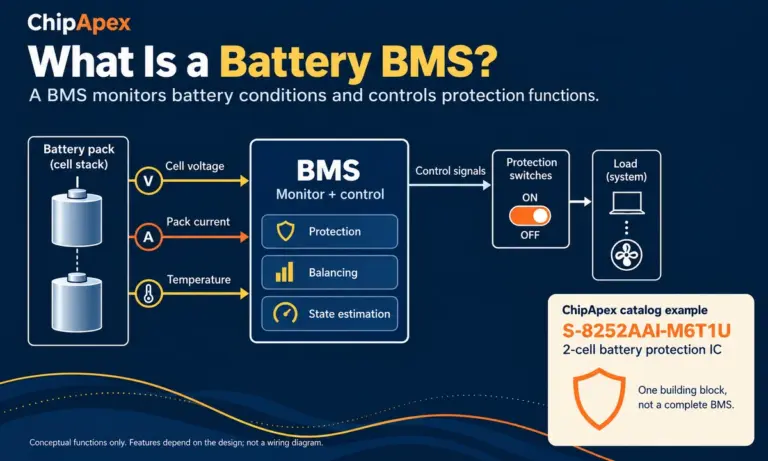
Learn what a battery BMS does, how protection differs from charging, and which pack specifications to check when sourcing BMS components through ChipApex.
Read More
The activity of extra discounts on wholesale prices is in full swing…
Please fill in your contact information and we will send you the latest wholesale price list.