 ChipApex | Global Electronic Components Supplier

SEARCH
Search Product
Search Post
— IC芯片 | 连接器 | 传感器 | 被动器件 —
Search productSearch post
— IC芯片 | 连接器 | 传感器 | 被动器件 —
Consult the customer manager about the wholesale price.
consultation hotline:86-132-6715-2157
email:[email protected]
Contact the product manager for consultation. One-stop consultation is available.
Do you want a lower wholesale price? Please send us your inquiry and we will reply immediately.
The FMCA100236-36 is a coaxial RF cable assembly manufactured by Fairview Microwave. It features a BNC male connector on one end and an N-type male connector on the other, utilizing LMR-400-UF coaxial cable. The assembly has a total length of 36 inches (914.4 mm). The product is designed for low-loss signal transmission with a TPE jacket. It operates at a characteristic impedance of 50 Ohms and supports frequencies up to 18 GHz. The unit is RoHS compliant and packaged individually in a bag.
Verify the specific connector gender and interface type against system requirements before ordering. Confirm that the 36-inch length aligns with spatial constraints. Ensure the operating frequency range of the application falls within the component's specified limits. Check for any specific environmental ratings required for the installation site. Review compliance documentation such as RoHS status if mandated by project standards.
Select this model when a transition between BNC and N-type connectors is necessary within a single assembly. Consider the LMR-400-UF cable properties for flexibility and loss characteristics compared to rigid alternatives. Evaluate the 36-inch length against available routing space. Compare performance metrics against other Fairview Microwave assemblies if different impedance or frequency ranges are needed.
This component belongs to the Fairview Microwave RF Cable Assemblies category. It is part of a broader portfolio offering various connector combinations and lengths. The manufacturer specializes in high-frequency components, providing options for diverse microwave and mmWave applications. This specific model serves as a specialized link between standard BNC and N-type interfaces.
Direct substitutes may include other Fairview Microwave assemblies with identical BNC-to-N-type configurations and similar cable types. Verify that alternative models maintain the same 50 Ohm impedance and frequency specifications. Cross-reference connector genders and cable lengths to ensure mechanical compatibility.
 FMCA100236-36
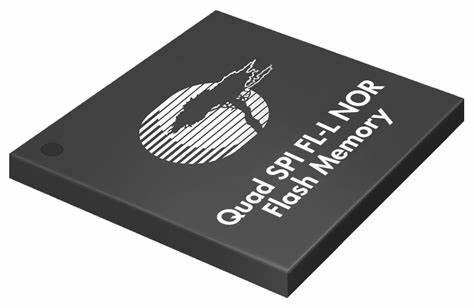
What Is NOR Flash? Why It Still Powers Critical Embedded Systems When your car’s engine control unit boots in milliseconds…When a medical device executes…
Read More
TOKYO, July 31, 2026 — Renesas Electronics Corporation has officially announced a major domestic manufacturing restructuring, confirming plans to gradually discontinue all wafer fabrication…
Read More
As the backbone of modern technology, electronic components are undergoing revolutionary changes, driven by advancements in materials science, miniaturization, and smart manufacturing. From ultra-efficient…
Read More
A perfect storm of surging demand and supply chain disruptions is roiling the global electronic components market, with advanced semiconductors and critical materials now…
Read More
Choose a DIP switch by contact type, coded positions, footprint and signal ratings. Check logic polarity, assembly conditions and PCB configuration behavior.
Read More
PLANO, Texas – March 20, 2026 – Diodes Incorporated (Nasdaq: DIOD), a leading global manufacturer and supplier of high-quality application-specific standard products in the…
Read More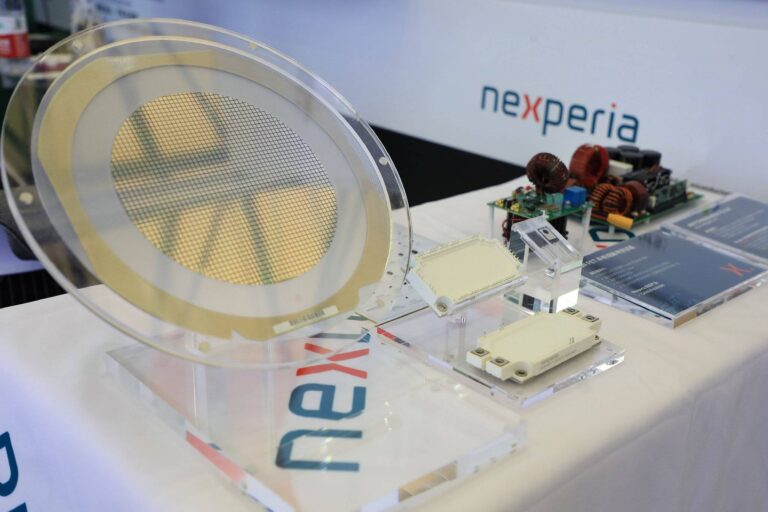
Dutch authorities announced on November 7 the lifting of control measures on Nexperia (formerly NXP Semiconductors’ Standard Products division), marking the end of a…
Read More
As 2025 draws to a close, the global semiconductor industry stands at a crossroads. Intertwined with escalating geopolitical tensions, supply chain disruptions, and groundbreaking…
Read More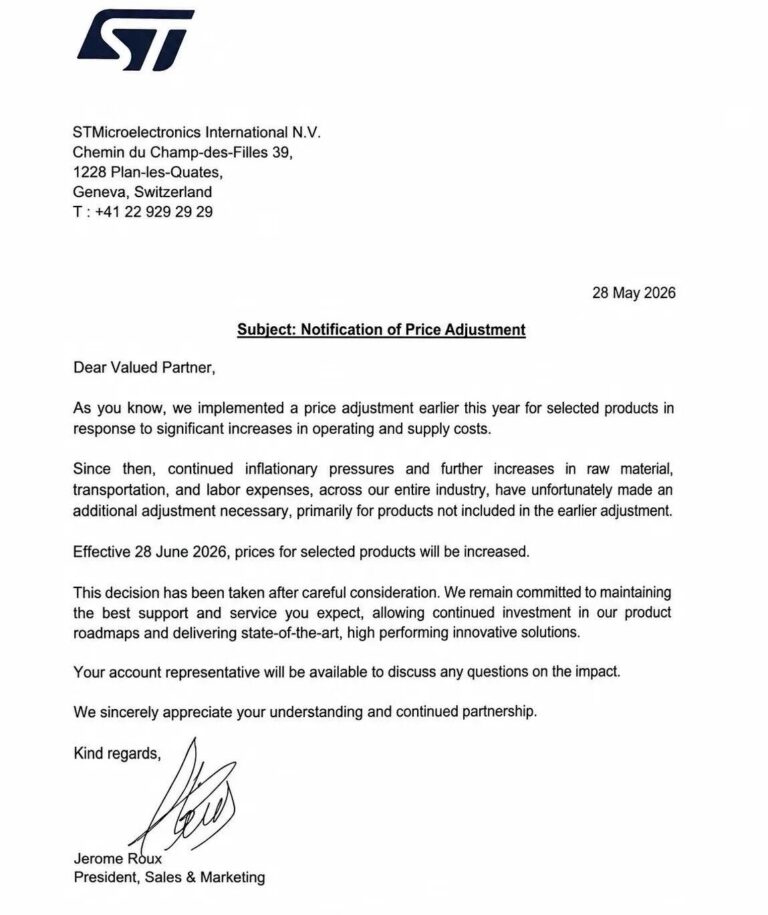
STMicroelectronics (ST), a global leader in semiconductor manufacturing, has officially notified customers of a new round of price increases for selected products, set to…
Read More
Choose tactile switches by operating force, travel, actuator height, footprint and lifetime. Check debounce, sealing and the assembled button mechanism.
Read More
Choose an AC to DC converter by input range, output demand, isolation, efficiency and thermal derating. Compare architectures and check installation needs.
Read More
Understand how a comparator switches at a voltage threshold, why hysteresis prevents chatter, and which output and input specs matter.
Read More
The activity of extra discounts on wholesale prices is in full swing…
Please fill in your contact information and we will send you the latest wholesale price list.




