ChipApex | Global Electronic Components Supplier

SEARCH
Search Product
Search Post
— IC芯片 | 连接器 | 传感器 | 被动器件 —
Search productSearch post
— IC芯片 | 连接器 | 传感器 | 被动器件 —
Consult the customer manager about the wholesale price.
consultation hotline:86-132-6715-2157
email:[email protected]
Contact the product manager for consultation. One-stop consultation is available.
Do you want a lower wholesale price? Please send us your inquiry and we will reply immediately.
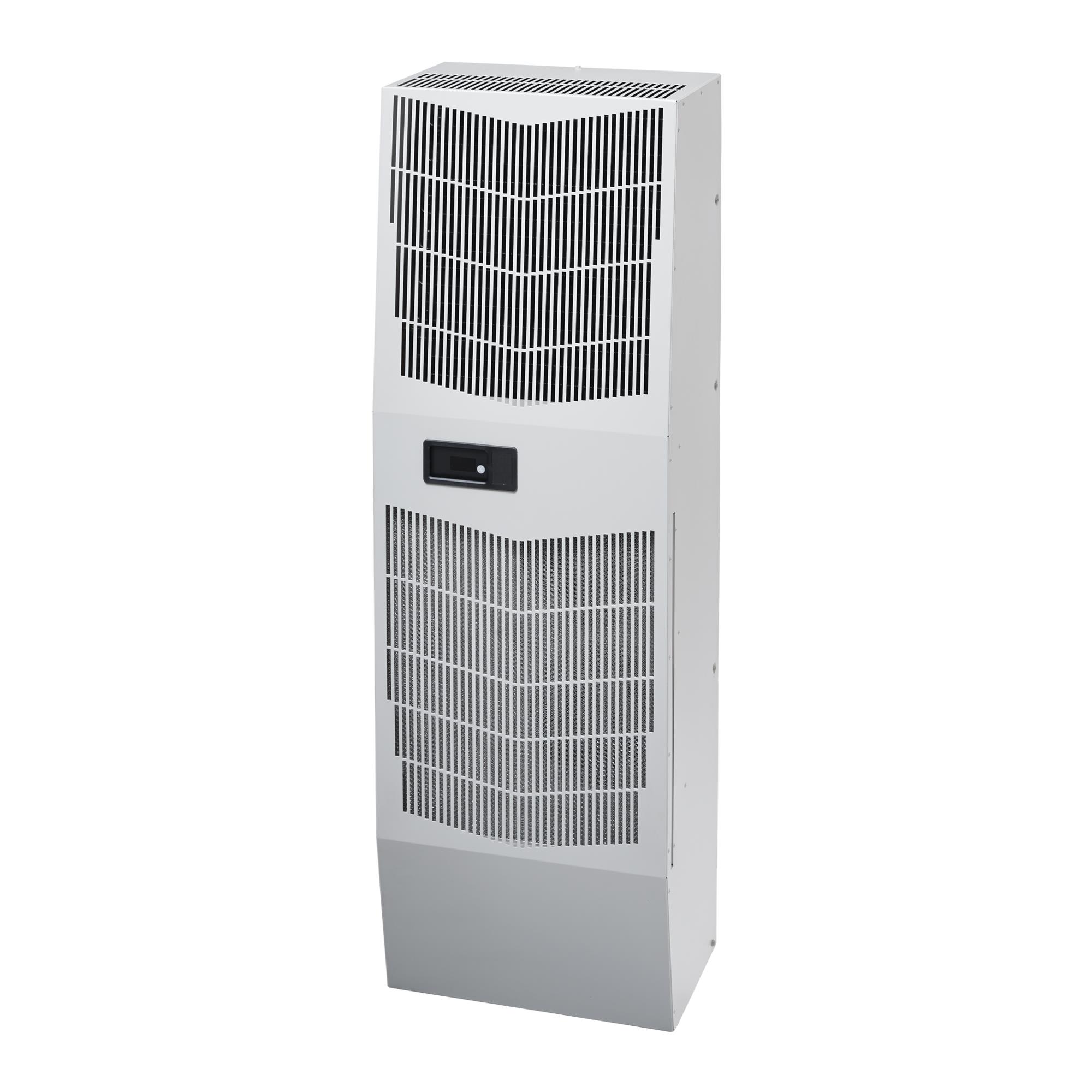
The nVent HOFFMAN G520816G700 is a rack-mounted enclosure air conditioner designed for thermal management in industrial environments. It provides a cooling capacity of 8,000 Btu/hr and operates on a single-phase 115 V AC power supply. The unit features Level 1 Advanced Corrosion Protection with a galvanized finish, ensuring durability in harsh conditions. Electrical ratings include an amperage of 11.4/12.5 A. The device utilizes Hoffman's patented tool-free click-in mounting system, allowing for versatile configurations in both wall-mount and floor-standing enclosures without the need for additional tools during assembly.
Verify that the installation environment requires Level 1 corrosion protection specifically, as higher levels may be needed for severe conditions. Confirm that the 115 V AC single-phase power supply matches the facility's electrical infrastructure. Ensure the enclosure dimensions accommodate the rack-mounted form factor and that the 8,000 Btu/hr capacity is sufficient for the specific heat load generated by internal components.
Select this model when high humidity or corrosive agents are present but extreme corrosion resistance is not required. The 8,000 Btu/hr capacity suits moderate heat loads in enclosed spaces. Consider the tool-free mounting advantage if frequent reconfiguration or rapid installation is a priority. Verify that the galvanized finish meets the aesthetic and material requirements of the installation site.
This unit belongs to the nVent HOFFMAN G52 series of rack thermal management products. The series is designed to protect sensitive electronics from dust, oil, and excessive heat. The G520816G700 variant specifically integrates corrosion-resistant materials and a standardized rack format, aligning with Hoffman's focus on maximizing uptime and extending equipment life through effective thermal regulation.
Public confirmed substitute part numbers are not available in the provided documentation. Consult nVent HOFFMAN technical support for cross-referencing equivalent models with similar cooling capacities and corrosion protection levels.
 G520816G700

Learn the relay definition, coil and contact operation, NO and NC forms, load ratings and suppression choices. Compare mechanical, reed and solid-state types.
Read More
See how a MEMS gyroscope measures angular rate, why its angle estimate drifts, and which range, noise, interface and temperature specs to compare.
Read More
The Dutch government’s intervention in the control of Nexperia (Anshi Semiconductor) is triggering a chain reaction of turmoil in the global power semiconductor market.…
Read More
As 2025 draws to a close, the global semiconductor industry stands at a crossroads. Intertwined with escalating geopolitical tensions, supply chain disruptions, and groundbreaking…
Read More
Choose tactile switches by operating force, travel, actuator height, footprint and lifetime. Check debounce, sealing and the assembled button mechanism.
Read More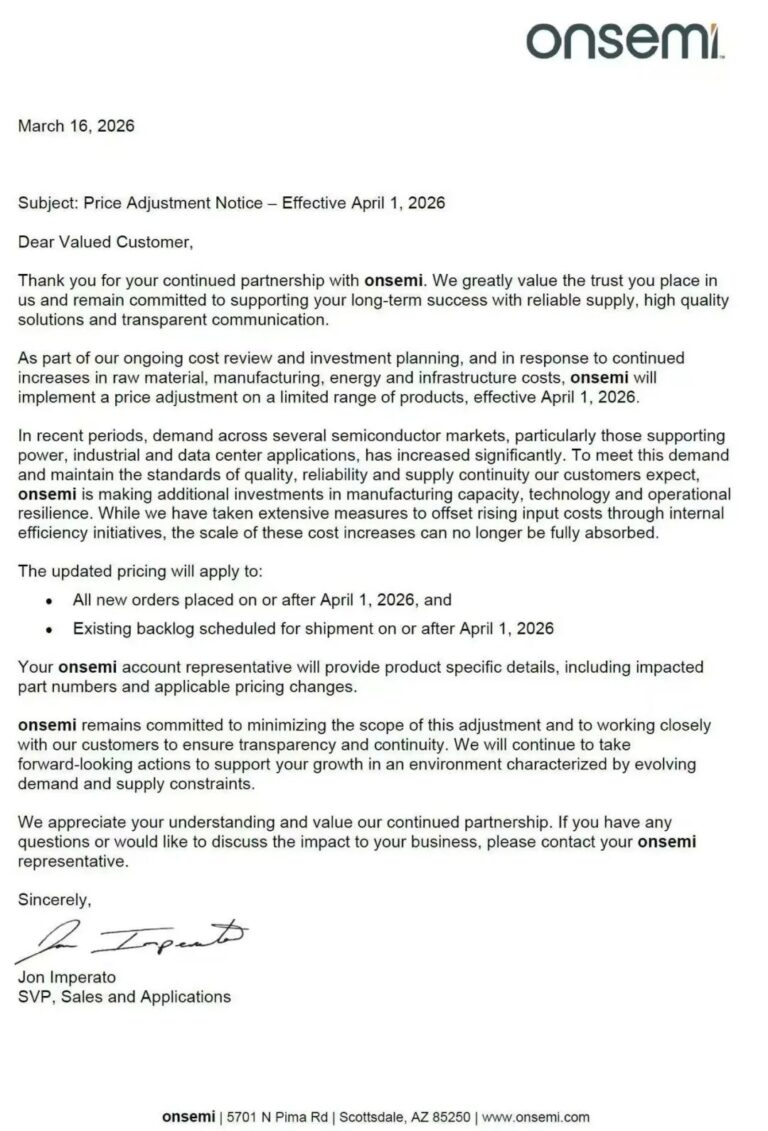
ON Semiconductor (onsemi), a global leader in intelligent power and sensing technologies, has announced plans to implement price adjustments for select product lines, effective…
Read More
On October 1, 2025 local time, OpenAI, an artificial intelligence research company, announced the establishment of a cooperative relationship with Samsung Electronics and SK…
Read More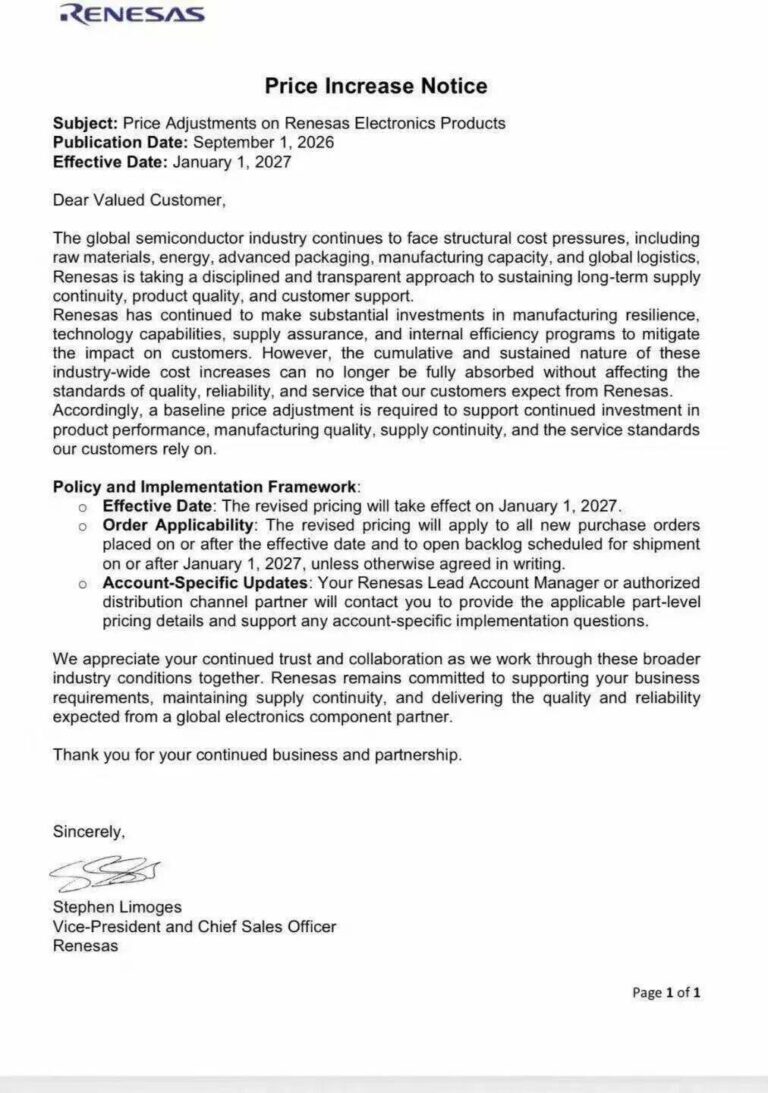
TOKYO — Global leading semiconductor and power electronic components manufacturer Renesas Electronics officially issued a new price adjustment notice in early September 2026, confirming…
Read More
Learn what an IMU measures, how accelerometers and gyroscopes work together, why orientation estimates drift, and what to compare.
Read MoreA digital-to-analog converter (DAC) turns a digital number into an analog voltage or current. It lets a controller set a physical output, such as…
Read More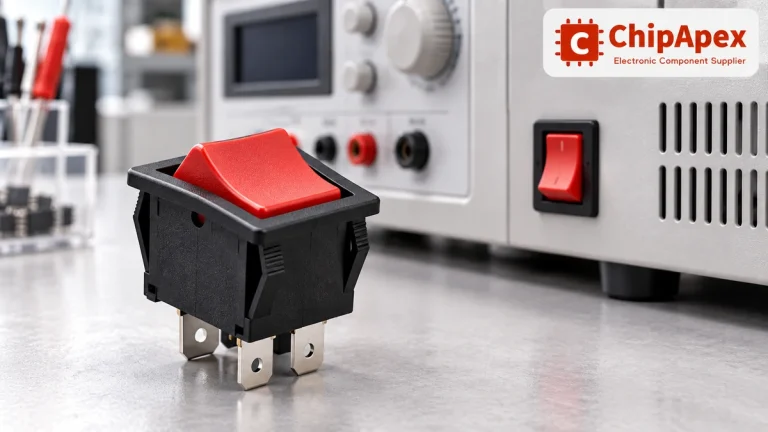
Choose a rocker switch by AC/DC ratings, contact arrangement, illumination, panel fit and sealing. Get practical checks for engineering and component sourcing.
Read More
Learn how a diode conducts, how to identify anode and cathode, and when to choose rectifier, TVS, Zener or photodiode types for a circuit.
Read More
The activity of extra discounts on wholesale prices is in full swing…
Please fill in your contact information and we will send you the latest wholesale price list.