 ChipApex | Global Electronic Components Supplier

SEARCH
Search Product
Search Post
— IC芯片 | 连接器 | 传感器 | 被动器件 —
Search productSearch post
— IC芯片 | 连接器 | 传感器 | 被动器件 —
Consult the customer manager about the wholesale price.
consultation hotline:86-132-6715-2157
email:[email protected]
Contact the product manager for consultation. One-stop consultation is available.
Do you want a lower wholesale price? Please send us your inquiry and we will reply immediately.
LM22676QMRE-5.0/NOPB is listed in the Voltage Regulators - DC DC Switching Regulators range at ChipApex. The manufacturer field lists Texas Instruments. Its product description is IC REG BUCK 5V 3A 8SOPWR. Review the specifications below when checking this part for your BOM.
The LM22676QMRE-5.0/NOPB is a SIMPLE SWITCHER step-down voltage regulator from Texas Instruments, featuring a fixed 5V output and 3A current capability. It operates within an input voltage range of 4.5V to 42V at a switching frequency of 500kHz. The device utilizes an 8-SO-PowerPad package for surface mount installation. It supports a junction temperature range from -40°C to +125°C and holds AEC-Q100 qualification for automotive applications.
Verify the complete part number including the suffix to ensure correct output voltage and package variant. Confirm AEC-Q100 qualification status if automotive compliance is required. Check datasheet revisions for any updates to thermal characteristics or pinout configurations before finalizing procurement specifications.
Select this component when a fixed 5V output is required with up to 3A load capacity. Ensure the input voltage does not exceed 42V. Consider the 8-SO-PowerPad package for thermal management needs. Verify that the 500kHz switching frequency aligns with electromagnetic interference constraints in the target application environment.
This device belongs to the LM22676 series of SIMPLE SWITCHER regulators. It shares core architecture with other variants in the family but differs in output voltage settings and package options. The series provides a compact solution for high-efficiency DC-DC conversion in space-constrained designs.
LM22676QMRE-ADJ/NOPB offers adjustable output instead of fixed 5V. LM22676TJ-5.0/NOPB provides the same electrical performance in a TO-263-7 package. Cross-reference thermal resistance values between SO-PowerPAD-8 and alternative packages.
Explore related parts through Power Management (PMIC), Integrated Circuits (ICs), all product categories, ChipApex homepage.
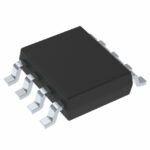 LM22676QMRE-5.0/NOPB
Choose logic inverter ICs by thresholds, supply, output drive and delay. Compare standard and Schmitt-trigger inputs, power sequencing and replacement checks.
Read More
LM22676QMRE-5.0/NOPB is listed in the Voltage Regulators - DC DC Switching Regulators range at ChipApex. The manufacturer field lists Texas Instruments. Its product description…
Read More
Understand RF attenuator dB values, fixed and programmable types, impedance, power limits and noise tradeoffs before choosing parts for an RF signal path.
Read More
Choose a DIP switch by contact type, coded positions, footprint and signal ratings. Check logic polarity, assembly conditions and PCB configuration behavior.
Read More
LM22676QMRE-5.0/NOPB is listed in the Voltage Regulators - DC DC Switching Regulators range at ChipApex. The manufacturer field lists Texas Instruments. Its product description…
Read More
LM22676QMRE-5.0/NOPB is listed in the Voltage Regulators - DC DC Switching Regulators range at ChipApex. The manufacturer field lists Texas Instruments. Its product description…
Read More
LM22676QMRE-5.0/NOPB is listed in the Voltage Regulators - DC DC Switching Regulators range at ChipApex. The manufacturer field lists Texas Instruments. Its product description…
Read More
LM22676QMRE-5.0/NOPB is listed in the Voltage Regulators - DC DC Switching Regulators range at ChipApex. The manufacturer field lists Texas Instruments. Its product description…
Read More
Compare Pt100 and Pt1000 RTDs, two-, three- and four-wire connections, excitation and self-heating. Build an error budget from element to reported temperature.
Read More
LM22676QMRE-5.0/NOPB is listed in the Voltage Regulators - DC DC Switching Regulators range at ChipApex. The manufacturer field lists Texas Instruments. Its product description…
Read More
LM22676QMRE-5.0/NOPB is listed in the Voltage Regulators - DC DC Switching Regulators range at ChipApex. The manufacturer field lists Texas Instruments. Its product description…
Read More
Understand how oscillators generate timing signals, how they differ from crystals, and which frequency, output and stability specs matter when choosing one.
Read More
The activity of extra discounts on wholesale prices is in full swing…
Please fill in your contact information and we will send you the latest wholesale price list.





