ChipApex | Global Electronic Components Supplier

SEARCH
Search Product
Search Post
— IC芯片 | 连接器 | 传感器 | 被动器件 —
Search productSearch post
— IC芯片 | 连接器 | 传感器 | 被动器件 —
Consult the customer manager about the wholesale price.
consultation hotline:86-132-6715-2157
email:[email protected]
Contact the product manager for consultation. One-stop consultation is available.
Do you want a lower wholesale price? Please send us your inquiry and we will reply immediately.
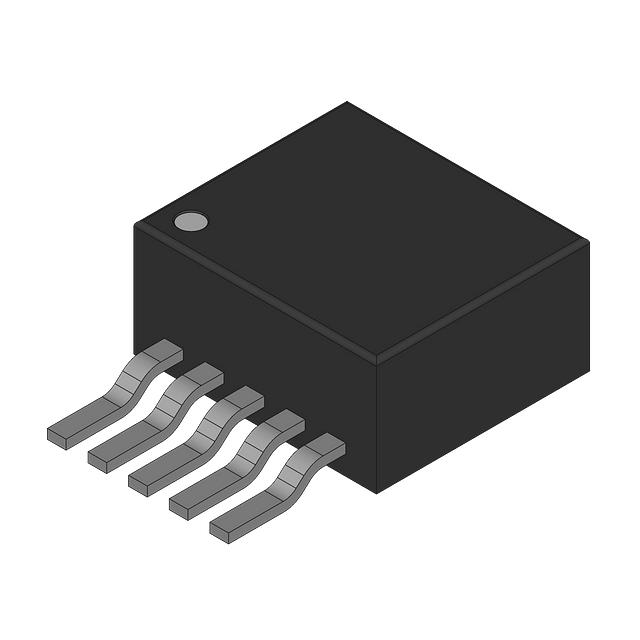
LM2577S-ADJ is listed in the Voltage Regulators - DC DC Switching Regulators range at ChipApex. The manufacturer field lists National Semiconductor. Its product description is LM2577 SIMPLE SWITCHER 3.5V TO 4. Review the specifications below when checking this part for your BOM.
The LM2577S-ADJ is a step-up (boost) or flyback switching voltage regulator manufactured by National Semiconductor, now part of Texas Instruments. It operates with an input voltage range up to 40 V and delivers a maximum output current of 3 A. The device features an adjustable output voltage ranging from 1.23 V to 37 V. It utilizes a fixed internal switching frequency of approximately 52 kHz. The component is housed in a TO-263 surface-mount package and is rated for operation within a temperature range of -40°C to +125°C.
Verify the manufacturer designation carefully, as National Semiconductor was acquired by Texas Instruments. Ensure the suffix matches the required package type and lead-free status. Confirm that the specific revision aligns with your design requirements, as older stock may differ from current TI production runs.
Select this component when a robust, single-inductor solution is needed for boosting voltages up to 3 A. Consider the thermal performance of the TO-263 package under full load conditions. Verify that the input voltage source can support the peak currents required during startup and transient events.
This device belongs to the LM2577 series of simple switcher regulators. It is functionally similar to the LM2576 but configured for non-inverting step-up applications rather than buck conversion. The 'S' indicates the surface-mount TO-263 package variant.
The typical minimum input voltage is 4 V, though it can operate down to lower levels depending on the specific application and duty cycle limits.
Yes, when configured in an inverting topology, it can produce negative output voltages relative to the input ground.
Explore related parts through Power Management (PMIC), Integrated Circuits (ICs), all product categories, ChipApex homepage.
 LM2577S-ADJ
LM2577S-ADJ is listed in the Voltage Regulators - DC DC Switching Regulators range at ChipApex. The manufacturer field lists National Semiconductor. Its product description…
Read More
LM2577S-ADJ is listed in the Voltage Regulators - DC DC Switching Regulators range at ChipApex. The manufacturer field lists National Semiconductor. Its product description…
Read More
Choose a DIP switch by contact type, coded positions, footprint and signal ratings. Check logic polarity, assembly conditions and PCB configuration behavior.
Read More
Learn what an integrated circuit is, how ICs work, the main types and the specs to check before choosing a part for your design…
Read More
LM2577S-ADJ is listed in the Voltage Regulators - DC DC Switching Regulators range at ChipApex. The manufacturer field lists National Semiconductor. Its product description…
Read More
LM2577S-ADJ is listed in the Voltage Regulators - DC DC Switching Regulators range at ChipApex. The manufacturer field lists National Semiconductor. Its product description…
Read More
Compare Pt100 and Pt1000 RTDs, two-, three- and four-wire connections, excitation and self-heating. Build an error budget from element to reported temperature.
Read More
Learn how a pressure transducer converts pressure into voltage, current, or digital output, and compare pressure references and key selection specs.
Read More
LM2577S-ADJ is listed in the Voltage Regulators - DC DC Switching Regulators range at ChipApex. The manufacturer field lists National Semiconductor. Its product description…
Read More
LM2577S-ADJ is listed in the Voltage Regulators - DC DC Switching Regulators range at ChipApex. The manufacturer field lists National Semiconductor. Its product description…
Read More
LM2577S-ADJ is listed in the Voltage Regulators - DC DC Switching Regulators range at ChipApex. The manufacturer field lists National Semiconductor. Its product description…
Read More
Learn what an IMU measures, how accelerometers and gyroscopes work together, why orientation estimates drift, and what to compare.
Read More
The activity of extra discounts on wholesale prices is in full swing…
Please fill in your contact information and we will send you the latest wholesale price list.