 ChipApex | Global Electronic Components Supplier

SEARCH
Search Product
Search Post
— IC芯片 | 连接器 | 传感器 | 被动器件 —
Search productSearch post
— IC芯片 | 连接器 | 传感器 | 被动器件 —
Consult the customer manager about the wholesale price.
consultation hotline:86-132-6715-2157
email:[email protected]
Contact the product manager for consultation. One-stop consultation is available.
Do you want a lower wholesale price? Please send us your inquiry and we will reply immediately.
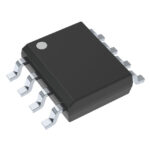
LM2594HVM-12/NOPB is listed in the Voltage Regulators - DC DC Switching Regulators range at ChipApex. The manufacturer field lists Texas Instruments. Its product description is IC REG BUCK 12V 500MA 8SOIC. Review the specifications below when checking this part for your BOM.
The LM2594HVM-12/NOPB is a SIMPLE SWITCHER step-down voltage regulator from Texas Instruments. It operates with an input voltage range of 4.5 V to 60 V and provides a fixed 12 V output at up to 500 mA. The device utilizes a buck topology with a switching frequency of 150 kHz. It is housed in an 8-pin SOIC surface-mount package. The component supports a shutdown function and functions within a junction temperature range of -40°C to +125°C.
Verify the specific suffix 'HVM' confirms the high-voltage variant with SOIC packaging and fixed 12 V output. Confirm the '/NOPB' designation indicates lead-free and RoHS compliance. Ensure the manufacturer is Texas Instruments, as this part belongs to the SIMPLE SWITCHER family. Cross-reference the datasheet for thermal performance requirements under your specific load conditions.
Select this component when a fixed 12 V output is required from inputs up to 60 V. The 500 mA current limit suits moderate power applications. Consider the SOIC package for surface-mount assembly. Compare against the adjustable version if variable output is needed, or the through-hole N variant if PCB mounting style differs.
This part belongs to the LM2594HV series, designed for high-input voltage applications. It is part of the SIMPLE SWITCHER family, which integrates the controller, power switch, and freewheeling diode into a single monolithic IC. This integration reduces the number of external components compared to discrete solutions.
LM2594MX-12/NOPB: Surface-mount alternative with identical electrical specifications but different reel packaging options.
Explore related parts through Power Management (PMIC), Integrated Circuits (ICs), all product categories, ChipApex homepage.
 LM2594HVM-12/NOPB

LM2594HVM-12/NOPB is listed in the Voltage Regulators - DC DC Switching Regulators range at ChipApex. The manufacturer field lists Texas Instruments. Its product description…
Read More
LM2594HVM-12/NOPB is listed in the Voltage Regulators - DC DC Switching Regulators range at ChipApex. The manufacturer field lists Texas Instruments. Its product description…
Read More
LM2594HVM-12/NOPB is listed in the Voltage Regulators - DC DC Switching Regulators range at ChipApex. The manufacturer field lists Texas Instruments. Its product description…
Read More
LM2594HVM-12/NOPB is listed in the Voltage Regulators - DC DC Switching Regulators range at ChipApex. The manufacturer field lists Texas Instruments. Its product description…
Read More
LM2594HVM-12/NOPB is listed in the Voltage Regulators - DC DC Switching Regulators range at ChipApex. The manufacturer field lists Texas Instruments. Its product description…
Read More
LM2594HVM-12/NOPB is listed in the Voltage Regulators - DC DC Switching Regulators range at ChipApex. The manufacturer field lists Texas Instruments. Its product description…
Read More
LM2594HVM-12/NOPB is listed in the Voltage Regulators - DC DC Switching Regulators range at ChipApex. The manufacturer field lists Texas Instruments. Its product description…
Read More
LM2594HVM-12/NOPB is listed in the Voltage Regulators - DC DC Switching Regulators range at ChipApex. The manufacturer field lists Texas Instruments. Its product description…
Read More
LM2594HVM-12/NOPB is listed in the Voltage Regulators - DC DC Switching Regulators range at ChipApex. The manufacturer field lists Texas Instruments. Its product description…
Read More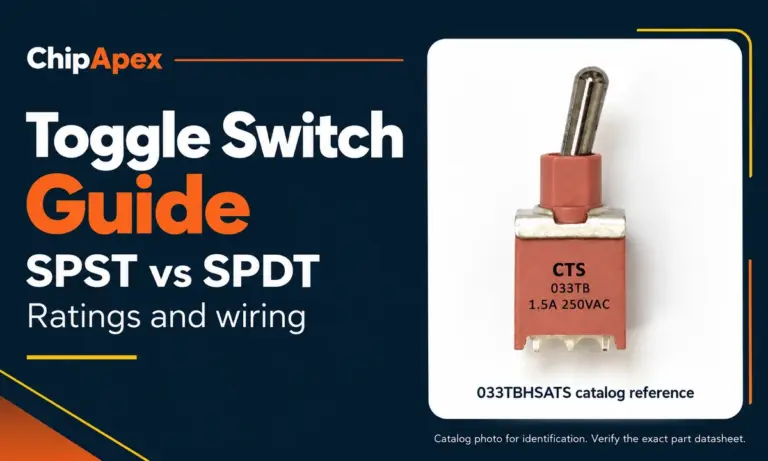
Compare SPST and SPDT toggle switches, understand AC/DC ratings, and follow wiring examples. Check contact action, mounting and parts in the ChipApex catalog.
Read More
LM2594HVM-12/NOPB is listed in the Voltage Regulators - DC DC Switching Regulators range at ChipApex. The manufacturer field lists Texas Instruments. Its product description…
Read More
See when an inductor behaves linearly, how DC bias and saturation reduce inductance, and which current and temperature curves to check.
Read More
The activity of extra discounts on wholesale prices is in full swing…
Please fill in your contact information and we will send you the latest wholesale price list.





