ChipApex | Global Electronic Components Supplier

SEARCH
Search Product
Search Post
— IC芯片 | 连接器 | 传感器 | 被动器件 —
Search productSearch post
— IC芯片 | 连接器 | 传感器 | 被动器件 —
Consult the customer manager about the wholesale price.
consultation hotline:86-132-6715-2157
email:[email protected]
Contact the product manager for consultation. One-stop consultation is available.
Do you want a lower wholesale price? Please send us your inquiry and we will reply immediately.
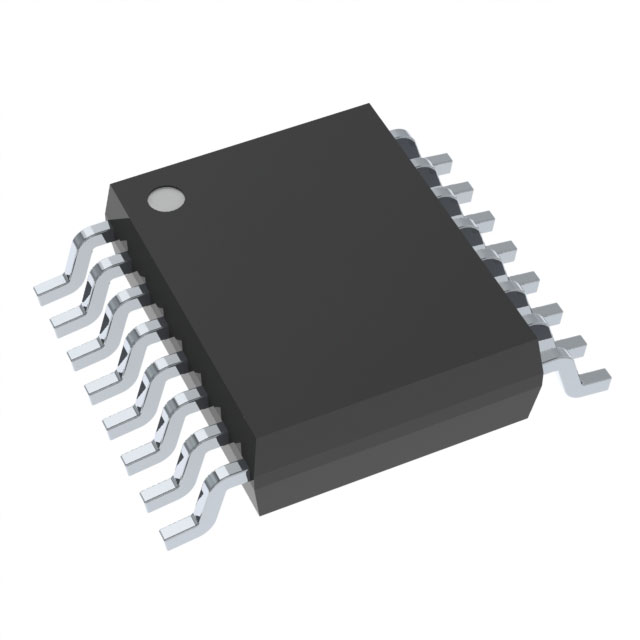
LM43602AQPWPTQ1 is listed in the Voltage Regulators - DC DC Switching Regulators range at ChipApex. The manufacturer field lists Texas Instruments. Its product description is IC REG BUCK ADJ 2A 16HTSSOP. Review the specifications below when checking this part for your BOM.
The LM43602AQPWPTQ1 is an automotive-qualified synchronous step-down voltage converter from Texas Instruments. It operates with an input voltage range of 3.5 V to 36 V and delivers a continuous output current of 2 A. The device features an adjustable output voltage ranging from 1 V to 28 V. It supports programmable switching frequencies between 200 kHz and 2.2 MHz. The component maintains a typical quiescent current of 27 uA. It functions within a junction temperature range of -40°C to +125°C. The unit is housed in a 16-PowerTSSOP package.
Verify the complete part number including suffixes to ensure correct packaging and automotive grade alignment. Confirm that the intended application meets the specified electrical limits and environmental conditions. Check for recent Product Change Notifications regarding assembly or material updates. Ensure compatibility with required moisture sensitivity levels during soldering processes. Validate that the supplier source matches the manufacturer's authorized distribution channels.
Select this component when designing for automotive applications requiring a 2 A buck converter with wide input voltage tolerance. The adjustable output voltage offers flexibility for various rail requirements. Consider the available switching frequency range to balance electromagnetic interference and external component size. Ensure the PCB layout accommodates the PowerTSSOP package dimensions and thermal dissipation needs for the target operating environment.
This device belongs to the LM4360x SIMPLE SWITCHER family of regulators. The family includes variants with different current capabilities and input voltage ranges. The LM43602 specifically targets the 2 A output segment. Automotive versions carry the Q1 designation and meet strict reliability standards. The series emphasizes ease of use with minimal external component counts.
LM43602DSUR is the commercial equivalent with identical electrical specifications but lacks automotive qualification. LM43602PWPRQ1 shares the same function and package but may differ in reel packaging quantity. Verify pin-to-pin compatibility and thermal characteristics before substitution.
Explore related parts through Power Management (PMIC), Integrated Circuits (ICs), all product categories, ChipApex homepage.
 LM43602AQPWPTQ1

LM43602AQPWPTQ1 is listed in the Voltage Regulators - DC DC Switching Regulators range at ChipApex. The manufacturer field lists Texas Instruments. Its product description…
Read More
LM43602AQPWPTQ1 is listed in the Voltage Regulators - DC DC Switching Regulators range at ChipApex. The manufacturer field lists Texas Instruments. Its product description…
Read More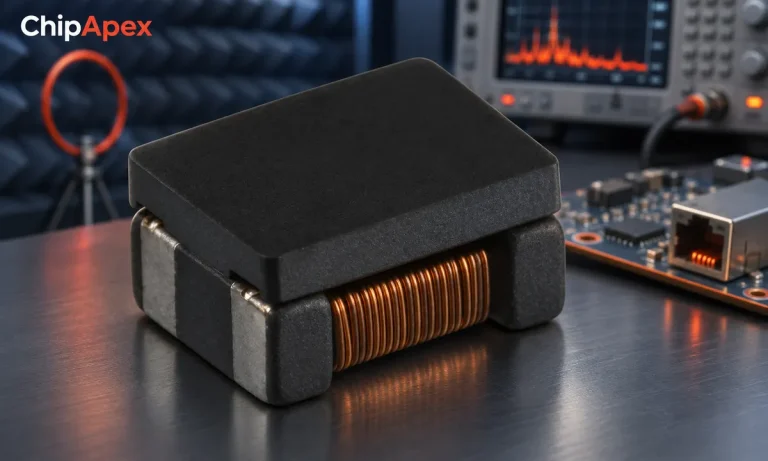
Select a common mode choke using noise frequency, current, insulation and signal integrity. Understand impedance curves, layout and filter limitations.
Read More
LM43602AQPWPTQ1 is listed in the Voltage Regulators - DC DC Switching Regulators range at ChipApex. The manufacturer field lists Texas Instruments. Its product description…
Read More
LM43602AQPWPTQ1 is listed in the Voltage Regulators - DC DC Switching Regulators range at ChipApex. The manufacturer field lists Texas Instruments. Its product description…
Read More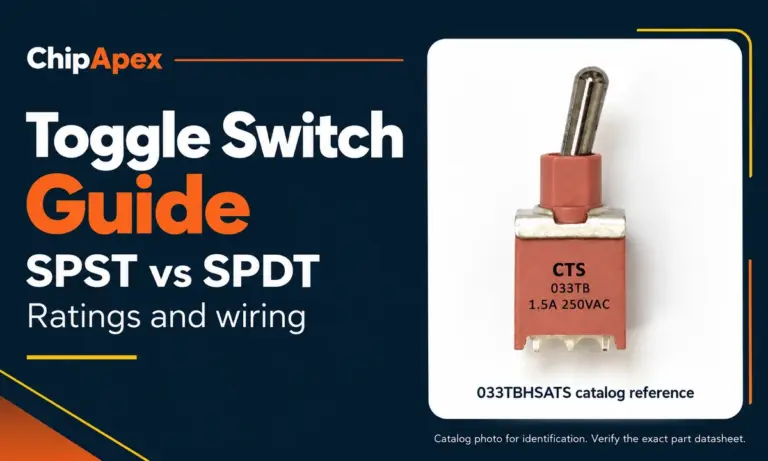
Compare SPST and SPDT toggle switches, understand AC/DC ratings, and follow wiring examples. Check contact action, mounting and parts in the ChipApex catalog.
Read More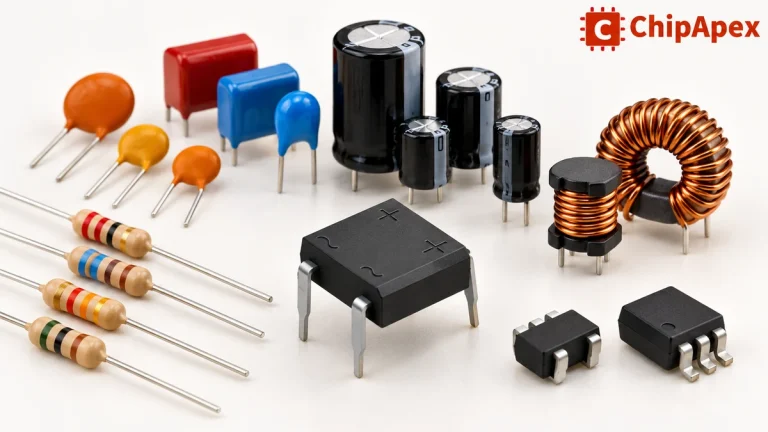
Explore electronic component types, functions, packages and datasheets. Learn selection, replacement and BOM checks before ordering parts for your PCB.
Read More
See how a MEMS gyroscope measures angular rate, why its angle estimate drifts, and which range, noise, interface and temperature specs to compare.
Read More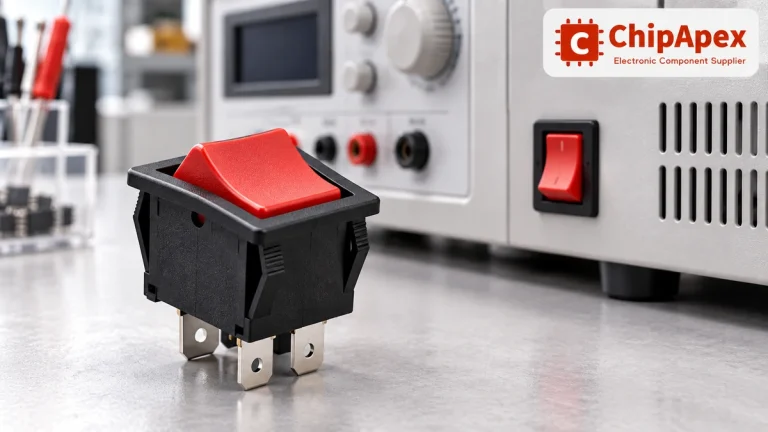
Choose a rocker switch by AC/DC ratings, contact arrangement, illumination, panel fit and sealing. Get practical checks for engineering and component sourcing.
Read More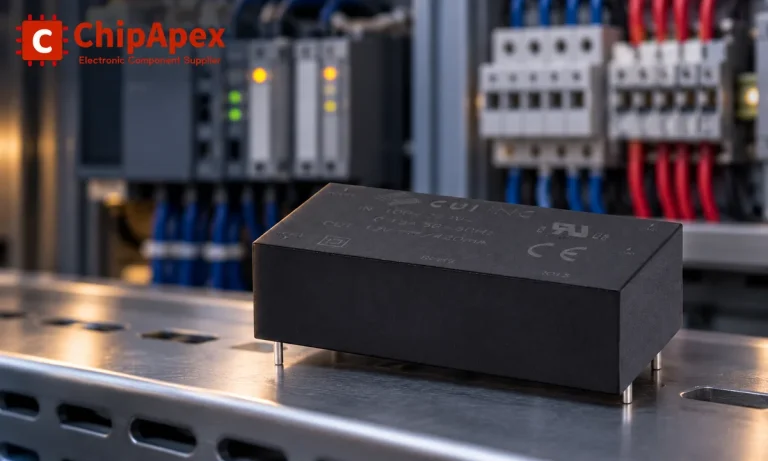
Choose an AC to DC converter by input range, output demand, isolation, efficiency and thermal derating. Compare architectures and check installation needs.
Read More
Understand how oscillators generate timing signals, how they differ from crystals, and which frequency, output and stability specs matter when choosing one.
Read More
Select a DC-DC converter by input range, topology, isolation and temperature. Compare ripple, efficiency and load limits before choosing a component.
Read More
The activity of extra discounts on wholesale prices is in full swing…
Please fill in your contact information and we will send you the latest wholesale price list.